Dr Jitendra Singh Joins 150-Year Celebrations of IACS, Birthplace of Raman Effect and India’s First Nobel Prize in Science

Dr. Jitendra Singh inaugurates indigenous solar-cell fabrication facility and RETINA incubation centre at Historic IACS Campus in Kolkata
IACS Journey Reflects India’s Scientific Rise Across Three Centuries, says Union Minister Dr Jitendra Singh
Dr Jitendra Singh Says Legacy of Mahendralal Sircar and C.V. Raman Will Inspire India’s Journey Towards Viksit Bharat 2047
Union Minister of State (Independent Charge) for Science & Technology, Earth Sciences and Minister of State for PMO, Personnel, Public Grievances, Pensions, Atomic Energy and Space, Dr. Jitendra Singh today visited the “Indian Association for the Cultivation of Science” (IACS), Kolkata, the institution where Sir C.V. Raman carried out the work leading to India’s first Nobel Prize in Science through the discovery of the Raman Effect, and joined the celebrations marking 150 years of one of India’s most iconic scientific institutions spanning the 19th, 20th and 21st centuries.
Describing IACS as a living symbol of India’s scientific awakening before Independence and its scientific rise after Independence, Dr. Jitendra Singh said the institution has carried forward an unbroken legacy of scientific excellence, innovation and nation-building across generations. Founded in 1876 by Dr. Mahendralal Sircar, the institute became the cradle of some of India’s greatest scientific minds including Jagadish Chandra Bose, Meghnad Saha, S.N. Bose and Sir C.V. Raman. He said the journey of IACS reflects the evolution of India’s scientific identity from colonial-era intellectual resurgence to the present-day innovation ecosystem driving Viksit Bharat 2047.
Dr. Jitendra Singh inaugurated the indigenously built Plasma Enhanced Chemical Vapor Deposition (PECVD) system developed at IACS for fabrication of India’s first amorphous silicon solar cell and also inaugurated the institute’s new incubation centre “RETINA”, Research Entrepreneurship for Translation, Innovation and NAvigation. The Minister also visited the IACS archives and research exhibition galleries showcasing the institution’s scientific contributions and ongoing research activities.
The Minister paid floral tributes to the busts and statues of Dr. Mahendralal Sircar, Sir C.V. Raman and Prof. Meghnad Saha at the campus. The programme was attended by Director of IACS Prof. Kalobaran Maiti, senior scientists, faculty members, researchers, students and distinguished members of the scientific community.
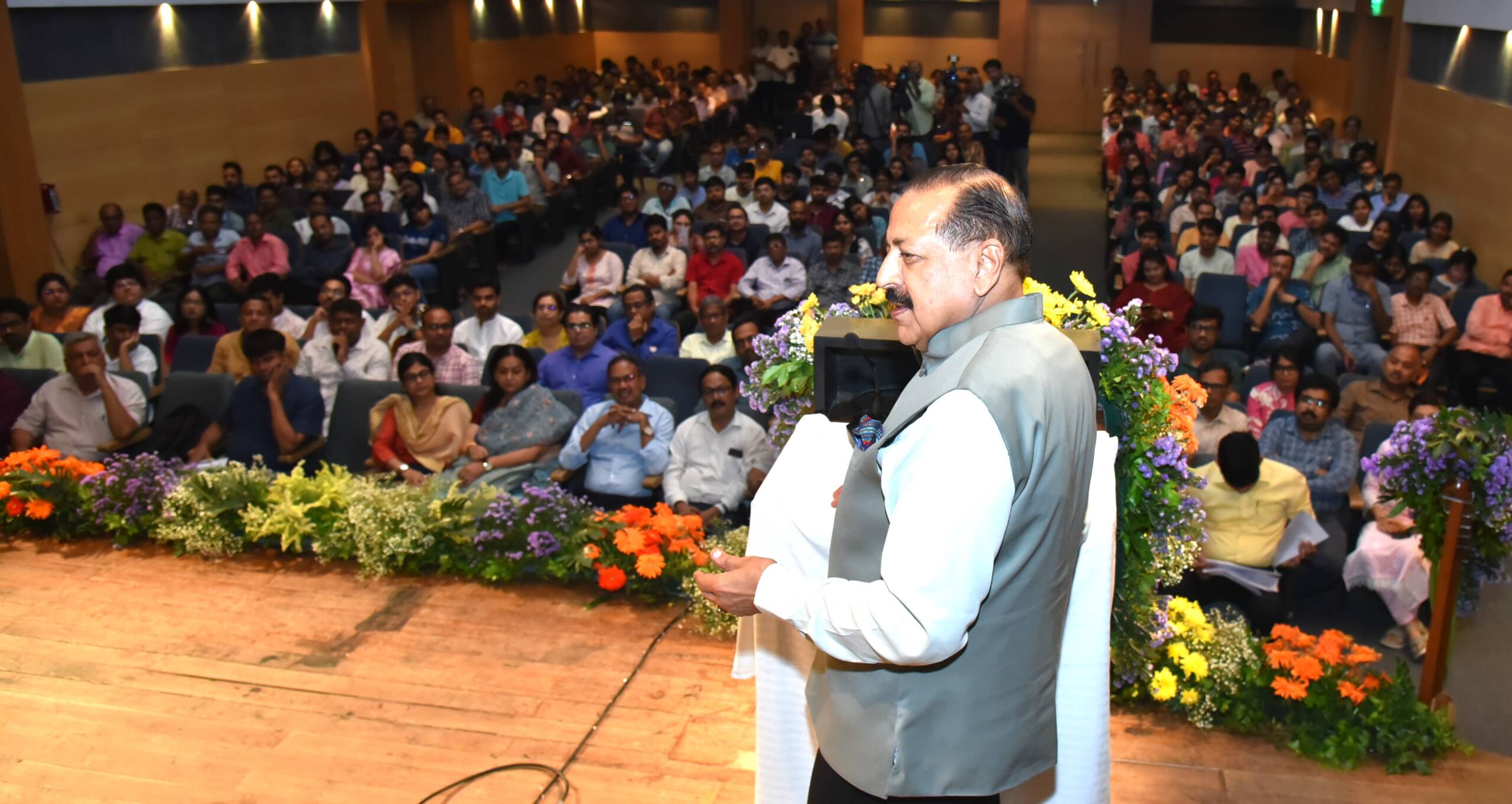
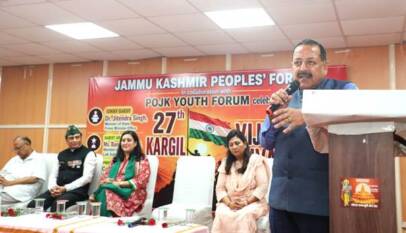
Addressing the gathering at Mahendra Lal Sircar Hall, Dr. Jitendra Singh said IACS occupies a unique place in India’s scientific history as the first research institution in Asia established by Indians for the cultivation of modern science through original research. He recalled that Dr. Mahendralal Sircar had envisioned scientific capacity-building and modern scientific education for Indians at a time when scientific infrastructure in the country was virtually absent. The Minister also referred to the institute’s unique historical association with Sri Ramakrishna Paramahamsa through Dr. Sircar, who served as his personal physician.
Dr. Jitendra Singh said the discovery of the Raman Effect at IACS remains one of the defining milestones in India’s scientific history and continues to inspire generations of Indian scientists. He said that the institution continued producing globally respected scientific contributions even after Independence and evolved into a leading centre for frontier research across physical sciences, biological sciences, materials science, computational science and interdisciplinary technologies.
Referring to the inauguration of the PECVD setup, the Minister said the indigenous development of advanced solar-cell fabrication technology represented the spirit of scientific self-reliance and innovation that India is now accelerating under the vision of “Atmanirbhar Bharat”. He also said that the system built by Prof. Ashok Kumar Barua had pioneered amorphous silicon solar-cell development in India and marked an important chapter in the country’s renewable-energy journey.
On the launch of the RETINA incubation centre, Dr. Jitendra Singh said India’s scientific institutions are now increasingly integrating fundamental research with entrepreneurship, startup culture and societal applications. He highlighted the future of Indian science lies in converting laboratory discoveries into affordable and scalable technologies capable of addressing national priorities in healthcare, clean energy, advanced materials and sustainable development.
The Minister also appreciated IACS for its contributions in emerging areas including quantum materials, nanotechnology, artificial intelligence, battery materials, cancer biology and environmental technologies. He referred to recent work carried out by scientists at IACS in areas such as Duchenne Muscular Dystrophy treatment research, toxic waste remediation, photodetectors, biosensors and sustainable energy materials.
Dr. Jitendra Singh said India’s scientific institutions are entering a transformative phase aligned with the national vision for Viksit Bharat 2047, where innovation, academia, industry and startups will work together to position India among the world’s leading knowledge economies. He also appreciated the institute’s outreach initiatives for school students, women and rural communities aimed at nurturing scientific temperament and expanding scientific participation across society.

More Than a Café: How MITTI Café is Brewing Hope, Dignity and Dreams at Rashtrapati Nilayam
Hyderabad, July 2026 : Tucked away inside the serene campus of Rashtrapati Nilayam in Boll…
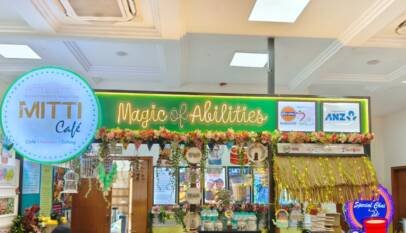
More Than a Café: How MITTI Café is Brewing Hope, Dignity and Dreams at Rashtrapati Nilayam
Hyderabad, July 2026 : Tucked away inside the serene campus of Rashtrapati Nilayam in …