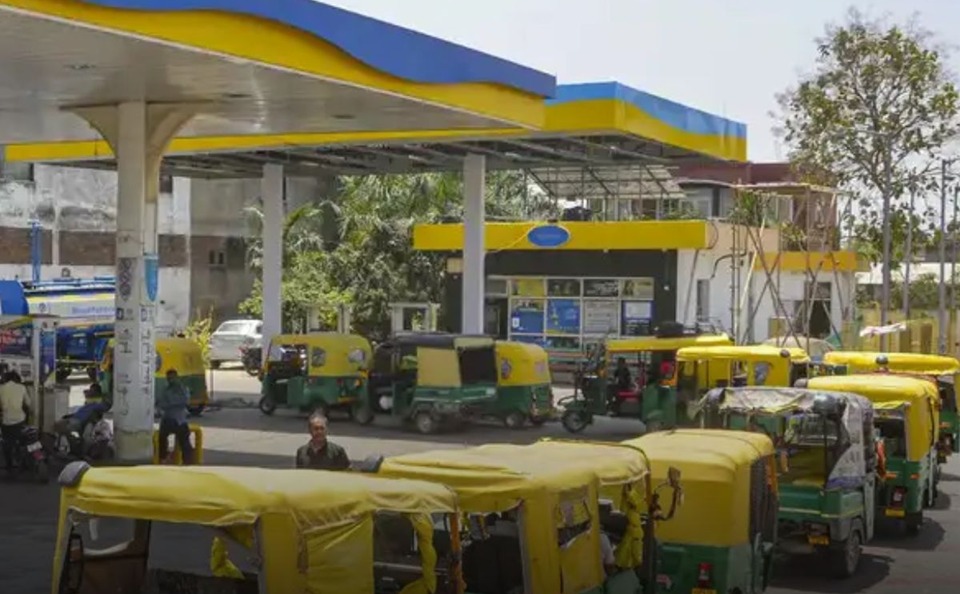
IGL Announces Fourth CNG Price Hike in Two Weeks, Fuel Costs Rise Across Major Cities

Mumbai, May 2026 : Indraprastha Gas Limited (IGL) on Tuesday announced a fresh increase in compressed natural gas (CNG) prices, marking the fourth revision in less than two weeks and adding further pressure on transport costs across the National Capital Region and other cities.
According to the latest revision, CNG prices in Delhi have been increased by Rs 2 per kilogram. With this adjustment, the new retail price of CNG in the national capital stands at Rs 83.09 per kg, compared to the earlier rate of Rs 81.09 per kg.
The price revision was not limited to Delhi alone, as IGL implemented similar upward adjustments across the wider NCR and select cities. In Noida, Ghaziabad, and Greater Noida, CNG will now cost Rs 91.70 per kg, reflecting a uniform increase across the region. In Gurugram, the revised price has been set at Rs 88.12 per kg, while in Ajmer, consumers will now pay Rs 92.44 per kg for CNG.
The latest hike comes shortly after a Rs 1 increase announced on Saturday, continuing a series of frequent upward revisions in fuel prices over recent days. The repeated adjustments have raised concerns among vehicle operators and consumers who rely heavily on CNG as a cost-effective fuel alternative.
CNG is widely used in public transport systems, including buses, auto-rickshaws, and taxis, especially in metropolitan regions like Delhi and Mumbai. Transport unions and operators have expressed concern that the rising input costs may soon force a revision in passenger fares, potentially increasing the financial burden on daily commuters.
In parallel developments, state-owned oil marketing companies (OMCs) have also revised petrol and diesel prices upward for the fourth time in under two weeks. Officials have attributed the sustained price increases to volatility in global energy markets, fluctuating crude oil prices, and concerns over supply disruptions linked to geopolitical tensions in the Middle East.
In Delhi, petrol prices have increased by Rs 2.61 per litre, bringing the new rate to Rs 102.12 per litre. Diesel prices in the capital have gone up by Rs 2.71 per litre, now retailing at Rs 95.20 per litre.
Among major metropolitan cities, Kolkata recorded one of the steepest increases. Petrol prices there rose by Rs 2.87 per litre to reach Rs 113.51, while diesel prices climbed by Rs 2.80 to Rs 99.82 per litre.
Mumbai also witnessed a significant upward revision. Petrol prices in the financial capital increased by Rs 2.72 per litre to Rs 111.21, while diesel rates rose by Rs 2.81, taking the price to Rs 97.83 per litre. In Chennai, petrol was revised upward by Rs 2.46 per litre to Rs 107.77, while diesel increased by Rs 2.57 per litre to Rs 99.55.
The latest round of price hikes follows multiple revisions earlier this month, indicating a sustained upward trend in fuel costs. On May 15, petrol and diesel prices were increased by Rs 3 per litre each. This was followed by another hike of 90 paise per litre on May 19. On May 23, petrol prices rose again by 87 paise per litre, while diesel saw an increase of 91 paise per litre.
Market experts say domestic fuel prices remain closely tied to international crude oil movements, currency exchange fluctuations, and domestic taxation structures. Any instability in global supply chains tends to directly influence retail fuel rates in India.
The continuous rise in fuel prices is expected to have a cascading effect on transportation and logistics costs, potentially pushing up prices of essential commodities transported via road networks. Consumers may also face increased daily commuting expenses as fuel costs continue to climb.
Meanwhile, the government had earlier reduced excise duty on petrol and diesel on March 27 in an effort to provide relief to consumers and stabilise retail prices. However, the recent upward trend suggests that global market pressures continue to outweigh domestic interventions, keeping fuel prices on an upward trajectory across major cities.
As fuel costs rise across sectors, stakeholders are closely watching further policy responses and global market movements that may determine the direction of prices in the coming weeks, with transport operators, businesses, and households all bracing for continued volatility in energy expenses.
Team Maverick





Delivery Of Second Indigenous Diving Support Vessel – ‘Nipun’
‘Nipun’ the second Diving Support Vessel (DSV), built by Hindustan Shipyard Limited&n…

Delivery Of Second Indigenous Diving Support Vessel – ‘Nipun’
‘Nipun’ the second Diving Support Vessel (DSV), built by Hindustan Shipyard Limited was delivered to the …