CYVCV Virus In Citrus Will Be Very Difficult To Eradicate, Flags EPPO.

Madrid; May 2026: The presence of Citrus Yellow Vein Clearing Virus (CYVCV) has now been confirmed in Spain. First detected in September 2025, this emerging pathogen is a cause for concern, especially for the citrus sector due to its ease of transmission and rapid spread, with lemon, lime, and sour orange trees as the most affected crops.
The yellow vein clearing disease is an emerging disease of citrus that was first observed in Pakistan in 1988 in lemon (Citrus limon) and sour orange trees (C. aurantium). In 1997, the disease was observed in several citrus-growing areas of India on different citrus species (Etrog citron (C. medica var ‘Etrog’), Rangpur lime (C. x limonia), sour orange, and lemon. In 2000, the disease was reported from Türkiye in lemon and sour orange trees in the region of Adana. In 2009, CYVCV was also found in lemon trees in Yunnan, China. Following the detection in Türkiye, eradication measures were taken, and surveys were carried out. As of 2023, the virus was no longer detected in the Turkish citrus-producing regions. In 2024, CYVCV was detected in a small number of citrus trees (6 symptomatic lemon trees and 1 asymptomatic sweet orange tree) in a private garden in Campania, Italy. In autumn 2025 CYVCV was found in Catalonia and Comunidad Valenciana in Spain.
Initially the presence of a filamentous virus was consistently observed in citrus symptomatic plants, but its identity remained unknown until 2012, when serological, molecular and biological studies showed that a new virus species called citrus yellow vein clearing virus ( Potexvirus citriflavivenae , CYVCV) was the causal agent of the disease (EPPO RS 2013/196). Since then, CYVCV has continued to spread in China and other Asian countries and has recently been reported in California (US), a first record for the Americas. In recent years, it has been detected in Turkey, Iran, California, and Italy. In Europe, the first outbreak was reported in March 2024 in the Italian region of Campania, initially in a private garden and later also in commercial nurseries in Lazio.
Genetic analyses carried out following the European detections point to a close phylogenetic relationship between the isolates found in Italy and Spain. Studies say that the Italian isolate is more closely related to the Spanish one than to the original Asian strains, suggesting either a recent common origin or the movement of plant material from Italy prior to the official detection in Spain.
Considering the potential impact of this emerging disease on citrus production, the EPPO Secretariat considered that CYVCV should be added to the EPPO Alert List.
The CYVCV is concentrated in the following regions:
EPPO region : Italy (transient), Spain.
Asia : China (Chongqing, Fujian, Guangdong, Guangxi, Guizhou, Hunan, Jiangxi, Sichuan, Yunnan, Zhejiang); India (Andhra Pradesh, Delhi, Gujarat, Maharashtra, Punjab, Rajasthan, West Bengal); Iran; Republic of Korea; Pakistan.
North America : USA (California).
CYVCV can infect most citrus species, cultivars and hybrids, particularly lemon (C. limon) and sour orange (C. aurantium). In Türkiye, in addition to the findings on citrus, CYVCV has been reported once on grapevine ( Vitis vinifera ) plants showing leaf necrosis, small leaves and shortened internodes. In addition to citrus and grapevine, CYVCV has also been detected in asymptomatic wild plants (Malva sylvestris, Ranunculus arvensis, Sinapis arvensis and Solanum nigrum).
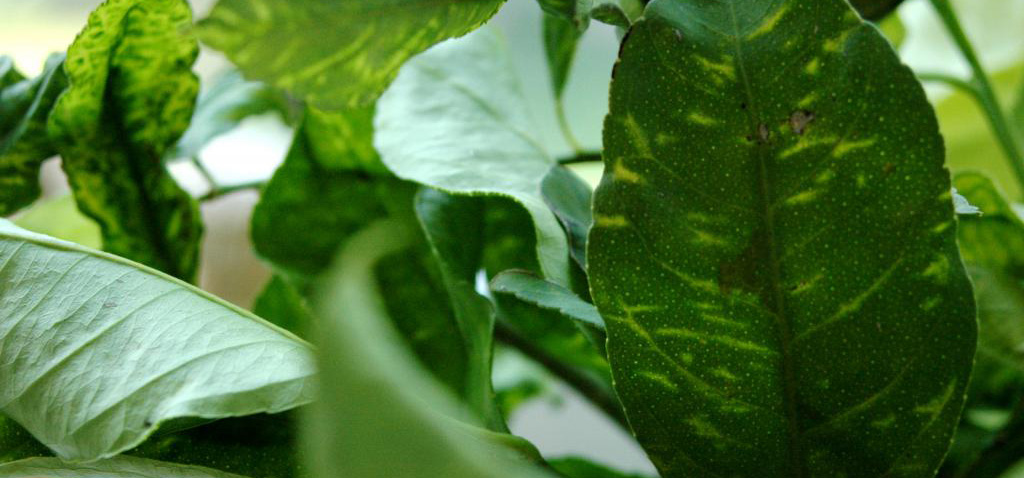
On citrus, symptoms include strong yellow vein clearing, leaf distortion, and occasionally, ringspots and veinal necrosis, as well as fruit malformation. Severe infections can lead to tree decline and decreased fruit marketability (fruit quantity and quality is reduced). Disease symptoms may vary according to citrus varieties, viral strains, and environmental conditions.
Transmission: CYVCV can be transmitted by grafting and contaminated tools. In addition to mechanical transmission, CYVCV is transmitted by insect vectors. Two aphid species, Aphis spiraecola, and A. craccivora have been shown to transmit CYVCV from infected lemons to vegetables. In addition, AA aurantii, A. spiraecola, A. gossypii and Dialeurodes citri (citrus whitefly) could successfully transmit CYVCV between citrus species. It is thought that disease spread in the field is mainly ensured by insect vectors. So far, seed transmission of CYVCV has not been demonstrated.
Pathways: Plants for planting (scions, rootstocks, seedlings), viruliferous vectors, contaminated tools and equipment.
Possible risks: Citrus spp. are economically important trees for the Mediterranean Basin, cultivated for fruit production and ornamental purposes. CYVCV is causing an emerging disease which can potentially have negative impacts on citrus production by affecting tree growth and fruit marketability. The fact that CYVCV has been detected once in grapevine in Türkiye may also add to the risk. The past detection of CYVCV in Türkiye and the recent one in Italy and Spain show that this virus has the potential to enter citrus production in the EPPO region, in addition its known insect vectors are present to ensure its further spread. As CYVCV can be spread by the movements of infected propagation material, as well as by grafting and contaminated tool, it is important that NPPOs of the citrus-growing countries of the EPPO region are alerted about this new citrus disease.
Team Maverick.








End of an Era: Cristiano Ronaldo Bids Farewell to the FIFA World Cup After a Record-Breaking International Career
Dallas, July 2026 : One of football’s greatest chapters came to a close on Tuesday a…

End of an Era: Cristiano Ronaldo Bids Farewell to the FIFA World Cup After a Record-Breaking International Career
Dallas, July 2026 : One of football’s greatest chapters came to a close on …