India Supports Morocco’s Transition To Full Domestic Aircraft Production Capability.

Rabat/New Delhi; May 2026: The defence partnership between Morocco and India is progressing rapidly, moving beyond the traditional exchange of military agreements and delving deeper into technology localisation and joint manufacturing in the aerospace sector.
Recent statements by the Indian ambassador to Morocco – Sanjay Rana, regarding advanced talks to expand industrial and military cooperation with India, raise questions about the next stage, especially after the success of the initial project with the Tata Advanced Systems factory on the outskirts of Berrechid. What distinguished this project from other foreign investments in Morocco was the nature and depth of the partnership.
Currently, Morocco hosts numerous factories where local personnel assemble European or American products; However, this presence is usually limited to partial assembly or licensed manufacturing, without reaching the level of full participation in the production and design cycle. In contrast, the Tata plant offers a model in which both parties share advanced manufacturing and final assembly processes, gradually increasing the level of local integration. The Indian diplomat sees this as a new beginning and a starting point for transferring this advanced manufacturing model to other defence sectors, including the aerospace industry.
The Moroccan Aerospace Ecosystem: From Parts To Complete Aircraft –
Over the past few years, Morocco has partially built a robust aviation sector, now boasting some 150 industrial companies that generate a turnover of nearly €2.5 billion. The world’s leading companies in this field have a strong presence:
- Airbus Group alone accounts for around 60% of the Moroccan aerospace sector, while the remainder is divided among major players such as Safran, which has a strong presence in engines, equipment, and maintenance through eight companies or joint ventures and employs some 4,700 workers;
- Boeing, which maintains industrial partnerships with Moroccan suppliers; and Spirit AeroSystems , which produces the forward and rear fuselage sections of the Airbus A220;
- Safran, which has been present in Morocco for twenty-five years, have demonstrated that continuity and support for industrial policies are decisive factors in attracting long-term investment.
However, despite this significant presence, Moroccan production remains limited to aerostructures, subassemblies, and components, having not yet reached the stage of producing a complete aircraft. This is because most of these large companies are unwilling to share their basic designs or transfer sensitive technology. The relative success at Berrechid has opened the door to more ambitious ideas, spearheaded by plans to jointly produce a complete aircraft within Morocco .
This is where the Indian offer stands out, as the “Make in India” philosophy aligns with the idea of ”Manufacturing abroad” in partnership with companies to supply third-party markets. This approach clearly intersects with the Moroccan government’s ambition, expressed by the Minister of Industry and Trade, Ryad Mezzour, in February 2024, who set the clear objective of seeing a complete aircraft roll off the “final assembly lines” and take off from Moroccan soil by 2030. It is precisely here that the Indian proposal emerges as a strategic opportunity to provide the platform for this assembly.
The Indian Axis: The “Make In India” Strategy With Moroccan Extension –
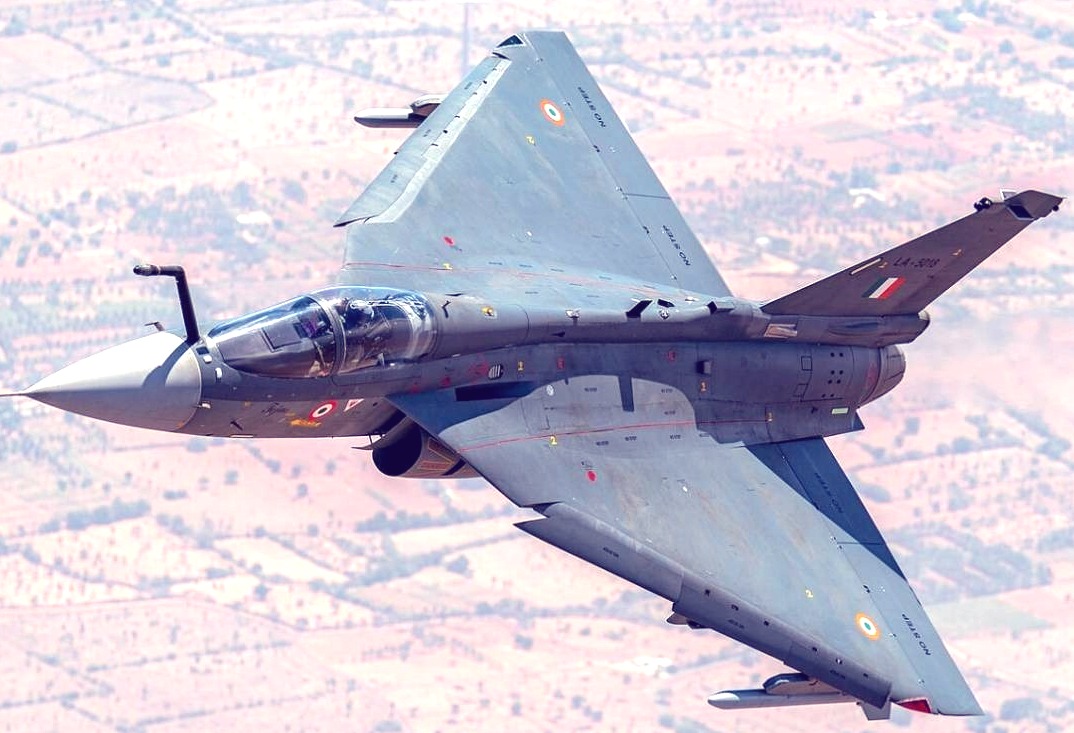
Through its “Make in India” defence strategy, India seeks to expand its military and industrial influence beyond its borders. This approach is not limited to meeting the internal needs of its armed forces but extends to encompass the concept of “Make Abroad” in partnership with strategic allies, with the aim of exporting and supplying third-party markets. India possesses a growing defence industrial base, and while most of its products remain subject to foreign manufacturing licenses, it has a very limited number of original products over which it holds all intellectual property rights, most notably the HTT-40 advanced training aircraft and the Tejas Mark 1A light fighter.
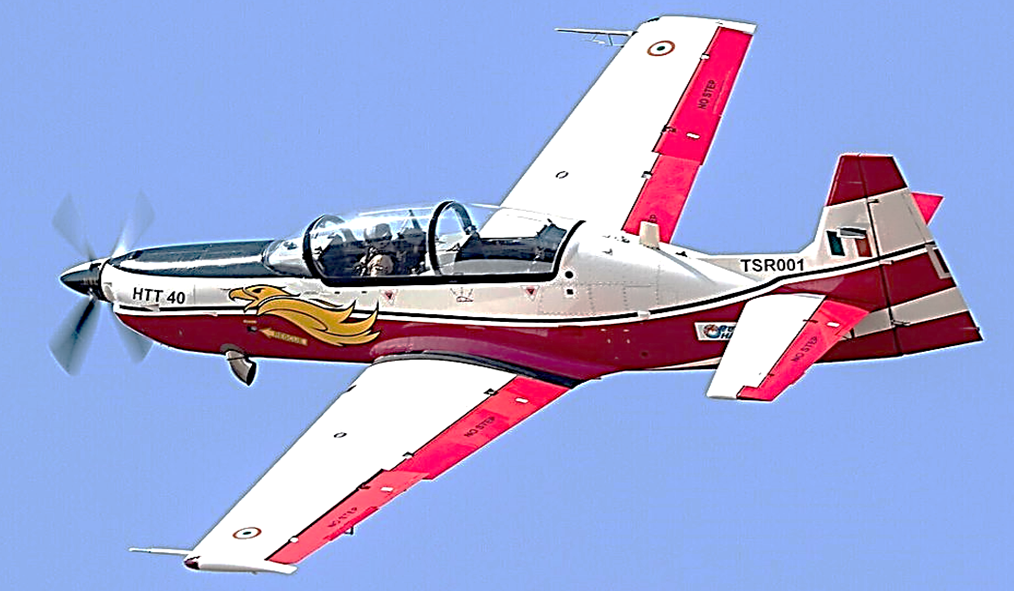
In this context, the HTT-40 appears to be the strongest and most realistic candidate for production to be transferred to Morocco. India holds full intellectual property rights to the airframe design and integrated systems through Hindustan Aeronautics Limited (HAL), granting it the freedom to transfer the airframe technology and establish assembly lines. Despite this autonomy in the basic design, the joint production process remains contingent upon external approvals for sensitive components, such as the turboprop engine from the American company Honeywell and the ejection seats from the British manufacturer Martin-Baker. This necessitates prior coordination with these companies to supply these parts to the future Moroccan production lines.
This aircraft is currently entering large-scale commercial production, as the Indian Ministry of Defence has signed a massive contract worth approximately $770 million for the firm purchase of 70 aircraft, with options to purchase additional aircraft that could raise the number to 108 for the Indian Air Force.
Although the design is entirely Indian, the only minor obstacle to the transfer of manufacturing lies in the foreign engine components (such as the Honeywell turboprop engine and the British Martin-Baker ejection seats), requiring direct approvals from these companies to supply these parts to future Moroccan production lines. What makes this aircraft attractive to Morocco is the possibility of modifying it for counterinsurgency and close air support missions after arming it with a payload of up to 500 kilograms of rockets and bombs; a model that meets the needs of several African countries and offers Morocco the opportunity to market it continentally.
Divergent Options: Between Mature Realism And Ambitious Risks –
Alongside the HTT-40 option, another project has emerged that represents the other side of the coin in this partnership: the memorandum of understanding signed by Morocco with the Indian company Genser Aerospace during the Paris Air Show (Le Bourget) in 2025, to develop and produce a multi-role business jet in Morocco. This company was founded in Bangalore in the late 1990s as an engineering and services company specialising in the aviation lifecycle, and is essentially closer to being an engineering and consulting firm than a full-fledged aircraft manufacturer.
Its flagship project, the Genser Jet, known as the Genjet GLJ3X1 “RAJAS”, is based on the design of a light business jet with seating for seven passengers and two pilots, a takeoff weight of five tons, and two turbofan engines. Although the conceptual design phases have been completed, the project is still in the pre-flight stage, as the company seeks approximately €267 million in funding to launch the first flying prototype. This makes the partnership more akin to co-financing, in which Morocco assumes some of the development risks, rather than a technology transfer of a finished aircraft.
This company has faced significant delays, failing to achieve its previously announced goal of reaching production in 2023. This classifies the project as a long-term, high-risk, experimental initiative, which is ambitious in nature but without guaranteeing immediate or tangible results. Consequently, the joint Indian-Moroccan ambition appears to be progressing along two parallel paths: a realistic and mature one, represented by the transfer of manufacturing capabilities for aircraft like the HTT-40, which have proven their worth and entered the current production phase; and an exploratory path fraught with risks, represented by cooperation with smaller companies like Genser to create an aircraft from scratch.
Positioning Strategy: Morocco As An Export And Industrial Integration Platform –
In conclusion, India is fully aware that its vision for Morocco should not be limited to simply being a consumer market for defence products. It must go further, becoming a strategic platform for final assembly, supplier integration, and the provision of maintenance and logistical support services; as well as a gateway to African markets, with the potential to export precision parts and components to the demanding European market.
Morocco possesses the infrastructure, trade agreements, and competitive costs that make it an ideal location for nearshoring operations, or production close to European markets, precisely what Indian defence industries are seeking to expand their global influence.
The convergence of these factors, from a mature civil and military aviation ecosystem to advanced maintenance centres, and including large-scale technological defence partnerships with countries like India, lays the groundwork for a new era that could transform Morocco into an industrial incubator, capable of absorbing, localising, and potentially exporting technology in the future, within a regional and international defence landscape where the rules of the game are changing at an accelerated pace.
Team Maverick.




Delivery Of Second Indigenous Diving Support Vessel – ‘Nipun’
‘Nipun’ the second Diving Support Vessel (DSV), built by Hindustan Shipyard Limited&n…
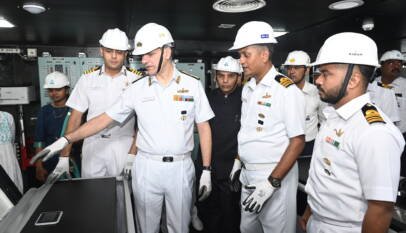
Delivery Of Second Indigenous Diving Support Vessel – ‘Nipun’
‘Nipun’ the second Diving Support Vessel (DSV), built by Hindustan Shipyard Limited was delivered to the …