Trump Administration Says Pressure Campaign Forced Iran Into Nuclear Talks

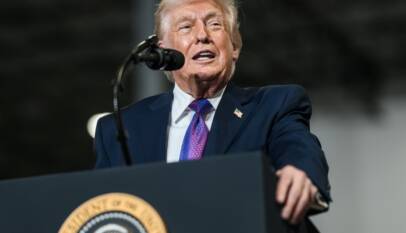
Washington, May 2026: The administration of Donald Trump has claimed that its strategy of military pressure and economic sanctions has successfully pushed Iran back to the negotiating table over its nuclear programme, with US Treasury Secretary Scott Bessent asserting that Tehran is now discussing issues it had long refused to address.
Speaking during a White House news conference, Bessent said recent developments represented a major shift in Iran’s approach and reflected the effectiveness of Washington’s hardline policy toward Tehran.
“President Trump has done something that no other administration is able to do,” Bessent told reporters while defending the administration’s handling of the Iran issue.
“We have gotten the Iranians to talk about their nuclear program and to perhaps commit to not having one. That has never happened before. It had been off the table,” he added.
The comments came amid continued speculation over ongoing contacts between Washington and Tehran. While the administration signalled optimism regarding the discussions, officials stopped short of confirming reports suggesting that a tentative understanding or interim agreement had already been reached.
Bessent repeatedly underlined that any future agreement would depend on Iran accepting key US conditions. According to him, Washington expects Tehran to surrender its highly enriched uranium, permanently abandon any attempt to develop nuclear weapons and ensure free navigation through the strategically vital Strait of Hormuz.
The Treasury Secretary argued that the combination of economic sanctions and military pressure had fundamentally changed Iran’s calculations and compelled its leadership to engage in negotiations.
“I think when you look at the results of the kinetic action, of our economic pressure, it has worked to bring them to the table and have a discussion on this,” Bessent said.
He made it clear that sanctions relief would only be considered if Iran agreed to concrete concessions. The administration, he said, would not offer any easing of pressure unless Tehran fulfilled Washington’s demands regarding uranium enrichment and regional security.
“Nothing is going to be on the table until we see the Strait of Hormuz open and the Iranians agree that they have to turn over the highly enriched uranium and that they can’t have a nuclear program,” he stated.
Bessent also portrayed the Iranian leadership as internally divided and weakened by the mounting pressure campaign. Describing the structure of Iran’s power system, he said the country’s leadership was split among the elected government, the Islamic Revolutionary Guard Corps (IRGC), and the clerical establishment.
“The Iranian government, such as it is, is three pillars. It is the elected government, it is the IRGC, and it is the clerics, and they are having trouble communicating,” he remarked.
While emphasising that President Trump preferred diplomacy and a negotiated settlement, Bessent warned that Washington’s patience was limited. He said the administration remained prepared to intensify pressure if diplomatic efforts failed to produce results.
“President Trump always prefers a peace deal,” he said. “We do not have unlimited patience.”
He further warned that if diplomacy collapsed and Trump concluded that no acceptable agreement was possible, military options could once again come to the forefront.
The administration’s remarks reflect its broader effort to present its Iran policy as a blend of pressure and diplomacy, arguing that sanctions and military action have strengthened America’s negotiating position rather than weakened it.
Team Maverick.




Delhi Court Acquits Brij Bhushan Sharan Singh, Vinod Tomar in Wrestlers’ Sexual Harassment Case
New Delhi, Aug 2026 : A Delhi court on Monday acquitted former Wrestling Federation of Ind…

Delhi Court Acquits Brij Bhushan Sharan Singh, Vinod Tomar in Wrestlers’ Sexual Harassment Case
New Delhi, Aug 2026 : A Delhi court on Monday acquitted former Wrestling Federation …