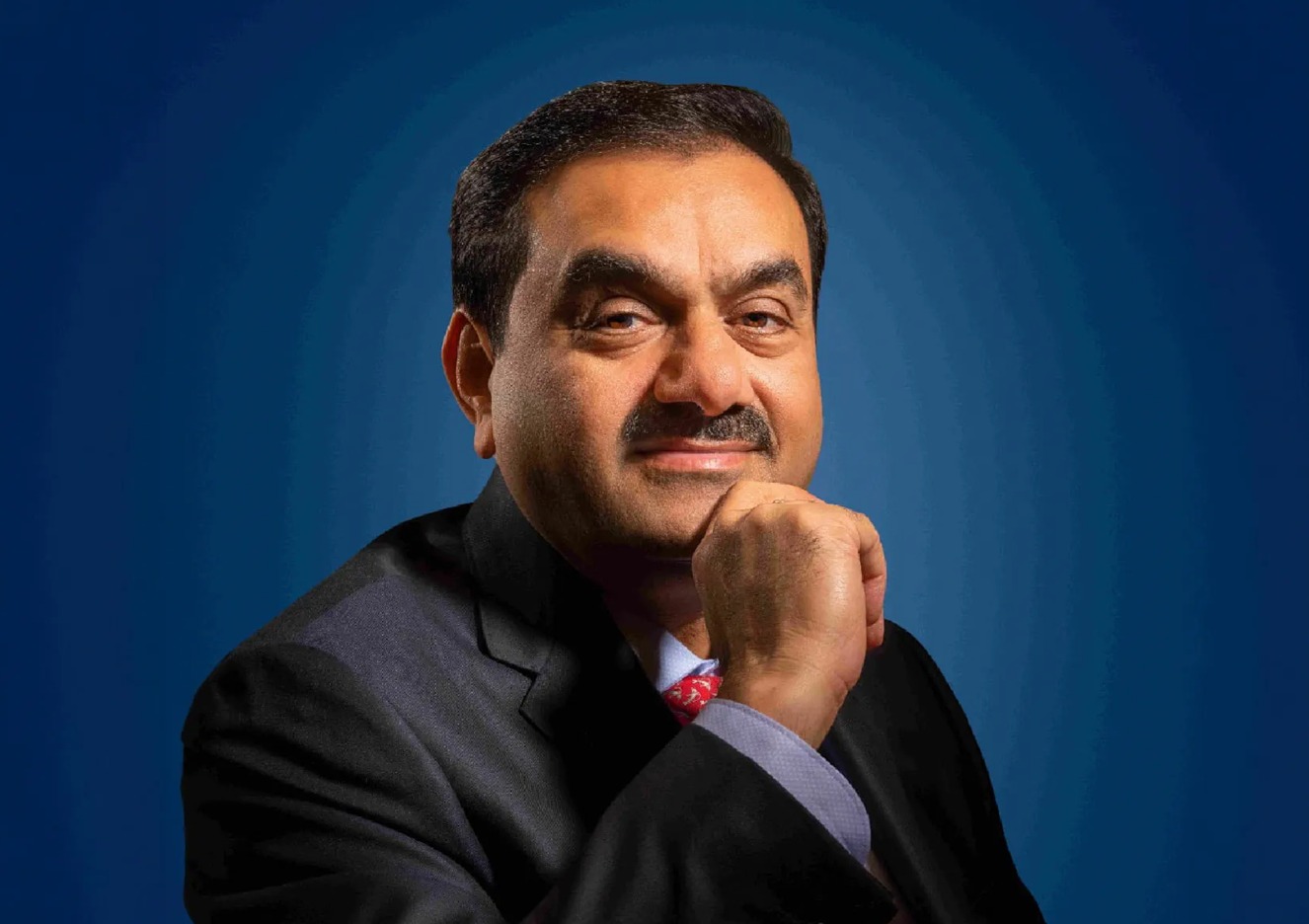
Infrastructure and Intelligence Must Grow Together for India to Lead the Next Decade: Gautam Adani

Ahmedabad, May 2026 : The traditional model of economic development has long followed a familiar path: build physical infrastructure first and allow technology to enhance its capabilities later. However, according to Adani Group Chairman Gautam Adani, that sequence is rapidly evolving. In today’s world, infrastructure and intelligence are no longer separate stages of growth but interconnected forces that must develop together to drive progress.
In his annual message for the financial year 2026, Gautam Adani outlined a vision in which the future of economic growth depends on the seamless integration of physical infrastructure, energy systems and digital technologies. He argued that before artificial intelligence can transform industries, reliable energy networks, connectivity systems and industrial infrastructure must first be in place. In this context, he described the Adani Group’s diverse portfolio not as a collection of individual businesses but as an integrated platform designed to bridge the physical and digital economies.
The Chairman emphasized that the next era of competitive advantage will belong to organizations capable of combining infrastructure, technology, energy and operational execution into a unified ecosystem. As artificial intelligence, automation and digital services reshape industries, the importance of foundational infrastructure is becoming increasingly evident.
Long before AI emerged as a dominant global conversation, the Adani Group had already begun investing heavily in the physical assets required to support a digitally driven future. These investments are now reflected in the Group’s financial year 2026 performance, which showcased one of the most ambitious capital expenditure programmes in corporate India.
During the year, the Group invested more than Rs 1.5 lakh crore across its businesses. Renewable energy capacity surpassed 19.3 gigawatts following the addition of 5.1 GW during the year, strengthening the company’s position in India’s clean energy transition. Meanwhile, the transmission business expanded significantly, with its order book reaching Rs 71,779 crore.
The Group’s logistics and transportation infrastructure also recorded notable milestones. Adani Ports handled more than 500 million tonnes of cargo, reinforcing its role in facilitating trade and economic activity. At the same time, work continued on the greenfield Navi Mumbai International Airport, one of India’s largest aviation infrastructure projects, which is expected to play a key role in enhancing connectivity and supporting economic growth.
The company’s data centre business also advanced steadily toward its long-term objective of creating a 2-gigawatt platform by 2030. These investments reflect a broader strategy that views ports, airports, logistics hubs, power generation facilities, transmission networks and digital infrastructure as interconnected elements of a single growth framework.
According to Gautam Adani, these developments are not isolated achievements but part of a carefully designed effort to build the backbone of India’s next phase of development. By creating interconnected infrastructure networks, the Group aims to generate efficiencies that can support industrial growth, technological innovation and economic resilience.
The significance of this strategy extends beyond corporate performance. Around the world, governments and businesses are grappling with rising energy demands, supply chain disruptions and the growing infrastructure requirements associated with artificial intelligence and digital transformation. In such an environment, Gautam Adani argues that technological leadership increasingly depends on infrastructure readiness.
Reliable power supplies, robust transportation systems, advanced logistics networks and strong digital connectivity have become critical enablers of economic competitiveness. The ability to build and scale these assets efficiently may determine which countries emerge as leaders in the next phase of global growth.
India, he believes, is particularly well positioned to benefit from this transformation. Unlike many developed economies that face the challenge of modernizing ageing infrastructure, India has the opportunity to build physical and digital systems simultaneously. Renewable energy projects, storage facilities, logistics corridors, airports, ports and data centres can be designed as integrated networks from the outset, creating a more efficient and future-ready economic foundation.
Throughout his message, Gautam Adani linked infrastructure development not only to economic growth but also to national resilience and strategic capability. He highlighted the importance of energy security, digital sovereignty, defence manufacturing and robust supply chains in an increasingly uncertain geopolitical environment.
The underlying message was clear: nations that control and strengthen the foundations of growth will be better equipped to navigate future challenges and seize emerging opportunities. Infrastructure, in this view, becomes more than a development tool—it becomes a strategic asset that supports national competitiveness and self-reliance.
Perhaps the most significant observation in the Chairman’s message was his assessment that the challenge today is no longer primarily about securing capital. Instead, the focus has shifted to execution—building projects quickly, efficiently and at scale to meet growing demand. In a world where capital is increasingly available, the ability to deploy it effectively has become the true differentiator.
Gautam Adani’s FY26 message ultimately reflects confidence in India’s long-term growth prospects. He believes that infrastructure provides the strength of a nation, while intelligence and technology provide its capability to innovate and lead. The real opportunity, however, lies in combining both at unprecedented speed and scale.
As India continues its development journey, the challenge is not simply to construct more assets but to create an integrated physical and digital foundation capable of supporting the ambitions of a nation seeking to shape the 21st century. In Gautam Adani’s view, India is uniquely positioned to achieve exactly that.
Team Maverick






Delhi Government Approves Up to 100% Remuneration Hike for Disaster Management Staff
New Delhi, Aug 2026 : The Delhi government has approved a major revision in the remunerati…

Delhi Government Approves Up to 100% Remuneration Hike for Disaster Management Staff
New Delhi, Aug 2026 : The Delhi government has approved a major revision in …