Rs 24,200 Crore Approved for Infrastructure, Healthcare Services and Public Welfare

Sub-Committee Constituted on Proposal for MP Mega Healthcare Infrastructure Incentive Policy (For Philanthropic Institutions)
Pilot Project Okayed for Operation of Community Health Centres in Rewa, Dewas and Guna through Outsourcing Model
Rs 19,472.29 Crore Approved for Revised Cost and Additional Financing of Indore Metro Rail Project
Rs 2,381.15 Crore Approved for Project Tiger and Elephant and Compensation for Village Rehabilitation
Rs 531.78 Crore Okayed for Educational Facilities for Tribal Students
Rs 639.25 Crore Approved to Promote Sericulture
Rs 492.45 Crore Allocated for Operation of Local Fund Audit and Maintenance of Departmental Assets
Decisions Taken at Cabinet Meeting Chaired by CM Dr. Yadav
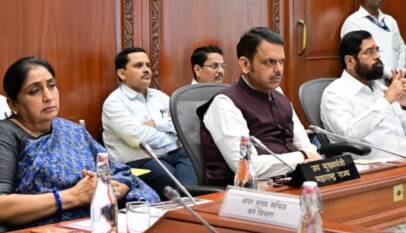
Bhopal, June 2026 : A Cabinet meeting chaired by Chief Minister Dr. Mohan Yadav was held at Mantralaya on Tuesday. The Cabinet approved proposals worth a total of Rs 24,200 crore to accelerate infrastructure development and public welfare in Madhya Pradesh.
A revised budget of Rs 19,472.29 crore, including additional financing for Indore Metro Rail Project, was approved. To expand world-class super-speciality healthcare facilities in state and encourage philanthropic investment, the Cabinet constituted a five-member Cabinet Sub-Committee to examine the proposal for implementation of “Mega Healthcare Infrastructure Incentive Policy 2026”. The committee will study all related aspects and submit its report. The Cabinet also approved a pilot project for operating Community Health Centres in Rewa, Dewas and Guna through an outsourcing model to strengthen rural healthcare services.
For wildlife conservation and rehabilitation, and compensation related to 94 villages located in sensitive areas, Rs 2,381.15 crore has been allocated under the period of the 16th Finance Commission from 2026 to 2031. Promoting social and economic inclusion, approval was granted for Rs 687 crore for educational and residential facilities for tribal students and Rs 639.25 crore for various sericulture schemes aimed at generating employment at the local level.
The Cabinet also approved Rs 531.78 crore for effective implementation of labour laws, industrial safety and smooth operation of labour welfare schemes, and Rs 492.45 crore for operation of Local Fund Audit to strengthen financial management and audit systems of local bodies. These decisions represent a major initiative towards ensuring inclusive, sustainable and comprehensive development of Madhya Pradesh over the next five years.
Rs 19,472.29 Crore Approved for Revised Cost and Additional Financing of Indore Metro Rail Project
The Cabinet approved a revised cost of Rs 12,889.38 crore for Indore Metro Rail Project by adding an additional cost of Rs 5,388.58 crore to the original project cost of Rs 7,500.80 crore. In addition, approval was granted for Rs 6,582.91 crore towards additional financing, including the impact of PPP component and internal borrowings as per approved industry norms. Thus, total approval amounting to Rs 19,472.29 crore has been granted.
The additional financing includes Rs 1,696.74 crore in additional equity from the Government of India and Government of Madhya Pradesh, Rs 214.64 crore in additional subordinate debt for central taxes, Rs 3,496.15 crore in additional PTA/internal loan against debt funding from financing agency banks, Rs 656.96 crore from the Government of Madhya Pradesh for state taxes, and Rs 518.42 crore as additional loan for IDC costs.
Rs 2,381.15 Crore Approved for Project Tiger and Elephant and Compensation for Village Rehabilitation
The Cabinet approved Rs 2,381.15 crore for operation of compensation-related schemes under Project Tiger and Elephant and village rehabilitation under the Forest Department for five years from April 1, 2026 to March 31, 2031, corresponding to the period of the 16th Finance Commission.
Of this, Rs 1,131.15 crore has been approved for Project Tiger and Elephant (Non-Recurring), Project Tiger and Elephant (Recurring), and Project Elephant. These schemes will implement management plans based on scientific principles of wildlife conservation, including habitat improvement, fire and forest protection, development of water sources, maintenance of forest roads, construction and maintenance of essential infrastructure, elephant management and protection activities, procurement of rescue materials, camp construction, purchase of medicines and food arrangements for elephants in Tiger Reserves, Kuno National Park and Gandhi Sagar Sanctuary.
Approval of Rs 1,250 crore has been granted for compensation related to village rehabilitation. The primary objective is to rehabilitate villages adversely affecting sensitive wildlife habitats and wildlife species in protected forest areas by relocating them outside protected forests. Compensation will be paid after lawful acquisition of immovable properties belonging to villagers. The scheme will be implemented in 94 villages under Sanjay Tiger Reserve, Satpura Tiger Reserve, Panna Tiger Reserve, Veerangana Durgavati Tiger Reserve, Ratapani Tiger Reserve, Orchha Sanctuary and Kuno National Park.
Rs 531.78 Crore Approved for Labour Welfare Schemes
The Cabinet approved Rs 531.78 crore for operation of various labour welfare schemes under the Labour Department for five years from April 1, 2026 to March 31, 2031.
The approved allocations include Rs 57.48 crore for operation of the Labour Commissioner’s Office, Rs 289.89 crore for staff engaged in implementation of labour laws, Rs 75.52 crore for industrial health and safety, Rs 1.20 crore for departmental assets, Rs 95 crore for establishment of the Labour Welfare Fund, Rs 0.60 crore for modernisation of the Hygiene Lab in Indore, Rs 4 crore for Child Labour Survey/Rehabilitation Scheme, Rs 4 crore for Bonded Labour Rehabilitation Scheme, Rs 1.25 crore for National Database of Unorganised Workers, Rs 0.05 crore for the Migrant Workers Commission, Rs 0.0005 crore for establishment of the Unorganised Urban/Rural Workers Board, and Rs 0.0005 crore for the Chief Minister Excellence Award. Moreover, under the capital head, approval was granted for Rs 1.09 crore for the Labour Commissioner, Rs 0.67 crore for staff implementing labour laws and Rs 0.22 crore for industrial health and safety.
Rs 492.45 Crore Approved for Local Fund Audit Operations and Maintenance of Departmental Assets
The Cabinet approved Rs 492.45 crore for continued operation of the Directorate of Local Fund Audit and maintenance of departmental assets under the Finance Department during the period of the 16th Finance Commission from April 1, 2026 to March 31, 2031. The approval includes Rs 491.75 crore for Local Fund Audit and Rs 0.70 crore for maintenance of departmental assets. The Directorate conducts audits of accounts of various local bodies in the state and also resolves pay fixation and pension-related cases of employees working under these institutions.
Sub-Committee Constituted on Proposal for MP Mega Healthcare Infrastructure Incentive Policy (For Philanthropic Institutions)
To ensure availability of quality tertiary healthcare services and encourage philanthropic investment in the state, the Cabinet constituted a five-member Cabinet Sub-Committee to examine implementation of the Madhya Pradesh Mega Healthcare Infrastructure Incentive Policy-2026 (For Philanthropic Institutions). The committee will study issues relating to establishment of world-class tertiary and super-speciality hospitals, expansion of medical education, production of specialist and MBBS doctors, assurance of quality treatment for poor patients, reduction in migration of patients to other states, improvement in health indicators such as MMR and IMR, and provision of advanced super-speciality healthcare facilities.
Pilot Project Approved for Outsourced Operation of Community Health Centres in Rewa, Dewas and Guna
The Cabinet approved a pilot project for operation of Community Health Centres in Rewa, Dewas and Guna through an outsourcing system. Approval has been granted to operate identified Community Health Centres in these three districts, where most doctor posts are vacant, through an outsourced model. Under this arrangement, responsibility for preparation of tenders and final award for operation of the concerned institutions will be vested with the Department of Public Health and Medical Education, while the tender process will be carried out through MPPHSCL.
This decision is expected to improve healthcare services at these centres and reduce the need for people to visit district hospitals for minor ailments. The scheme will be evaluated over five years and, if successful, may be expanded to other Community Health Centres in the state.
Rs 687 Crore Approved for Educational Facilities for Tribal Students
The Cabinet approved Rs 687 crore for continued operation of the Tribal Affairs Department’s grant scheme for voluntary institutions engaged in educational and welfare activities during the period from April 1, 2026 to March 31, 2031.
Under the scheme, grants are provided for salaries, allowances and operational expenses of educational institutions, hostels, Ashram schools, Balwadis and health centres run by 32 aided non-government institutions operating in 22 districts of the state. Beneficiary students are selected through mapping of educational requirements by the aided institutions. The scheme is primarily intended for tribal communities. Benefits are extended to persons with disabilities as per prescribed norms. Residential and educational facilities are provided while ensuring appropriate gender equality.
Rs 639.25 Crore Approved to Promote Sericulture
The Cabinet approved an estimated financial outlay of Rs 639.25 crore for continuation of eight programmes and schemes operated by the Directorate of Sericulture from FY 2026-27 to FY 2030-31. The approved amount will be used for implementation of the Sericulture Prosperity Scheme, development of the sericulture industry, implementation of industry-related schemes, Tasar silk development and expansion programmes, promotion of cottage and village industry products, brand building and marketing infrastructure, integrated cluster development programmes, maintenance of departmental assets, and irrigation and other construction works at sericulture centres. The objective of these schemes is to increase the income of cocoon producers, silk reelers, weavers and entrepreneurs, while promoting environmental conservation, sustainable local employment and livelihood opportunities.

More Than a Café: How MITTI Café is Brewing Hope, Dignity and Dreams at Rashtrapati Nilayam
Hyderabad, July 2026 : Tucked away inside the serene campus of Rashtrapati Nilayam in Boll…
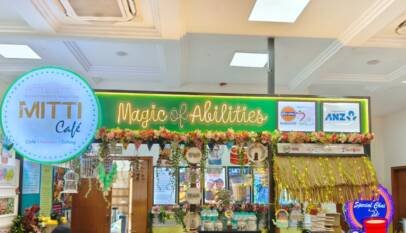
More Than a Café: How MITTI Café is Brewing Hope, Dignity and Dreams at Rashtrapati Nilayam
Hyderabad, July 2026 : Tucked away inside the serene campus of Rashtrapati Nilayam in …