BJP Retains Zilla Parishad Supremacy, MahaYuti Consolidates Grip on Rural Maharashtra

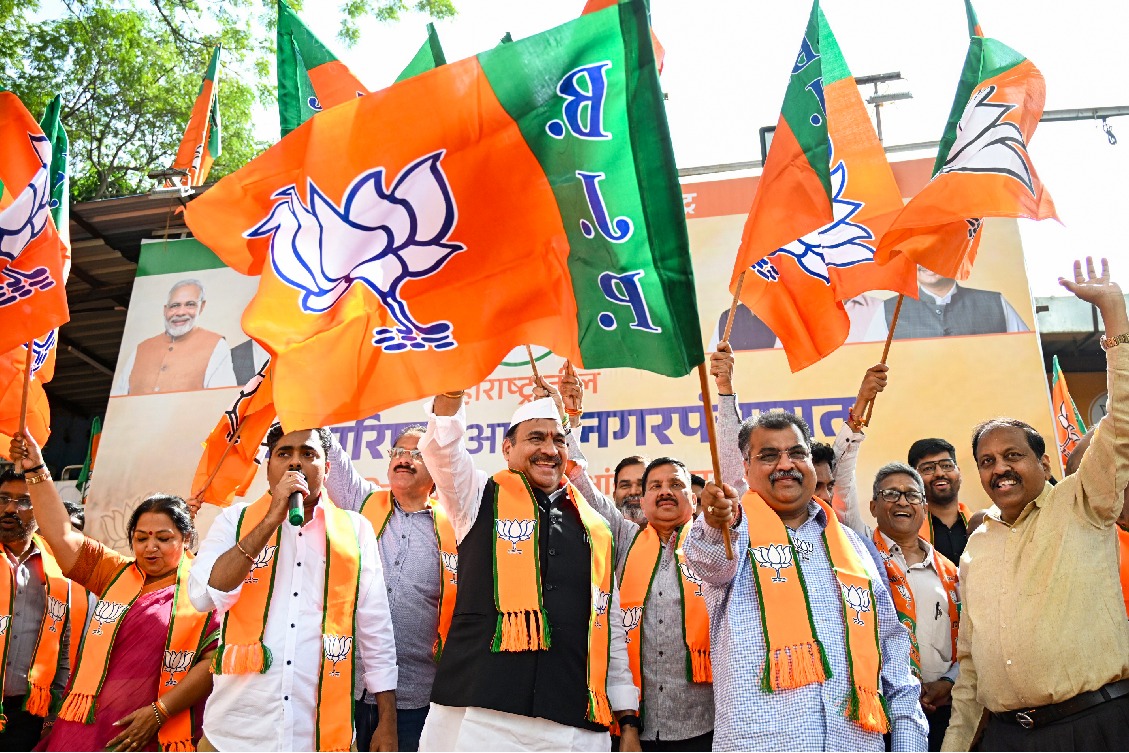
Mumbai, Feb 2026 : Extending its winning streak beyond the Legislative Assembly, Municipal Corporations and Municipal Councils, the Bharatiya Janata Party (BJP) has once again demonstrated its organisational strength by retaining dominance in the Zilla Parishad and Panchayat Samiti elections across Maharashtra. The results underline the continued consolidation of the MahaYuti alliance in the state’s rural power centres, even as shifting equations among allies and rivals point to a complex phase of coalition politics ahead.
Of the 12 Zilla Parishads where results were declared on Monday—under elections conducted with reservations capped at 50 per cent—the BJP either secured a clear majority or emerged as the single largest party in six districts. This performance firmly placed the party at the top of the political ladder at the district level, reaffirming its status as the principal force in Maharashtra’s local governance landscape.
Close on the BJP’s heels was the Ajit Pawar-led Nationalist Congress Party (NCP), which clinched the second position overall, overtaking the Eknath Shinde-led Shiv Sena. The Shinde faction, which had earlier maintained a strong second-place showing in several urban and semi-urban local body polls, slipped to third in these rural elections. Together, the BJP, NCP (Ajit Pawar), and Shiv Sena (Shinde) ensured that the MahaYuti alliance maintained a commanding presence across Zilla Parishads and Panchayat Samitis.
In numerical terms, the BJP emerged as the single largest party, winning 225 of the 731 Zilla Parishad seats and 459 of the 1,462 Panchayat Samiti seats. The party secured outright majorities in Sindhudurg and Solapur, while it topped the charts as the largest party in Satara, Chhatrapati Sambhaji Nagar, Parbhani, and Dharashiv. These results highlight the BJP’s growing penetration into rural Maharashtra, including regions that were once considered difficult terrain for the party.
The Ajit Pawar-led NCP registered a notable performance, winning 165 Zilla Parishad seats and 306 Panchayat Samiti seats. A wave of sympathy following the sudden passing of Ajit Pawar significantly boosted the party’s prospects, particularly in Western Maharashtra. The most striking result came from Pune, where the NCP (Ajit Pawar) won 51 out of 73 Zilla Parishad seats in a landslide, and from Kolhapur, where it emerged as the largest party.
The Shinde-led Shiv Sena followed closely, securing 162 Zilla Parishad seats and 302 Panchayat Samiti seats. In the Konkan region, the faction proved its resilience by winning Ratnagiri, delivering a setback to senior BJP leader Narayan Rane’s traditional influence. It also emerged as the single largest party in Raigad, reinforcing its coastal stronghold.
One of the BJP’s most significant takeaways from the elections was its improved performance in Western Maharashtra—a region historically dominated by cooperative politics and rival parties. Observers noted that the BJP has now succeeded in establishing deeper roots in rural areas and cooperative sector strongholds, signalling a long-term strategic shift.
The opposition Congress, though facing an overall decline, managed to hold ground in select pockets. It emerged as the largest party in Latur with 23 seats, aided by the influence of local leader Amit Deshmukh. Similarly, the Sharad Pawar-led NCP topped the charts in Sangli, largely due to the strong local network of Jayant Patil. However, both parties face an uphill task in translating numbers into power, given the arithmetic of alliances.
Despite being the largest party in several districts, no single party enjoys unchallenged control in most Zilla Parishads. Coalition politics will be unavoidable in places such as Raigad, Latur, Sangli, and Satara. In Raigad, for instance, although the Shinde-led Shiv Sena is the largest party, Sunil Tatkare of the NCP (Ajit Pawar)—which has a pre-poll understanding with the BJP—is poised to assume power. In Latur, Congress may find itself sidelined if the BJP and NCP (Ajit Pawar) combine forces.
Political analysts caution that these fluid equations open the door to intense negotiations, shifting loyalties, and even the possibility of “horse-trading” as parties vie for control of district bodies.
Among other notable developments, the Peasants and Workers Party (PWP) suffered a major setback by failing to win a single seat in Raigad, once considered its stronghold—an outcome seen as a significant blow to leader Jayant Patil. Meanwhile, independent and smaller parties together accounted for 41 Zilla Parishad seats and 86 Panchayat Samiti seats, underlining the fragmented nature of local politics.
Overall, the results reaffirm the BJP-led MahaYuti’s dominance in Maharashtra’s grassroots institutions, while also highlighting the growing importance of post-poll alliances in shaping district-level governance.
| Party / Group | Zilla Parishad Seats (731) | Panchayat Samiti Seats (1,462) |
|---|---|---|
| BJP | 225 | 459 |
| NCP (Ajit Pawar) | 165 | 306 |
| Shiv Sena (Shinde) | 162 | 302 |
| Congress | 55 | 97 |
| Shiv Sena (UBT) | 43 | 89 |
| NCP (Sharad Pawar) | 26 | 46 |
| MNS | 2 | — |
| Independents / Others | 41 | 86 |
Team Maverick.



Hockey Junior Men’s Nationals: Rajasthan, Telangana, Puducherry Shine in Coimbatore
Coimbatore, July 2026 : Hockey Rajasthan, Telangana Hockey and Le Puducherry Hockey regist…
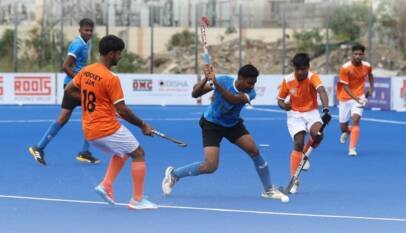
Hockey Junior Men’s Nationals: Rajasthan, Telangana, Puducherry Shine in Coimbatore
Coimbatore, July 2026 : Hockey Rajasthan, Telangana Hockey and Le Puducherry Hockey registered impressive …