The US Supreme Court Judgement; The Game Is With Donald Trump.

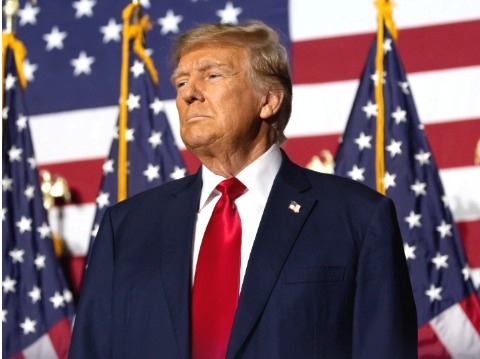
Washington DC; February 2026: The most learned US Supreme Court on Friday, 20th February 2026, has ruled that the tariffs imposed by President Donald Trump is unconstitutional. What is most important, is understanding the following facts:
Has the Supreme Court put a stay on the tariffs?
The answer is “NO”.
Has the Supreme Court asked the US Federal Government to return the already collected tariffs?
The answer is “NO”.
Has the Supreme Court directed to impose a ban on further tariffs?
The answer is again “NO”; but on the contrary has advocated the rights of the US President to impose Section 122.
The almighty US President has immediately imposed a Global Tariff of 10% on Friday late evening, followed by an additional 05% on Saturday late evening lifting the figure to 15%, citing Section 122 of the Trade Act of 1974 for a period of 150 days (considered to be an ample time within which he would enforce his narratives legalised).
What does it imply? India will now have to pay (50% + 15%) which is 65% as tariffs (status quo as of now).
The most learned US Supreme Court could more easily have issued some guidelines cabining the authority and then sent them back to lower courts to work out. The decision that IEEPA allows no tariffs under any circumstances, by contrast, creates the rather bizarre situation, as President Trump noted in his press conference, where he could restrict trade, license trade, embargo trade, mandate quotas on trade, but never collect any tax or fee on it. That’s a somewhat ironic position for the Chief Justice to adopt, after he saved President Obama’s signature health care policy by rather creatively construing a tax where only a mandate existed.
But as trade experts across the political spectrum have been noting since the start of the case, and as President Trump emphasised this afternoon, the decision does not have much substantive effect on the administration’s trade agenda. One could even interpret the opinion from Chief Justice Roberts, who knew all this too, as emulating the style of John Marshall in Marbury vs. Madison: taking the opportunity to lay down principles that will constrain executive authority for all time (in this case, via the Major Questions Doctrine) at a moment when the executive would not be all that bothered.
And indeed, Trump seemed unperturbed and in downright good humor in his reaction. To understand why, and what’s likely to happen now, let’s return to the framework we’ve been using since Liberation Day, which breaks the tariffs into three categories: the Global Tariff, the Reciprocal Tariffs, and China.
1. The Global Tariff: The baseline 10% tariff is an important policy for rebalancing global trade and also raises substantial revenue, but was always difficult to fit within IEEPA’s parameters. Ideally, it would be legislated; indeed, legislation has already been introduced. In the interim, the president announced he will use Section 122 of the Trade Act of 1974, which allows him to address the trade deficit by imposing a baseline tariff of up to 15% on all countries. So little will change in the short run, though that authority will expire after 150 days unless Congress votes to extend it, finally setting up an unavoidable moment of action at that end of Pennsylvania Avenue.
2. Reciprocal Tariffs: These are the targeted, country-by-country tariffs that the president has used for negotiating leverage to reach bilateral agreements with a wide range of allies. The minimal process required by IEEPA before regulating trade (which, per the Supreme Court, cannot include imposing tariffs) made it an especially potent tool for negotiations, but the president can impose comparable, or in specific cases higher tariffs through Section 301 of the 1974 Act and Section 232 of the Trade Expansion Act of 1962. Those require a more thorough process, but imposition is an entirely credible threat, and countries that have already entered negotiations or reached deals will likely recognize that they would be unwise to back out now.
The ongoing renegotiation of the USMCA with Mexico and Canada is an especially important subset of the many negotiations. Successfully concluding an agreement with those countries (whether among all three, or as two bilateral deals) that provides a framework for ensuring fair and balanced trade on our continent will provide a crucial cornerstone for trade among the US’s broader set of allies. Here, again, renegotiation is underway and the president retains ample leverage through these other trade laws, and other facets of the North American relationship, to reach satisfactory terms.
3. China: On one hand, China is the easiest situation. The president imposed wide-ranging tariffs on China under well-established authorities in his first term, President Biden mostly maintained them, and now they have been expanded further. IEEPA tariffs were adding to the total, but no one really questions that Trump can use other authorities to go as high as he might want with tariffs on China, given its status both as an obvious adversary and national security threat, and as an obvious bad actor in the trading system.
On the other hand, China is where the president’s strategy has been most unclear. Since his meeting with President Xi in October, Trump has mostly tried to dial back pressure and avoid confrontation, and with the next summit now slated for the week of March 30, no one is quite sure whether he is looking to strengthen his leverage or signal a commitment to détente. If he uses the loss of IEEPA tariffs as an excuse to let the rate on China drift lower, that would be a concerning sign for the summit and it would undermine the ongoing effort to push supply chains out of China, which depends on keeping tariffs there meaningfully higher than they are on other countries.
Here is the most obvious opportunity for Congress to act, by revoking China’s permanent normal trade relations (PNTR) status. Revoking PNTR is a bipartisan recommendation of both the US-China Economic and Security Review Commission and the House Select Committee on the Chinese Communist Party. Secretary of State Marco Rubio, while in the Senate, cosponsored legislation that would accomplish the task, and it has a bipartisan companion in the House. Congress could reassert its role in trade policy and settle the question of the US-China relationship’s future direction, along exactly the lines where there is broadest consensus.
The ruling’s most obvious complication for the president’s agenda may come on the issue of transshipment. The US can put up its own barriers to Chinese goods, but if it wants to maintain free trade with Mexico, or even Malaysia, and those countries put up no such barriers, the goods will soon make their way into the American market anyway. The President had used the IEEPA tariffs as leverage to extract commitments on blocking transshipment, and the threat of re-instituting such tariffs offered an especially potent enforcement mechanism if the commitments were not fulfilled. This is another issue on which both parties in Congress and even the most strident free traders can agree, and could provide the basis for new legislation as well.
Whatever the Court thought it was doing, Trump is correct that in many respects it “made the president’s ability to regulate trade and impose tariffs more powerful and more crystal clear, rather than less”. He had made a strategic choice to move quickly with the authority that was most flexible, even if not the one on firmest legal ground. The year since has given his team time to make enormous progress on negotiations and to initiate processes that will provide a more stable foundation for continued efforts.
Suvro Sanyal – Team Maverick.



From National Leadership to Global Excellence: Punjab Government Launches Mission Samarth 2026–27 with Attendance Reforms
Chandigarh, April 2026 : To take Punjab’s education revolution to the next phase, Educatio…
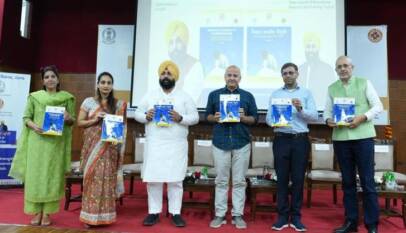
From National Leadership to Global Excellence: Punjab Government Launches Mission Samarth 2026–27 with Attendance Reforms
Chandigarh, April 2026 : To take Punjab’s education revolution to the next phase, Education …