8-Year-Old Lakshveer Builds AI Agent That Controls Hardware Through Telegram Commands

Young tech enthusiast develops AI agent ‘PBLClaw’ that generates and executes code on hardware devices through Telegram commands
Hyderabad, March 2026 : In a remarkable example of young innovation in the rapidly evolving world of artificial intelligence, eight-year-old Lakshveer has captured the attention of the tech community by creating an autonomous AI agent capable of controlling hardware devices through simple messaging commands. The project, called PBLClaw, demonstrates how natural language instructions sent through Telegram can be translated into working code that runs directly on electronic devices such as the ESP32 microcontroller.
Lakshveer’s creation comes at a time when AI development is accelerating globally, yet his achievement stands out because of his age and the complexity of the system he has built. The project was shared online by his father, Captain Venkat, on the social media platform X (formerly Twitter), where it quickly gained admiration from developers, educators and technology enthusiasts.
The AI agent, PBLClaw, which stands for “Projects by Laksh,” is designed to simplify the process of programming embedded hardware. Instead of manually writing code, compiling it and uploading it to a device, users can simply send instructions in plain language through Telegram. The AI agent then generates the required code, uploads it to the device and executes it automatically.
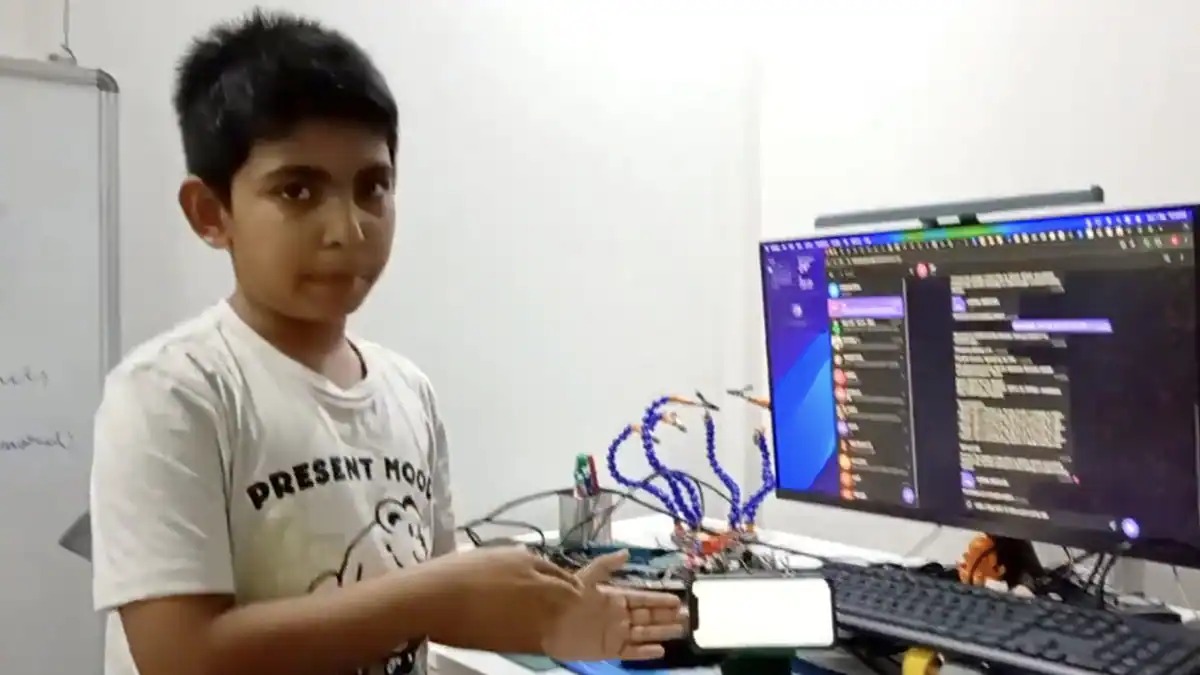
Captain Venkat showcased the technology through a video demonstration that highlighted what he described as “Level 1” of the project’s development. In his post, he explained the concept behind the system: “You describe what you want. It builds. It flashes. It runs. Any device. On the fly.” The demonstration showed how the AI interprets instructions and performs the full cycle of development — coding, uploading and running the program on hardware.
In the video, Lakshveer confidently explains how the system works while sitting at his workstation. His setup includes a computer monitor displaying code and Telegram conversations, along with an ESP32 development board, wires and various electronic components. The system draws inspiration from projects such as OpenClaw and Zclaw, which were referenced by Captain Venkat as part of the learning journey behind the project.
According to his father, PBLClaw represents just the third day of Lakshveer’s hands-on experimentation with this particular concept. Despite the short development time, the working prototype has already demonstrated impressive capabilities, highlighting the child’s curiosity and dedication toward learning advanced technology.
The online tech community responded enthusiastically after the demonstration was shared. Developers and startup founders praised Lakshveer’s creativity and technical understanding at such a young age. One AI startup, Embedr, commented that when they were eight years old they were still trying to figure out basic electronics problems, while Lakshveer was already building autonomous firmware agents capable of controlling hardware systems.
Captain Venkat responded modestly to the praise, saying that his son was simply following the path of builders who share knowledge and help others learn. Many commenters also highlighted the importance of mentorship and supportive learning environments in nurturing young talent.
Some users referenced educational ideas that emphasize practice-based learning. One commenter cited the book Bring Up Genius! by László Polgár, which argues that exceptional talent is often the result of dedicated learning environments rather than natural ability alone. Others praised Captain Venkat’s role as a mentor, noting the effort required to guide and support such projects.
Lakshveer’s latest innovation is not an isolated achievement. The young developer already has a growing list of technology experiments to his name. According to his father, he has completed nearly 200 different technology projects, ranging from ESP32 camera systems to sensor-based tools and small electronics experiments.
His interests also extend into wearable technology and robotics, areas where he has experimented with various ideas and prototypes. These projects reflect his enthusiasm for building and exploring how technology works in practical situations.
Together with his father, Lakshveer has also launched several initiatives designed to encourage other children to learn about electronics and technology. These include Projects by Laksh, Circuit Heroes, and Chhota Creator—platforms aimed at making technical learning more accessible and enjoyable for young minds.
The Chhota Creator platform is particularly unique, offering children a safe environment where they can create and share their own educational or creative content. Under parental supervision, young users can produce and sell items such as video tutorials, e-books, quizzes, games, robotics lessons, science experiments and creative projects.
Another initiative, Circuit Heroes, is a card-trading game created by Lakshveer to teach the fundamentals of circuits, sensors and electronics in a playful way. By turning technical concepts into a game, the project aims to make engineering ideas easier for children to understand.
Lakshveer has also gained exposure to emerging technologies by interacting with electric vehicle startups, drone manufacturers and robotics companies. These experiences have helped him explore new ideas while expanding his understanding of real-world technology development.
His work highlights how curiosity, mentorship and hands-on experimentation can nurture innovation at an early age. While most children his age are only beginning to explore computers, Lakshveer is already demonstrating how artificial intelligence can simplify hardware development.
If his early achievements are any indication, the young innovator’s journey in technology may just be getting started.
Team Maverick


North Bastar Kanker: Savita Sahu Becomes a ‘Lakhpati Didi’ Through the Bihan Scheme
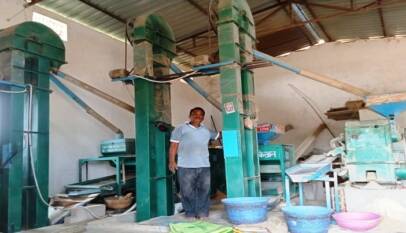
Entrepreneur Achieves Financial Independence Through Rice Milling and Mushroom Cultivation…
North Bastar Kanker: Savita Sahu Becomes a ‘Lakhpati Didi’ Through the Bihan Scheme
Entrepreneur Achieves Financial Independence Through Rice Milling and Mushroom Cultivation North Bastar Kanker, July …