While Condemning Iran’s Attack On Bahrain, GCC Secretary General Reiterated The Formidable Unity In Mitigating Such Attacks.

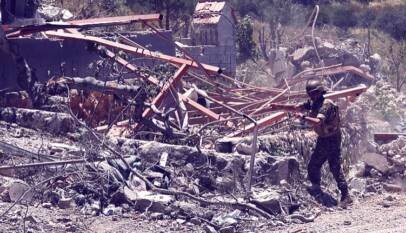
Riyadh; March 2026: Cooperation Council for the Arab States of the Gulf, condemned in the strongest terms the treacherous Iranian aggression that targeted buildings in the sisterly Kingdom of Bahrain that housed elements of the Qatari Emiri Naval Forces participating in the Unified Maritime Operations Center of the Unified Military Command of the Cooperation Council for the Arab States of the Gulf.
His Excellency stressed that targeting facilities housing elements of the naval forces of the Gulf Cooperation Council (GCC) countries participating in the Unified Maritime Operations Centre is a reprehensible hostile act that contravenes all international laws and norms, and reveals once again the escalatory approach that Iran is pursuing towards the GCC countries.
His Excellency the Secretary General have stressed that the GCC countries stand united in the face of any threat targeting their security or the safety of their forces and vital facilities, affirming the GCC’s full solidarity with the Kingdom of Bahrain and the State of Qatar, and its support for all measures they take to protect their security and sovereignty. His Excellency reiterated that the security of the GCC countries is indivisible and that any attack on one of its countries or its joint forces is an attack on all of them.
Earlier, in the year 1981 – stemming from a firm conviction in the unity of purpose and destiny, as well as the realities of shared geography and history, and at the behest of the GCC Ministerial Council, the first meeting of the Chiefs of Staff of the Armed Forces of the GCC states was held in Riyadh. Several recommendations were issued to build and strengthen military cooperation among the armed forces of the GCC states. These decisions were based on specific methodological foundations and scientific principles, taking into account available capabilities, defence requirements, the sources and magnitude of threats, the diverse forms and types of risks, and all challenges that the GCC states might face.
The Joint Defence Agreement of the Cooperation Council – Recognising the special relations and similar characteristics that bind the GCC countries together, based on the Islamic faith, and based on the defence policy of the Cooperation Council, which is based on the principle of integrated collective security, the signing of the Joint Defence Agreement by Their Majesties and Highnesses, the leaders of the GCC countries, at the twenty-first session of the Supreme Council (Manama, December 2000), signaled the beginning of a new phase of joint military action, by moving from the stage of military cooperation that lasted for two decades to the stage of joint defence among the GCC countries. Thus, joint military action achieved many collective and qualitative gains and achievements, as the agreement included and defined many of the pillars, principles, foundations, and priorities of joint defence.
The member states of the agreement affirmed their commitment to the Charter of the Cooperation Council and their respect for the Charters of the League of Arab States and the United Nations. They also affirmed their determination to defend themselves collectively, based on the principle that any attack on any one of them is an attack on all, and that any threat to one of them is a threat to all.
The agreement stipulated the member states’ intention to strengthen joint military action among themselves, enhance their collective capabilities to achieve the highest level of coordination for the concept of joint defence, continue developing the Peninsula Shield Force, follow up on the implementation of joint exercises, and prioritize the establishment and development of a military industry base, encouraging private sector investment in this field.
The Defence Strategy of the Cooperation Council States – The approval by Their Majesties and Highnesses, the leaders of the Gulf Cooperation Council (GCC) states, at the 30th session of the Supreme Council (Kuwait, December 2009), of the GCC Defence Strategy constituted a significant achievement and a fundamental step towards building a joint GCC defence system. The strategy outlined a clear vision through which the GCC states will coordinate and enhance their integration and cohesion, develop their capabilities to defend their sovereignty, stability, and interests, deter aggression, and cooperate to confront challenges, crises, and disasters through self-reliance and joint action, ultimately achieving the desired defence integration. The strategy also affirmed its underlying principles and constants, defined its strategic defence objectives and the means to achieve them, and emphasized the importance of conducting a comprehensive strategic assessment of the security environment, strategic threats, challenges, and risks on a regular basis.
The Peninsula Shield Force – The existence of a joint military force for the GCC states is a crucial foundation for establishing a joint defence system aimed at providing security to protect the GCC countries, defend their independence, and safeguard their resources and achievements. In 1982, the first significant step towards forming a joint military force for the GCC states was taken with the issuance of a decree establishing the Peninsula Shield Force. This was followed by numerous decisions to develop the force to align with changes in the security environment and the sources and types of challenges, risks, and threats that the GCC states might face. Initially, it was the size of a mechanized infantry division with full combat and administrative support.
Subsequently, in 2006, it was further developed into the Joint Peninsula Shield Force, reinforced with naval and air capabilities according to operational concepts, to enhance its combat effectiveness and ensure the complete execution of reinforcement and support missions for the national armed forces of the GCC states. In 2009, the Joint Peninsula Shield Force was further strengthened with a rapid intervention force.
At the 34th session of the Supreme Council (Kuwait, December 2013), the Joint Peninsula Shield Force Command was developed into the Unified Land Command under the Unified Military Command of the Cooperation Council, and renamed the “Peninsula Shield Force Command”.
The Unified Military Command of the GCC States – Given the importance of a unified military command for the GCC states, responsible for planning and managing joint military operations, supporting and enhancing the defence capabilities of the GCC states to defend their lands, airspace, and territorial waters, and to confront potential threats to the GCC states and their interests, within the framework of the Joint Defence Agreement, the Supreme Council, at its 34th session (Kuwait, December 2013), decided to establish the Unified Military Command of the GCC states, based on the detailed study submitted by the Joint Defence Council. The decisions of the Joint Defence Council related to the establishment and activation of this command were ratified.
The Unified Maritime Operations Center – In pursuit of the GCC’s primary objectives of coordination, integration, and interdependence among its member states in all fields, including cooperation and coordination in maritime security and defence to enhance and develop their military and defence capabilities and safeguard their security, stability, and sovereignty, the Supreme Council, at its thirty-fifth session (Doha, December 2014), endorsed the decision of Their Highnesses and Excellencies the Ministers of Defence of the GCC states at their thirteenth session, held on November 11 and 12, 2014, to establish the Unified Maritime Operations Center, headquartered in the Kingdom of Bahrain.
The Center was inaugurated on February 4, 2016, under the patronage of His Majesty King Hamad bin Isa Al Khalifa, King of the Kingdom of Bahrain, and with the participation of Their Excellencies and Highnesses the Chiefs of Staff of the Armed Forces of the GCC states.
Defence Integration – Harnessing comprehensive capabilities and working to coordinate, develop, and integrate them as collective capabilities to confront various current and future challenges, risks, and threats is one of the most important strategic goals that the GCC has prioritized since its inception.
The armed forces of the GCC states have taken tangible steps towards achieving military integration and its requirements. This was accomplished through the signing of the Joint Defence Agreement of the Cooperation Council for the Arab States of the Gulf at the 21st session of the Supreme Council (Manama, December 2000), the development of the GCC Defence Strategy, the establishment of a timetable for completing and activating joint military operations, the laying of its foundations, rules, building blocks, and main components, the setting of priorities, the unification of concepts, and the mutual utilization of available capabilities and resources.
At the 34th session of the Supreme Council of the Cooperation Council (Kuwait, December 2013), the signs and indicators of the beginning of the defence integration phase became clearly evident with the establishment of the Unified Military Command for the GCC states, the establishment of the Gulf Academy for Strategic and Security Studies in Abu Dhabi, and the approval by the Joint Defence Council at its 12th session (Kingdom of Bahrain, December 2013) of the axes of defence integration for the GCC states. Undoubtedly, these decisions have brought significant gains to joint military action, supported and strengthened the achievements made over three decades, and also brought about important progress towards building an integrated defence system among the GCC states.
Team Maverick.




Bengal to Receive Over ₹1,700 Crore for Rural Roads and Employment Schemes, Says Suvendu Adhikari
New Delhi, June 2026 : Senior West Bengal BJP leader Suvendu Adhikari on Monday announced …

Bengal to Receive Over ₹1,700 Crore for Rural Roads and Employment Schemes, Says Suvendu Adhikari
New Delhi, June 2026 : Senior West Bengal BJP leader Suvendu Adhikari on Monday …