Bangladesh’s New Parliament Faces Constitutional Uncertainty Ahead of First Session

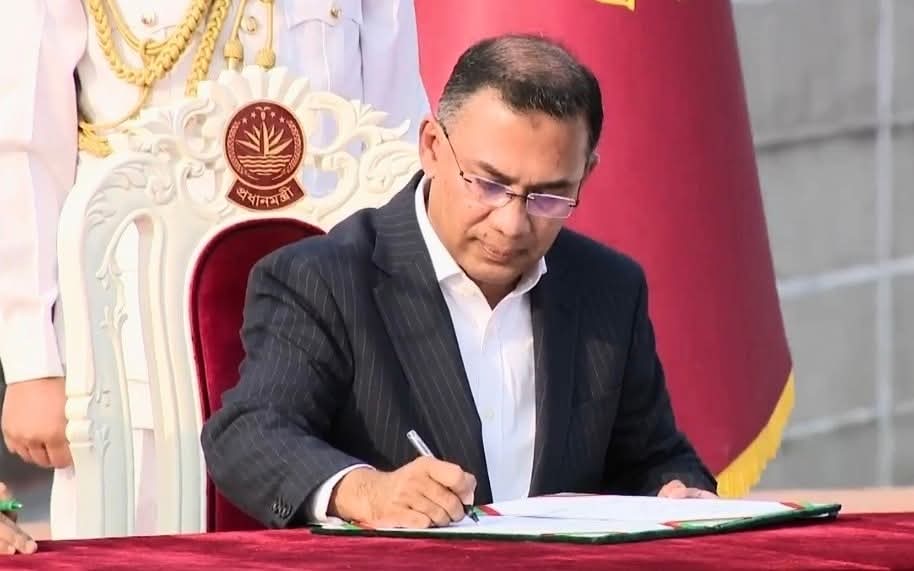
Ankara, March 2026 : As Bangladesh prepares for the first session of its newly elected parliament on March 12, the country is entering a complex constitutional phase marked by competing political mandates. Experts warn that the new legislature could face institutional tensions as it attempts to reconcile the existing constitutional framework with the reform agenda outlined in the July Charter.
According to a report by Anadolu Agency, Bangladesh is currently experiencing an unusual political moment following the 2024 Bangladesh July uprising that resulted in the removal of former Prime Minister Sheikh Hasina. The uprising gave rise to the July Charter, a reform framework that outlines proposed changes to the country’s political and constitutional structure.
Typically, the beginning of a new parliamentary term is marked by routine procedures and a smooth transition into legislative work. However, the incoming parliament is expected to begin its tenure amid unresolved debates over constitutional authority and differing interpretations of the July Charter.
At the centre of the controversy is an unprecedented development in which lawmakers have taken different oaths based on their political affiliations. Members of the ruling Bangladesh Nationalist Party (BNP), which holds a two-thirds majority in the parliament and occupies the treasury benches, have taken the standard oath required for members of parliament under the current constitutional system.
In contrast, opposition lawmakers—primarily from Bangladesh Jamaat-e-Islami and the student-led National Citizen Party—have taken two separate oaths. In addition to the parliamentary oath, they have sworn an additional pledge as members of a proposed Constitution Reform Council envisioned under the July Charter.
Political analysts say this dual oath-taking has created a constitutional dilemma that may overshadow the opening days of parliamentary proceedings. The July Charter proposes the establishment of a special constitutional reform body tasked with overseeing major institutional and governance reforms. According to the charter, the council would require the support of at least 60 members of parliament to be formally established.
The opposition bloc, consisting of Jamaat-e-Islami and the National Citizen Party, has already surpassed that requirement. Together, the two parties control 77 parliamentary seats and have taken the necessary oath to move forward with the formation of the reform council.
However, the ruling BNP has refused to participate in the second oath, arguing that the proposed council has no legal basis within the current constitutional structure of Bangladesh. The party maintains that any constitutional amendments or institutional reforms should be pursued through the established parliamentary process rather than through an external body created under the July Charter.
The situation has become even more complicated following a fresh legal challenge that has drawn the judiciary into the growing political debate. A group of lawyers recently filed a petition in the High Court Division of the Supreme Court of Bangladesh questioning the legality of both the July Charter and the referendum that endorsed it.
Opposition leaders have alleged that the lawyers involved in the petition are aligned with the ruling BNP, though no formal confirmation of such links has been established. The court has since issued a notice asking why both the charter and the referendum should not be declared invalid.
Legal experts say the court’s intervention could transform what was primarily a political disagreement into a significant constitutional confrontation. As the new parliament prepares to convene, observers believe the interaction between the legislature, political factions, and the judiciary will shape the direction of Bangladesh’s governance reforms in the months ahead.
With competing mandates and legal questions yet to be resolved, the opening session of parliament is expected to be closely watched as a key test of how the country navigates its evolving political landscape.
(The content of this article is sourced from a news agency and has not been edited by the Mavericknews30 team.)





End of an Era: Cristiano Ronaldo Bids Farewell to the FIFA World Cup After a Record-Breaking International Career
Dallas, July 2026 : One of football’s greatest chapters came to a close on Tuesday a…

End of an Era: Cristiano Ronaldo Bids Farewell to the FIFA World Cup After a Record-Breaking International Career
Dallas, July 2026 : One of football’s greatest chapters came to a close on …