
Government Keeps Small Savings Interest Rates Unchanged for April–June Quarter

New Delhi, March 2026: The government on Monday announced that interest rates on key small savings schemes, including the Public Provident Fund (PPF) and National Savings Certificate (NSC), will remain unchanged for the first quarter of the financial year 2026–27, beginning April 1.
According to a notification issued by the Finance Ministry, the rates applicable from April 1 to June 30, 2026, will be the same as those notified for the previous quarter (January–March 2026). This marks the eighth consecutive quarter in which small savings interest rates have been left unchanged, with the last revision made during the fourth quarter of 2023–24.
Under the latest decision, the Public Provident Fund (PPF) will continue to offer an interest rate of 7.1 per cent, while post office savings deposits will retain a rate of 4 per cent. The National Savings Certificate (NSC), a popular fixed-income investment option, will provide 7.7 per cent interest for the April–June period.
The NSC remains an attractive avenue for long-term investors, with a minimum investment requirement of Rs 1,000 and a fixed maturity period of five years. Investors can also claim tax benefits of up to Rs 1.5 lakh under Section 80C of the Income Tax Act, making it a preferred choice for those seeking both returns and tax savings.
The Sukanya Samriddhi Scheme, aimed at securing the financial future of the girl child, will continue to offer one of the highest interest rates among small savings instruments at 8.2 per cent. The scheme supports savings for education and marriage expenses and has a maturity period extending up to 21 years.
Meanwhile, the interest rate for a three-year term deposit remains unchanged at 7.1 per cent. The Kisan Vikas Patra (KVP), another government-backed scheme, will continue to offer 7.5 per cent interest, with investments doubling in 115 months. The KVP requires a minimum investment of Rs 1,000 and has no upper investment limit, although it carries a lock-in period of two and a half years.
Small savings schemes, available through post offices and authorised banks, are widely regarded as safe investment options due to their sovereign guarantee. They typically offer higher returns compared to regular savings accounts and also provide tax advantages under Section 80C.
The decision to maintain existing rates reflects the government’s effort to ensure stability and predictability for investors amid evolving economic conditions.







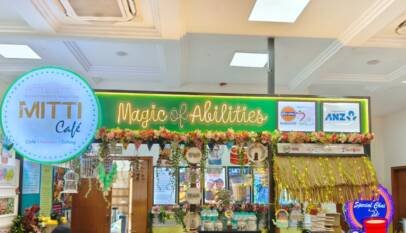
More Than a Café: How MITTI Café is Brewing Hope, Dignity and Dreams at Rashtrapati Nilayam
Hyderabad, July 2026 : Tucked away inside the serene campus of Rashtrapati Nilayam in Boll…
More Than a Café: How MITTI Café is Brewing Hope, Dignity and Dreams at Rashtrapati Nilayam
Hyderabad, July 2026 : Tucked away inside the serene campus of Rashtrapati Nilayam in …