Trump Says US Nearing Victory in Iran Conflict, Warns of Intensified Strikes Ahead

Key Points from Trump’s Address:
- US claims “swift, decisive, and overwhelming victories” against Iran
- Military objectives described as “nearing completion”
- Warning of intensified strikes over the next 2–3 weeks
- Assurance that US will protect Israel and Gulf allies
- Iran’s military capabilities, including missile launchers, significantly reduced
- Potential for negotiations, but with strict conditions
- Strait of Hormuz highlighted as a global economic concern
- Rising fuel prices acknowledged, but framed as a necessary sacrifice
- War described as an “investment” in America’s future security
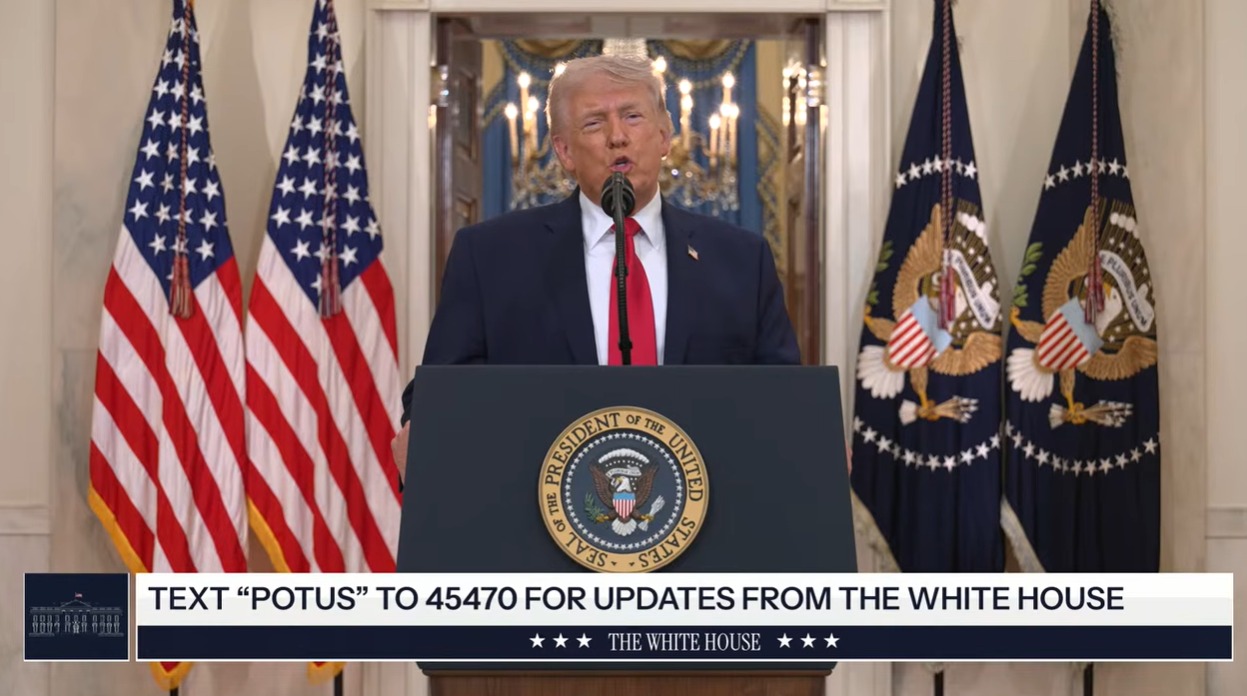
Washington, April 2026 : US President Donald Trump declared that the United States is close to achieving its military objectives in the ongoing conflict with Iran, while warning of intensified strikes over the next two to three weeks. In a high-stakes national address from the White House—his first since the conflict began on February 28—Trump projected confidence, describing the campaign as decisive and largely successful, even as tensions continue to escalate across the Middle East.
Trump asserted that American forces, in coordination with Israel, have delivered “swift, decisive, and overwhelming victories” against Iranian targets. According to him, Iran’s military infrastructure has been significantly weakened, with only a limited number of missile launchers still operational. He described the most challenging phase of the war as already behind, stating that the United States is now entering the final stretch of its strategic mission.
Despite this optimism, Trump made it clear that military operations are far from over. He warned that Iran would face “extremely hard” strikes in the coming weeks as the US pushes to complete its objectives. He also reiterated that Washington is prepared to target critical infrastructure, including power generation facilities, if Tehran fails to engage in meaningful negotiations.
The President sought to reassure key regional allies, including Israel and Gulf nations such as Saudi Arabia, Qatar, the United Arab Emirates, Kuwait, and Bahrain, that the United States would not allow them to suffer setbacks due to Iranian aggression. He emphasized that protecting these allies remains a top priority, especially in light of continued drone and missile attacks attributed to Iran.
At the same time, Trump hinted at the possibility of diplomatic engagement, suggesting that Iran’s current leadership appears “less radical and more reasonable” than before. However, he cautioned that any negotiations must be genuine and not used as a delaying tactic. If talks fail, he warned, the US would not hesitate to escalate its military campaign further.
A major point of concern highlighted during the address was the Strait of Hormuz, a crucial global oil transit route through which nearly 20 percent of the world’s oil supply passes. Trump called on other nations to show “courage” and take responsibility for ensuring the waterway remains open. The strait’s effective closure in recent days has triggered a sharp rise in global oil prices, fueling economic uncertainty and adding pressure on governments worldwide.
Trump acknowledged that rising fuel costs are causing concern among Americans, but framed the war effort as a long-term investment in national security and the future of the country. He argued that confronting Iran’s military ambitions now would prevent greater threats down the line, particularly for future generations.
However, Iran has strongly rejected US overtures for a ceasefire. Iranian officials have described Washington’s demands as “maximalist and irrational,” signaling that no direct negotiations are currently underway. According to Iran’s foreign ministry, while messages have been exchanged through intermediaries such as Pakistan, there is no formal dialogue between the two sides.
The conflict has continued to intensify on the ground. Iran has launched fresh waves of missile and drone attacks targeting Israeli cities, including Tel Aviv and Eilat, as well as US military installations in the Gulf region. Air defence systems have been activated repeatedly to intercept incoming threats, while civilian casualties have been reported in multiple locations.
In Israel, emergency sirens have become a routine occurrence, disrupting daily life as the country prepares for major religious observances. Meanwhile, in Iran, explosions have been reported in several cities, including Tehran and Isfahan, following retaliatory strikes. Key infrastructure, including airports and industrial facilities, has reportedly sustained damage.
The broader regional impact has also been severe. Strikes have caused fires and disruptions in countries such as Kuwait and Bahrain, while Saudi Arabia has intercepted multiple drones. Reports also indicate casualties among civilians, including foreign nationals, highlighting the widening humanitarian toll of the conflict.
Amid the ongoing violence, Iran’s leadership has taken a defiant stance. The country’s new supreme leader has accused the United States and Israel of acting without regard for human or moral limits, while large public gatherings in Tehran have demonstrated continued domestic support for resistance.
The conflict has also spilled over into neighboring regions. In Lebanon, Israeli strikes targeting Hezbollah positions have resulted in significant casualties, further complicating an already volatile situation. The involvement of multiple actors has raised concerns about the risk of a broader regional war.
As the situation continues to evolve, Trump’s address underscores a critical moment in the conflict—one where military success, economic consequences, and diplomatic possibilities are all converging. While the US projects confidence in nearing its objectives, the ongoing violence and lack of direct negotiations suggest that the path to resolution remains uncertain and fraught with risk.
(The content of this article is sourced from a news agency and has not been edited by the Mavericknews30 team.)






Argentina vs England World Cup Semifinal Declared Highest-Risk Match as Security Tightens in Atlanta
July 16: The FIFA World Cup 2026 has entered its most dramatic stage, but ahead of the blo…

Argentina vs England World Cup Semifinal Declared Highest-Risk Match as Security Tightens in Atlanta
July 16: The FIFA World Cup 2026 has entered its most dramatic stage, but …