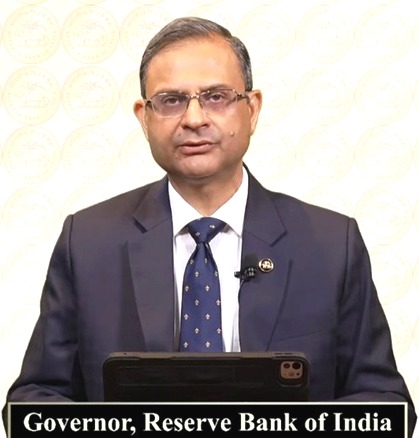
Reserve Bank Of India Has Kept Repo Rate Unchanged At 5.25% In First Policy Of FY27 After Ceasefire In West Asia Conflict.

Mumbai; April 2026: The Reserve Bank of India today has kept the policy repo rate unchanged at 5.25% in the first monetary policy announcement of the financial year 2026-27, citing rising global uncertainties and geopolitical tensions. Announcing the decision, RBI Governor Sanjay Malhotra said that the Monetary Policy Committee (MPC) has unanimously voted to maintain the policy repo rate under the liquidity adjustment facility at 5.25%.
Governor stated “After the detailed assessment of the evolving macroeconomic and financial developments and the outlook, the MPC voted unanimously to keep the policy repo rate unchanged under the liquidity facility at 5.25%. Consequently, the SDR rate remains at 05% and the MSF rate and the bank rate at 5.5%”. “Consequently, the Standing Deposit Facility (SDF) rate remains at 05% and the Marginal Standing Facility (MSF) rate and the bank rate at 5.5%”, he said.
The MPC meeting was held on April 6, 7 and 8 to assess the evolving macroeconomic and financial conditions before arriving at the decision. The central bank noted that the policy comes at a time when the global economy is facing significant challenges due to heightened geopolitical tensions, particularly the ongoing conflict in West Asia, along with disruptions in global supply chains. The RBI Governor said that before the outbreak of the conflict, India’s macroeconomic fundamentals reflected strong growth and low inflation. However, conditions turned adverse in March as the conflict widened and intensified.
Despite these challenges, he emphasised that India’s economic fundamentals remain strong and are better positioned compared to previous crisis periods and many other economies, providing resilience against global shocks.
He highlighted that global growth is facing downside risks due to rising energy prices and shortages of key inputs, which have increased inflation concerns and pushed up geopolitical risk premiums in oil markets. Heightened uncertainty due to the conflict has also impacted financial markets globally. Safe-haven flows have strengthened the US dollar, putting depreciation pressure on currencies of major economies. At the same time, commodity prices such as metals and gold have moderated, while financial markets have witnessed increased volatility. Equity markets have seen broad-based corrections, and sovereign bond yields have hardened due to inflation fears and concerns over long-term fiscal sustainability.
Earlier, Dipti Deshpande, Principal Economist at Crisil, had asserted that the apex bank primarily pursues a wait-and-watch kind of approach. “It’s also going to be cautious” she had said. Deshpande noted that the policy announcements depended on inflationary pressures in the bank’s forecast and the comfort of 2.6%. She maintained that GDP projections remained around 07% for the first two quarters. However, she expects slight modifications in credit growth for the coming years. “Credit growth is expected to see slight modifications and will see a couple of basis points lower growth in 2027 and 2028”, she said.
Rajani Sinha, Chief Economist at CareEdge Ratings, expected the RBI to maintain the status quo on policy rates and stance. She highlighted that a cautious strategy enables the bank to gauge emerging risks to growth and take a calibrated call on future reactions. “The RBI would acknowledge that the uncertainties around its projections are likely to increase. The central bank may consider providing scenario-based projections for growth”, Sinha had said.
Sinha also pointed to the Iran-US conflict and supply-side shocks as primary drivers of inflationary pressure. She estimates that if global crude oil prices average USD 90 per barrel for the full year, India’s GDP growth will moderate to 6.7%. “Elevated energy prices could have significant implications for India’s macroeconomic fundamentals, affecting growth, inflation, external balances and the fiscal position”, she noted.
Apoorva Javadekar, Chief Economist from Muthoot FinCorp, said that the RBI likely holds the repo rate constant to support potential slowing of GDP growth due to external headwinds. He noted that low inflation in February gave the bank room to wait. Former State Bank of India Chairman Dinesh Kharap also had reiterated that RBI will keep the repo rate steady.
Ranen Banerjee, Partner and Economic Advisory Leader at PwC India, suggested that monetary policy action may not effectively address challenges from the West Asia conflict. “With the conflict and uncertainties, we can expect a status quo in rates. There could be some announcements related to liquidity measures, but a rate action is unlikely”, he said. Banerjee highlighted that crude oil prices remain a key risk factor for inflation. He noted that if prices stay at USD 100 per barrel, it will lead to nearly a 01% increase in the Consumer Price Index and a 1.5 to 02% rise in the Wholesale Price Index.
Team Maverick.



Pakistan Deploys Chinese SH-15 Howitzers Along Eastern Border Amid Military Modernisation
New Delhi, Aug 2026 : Pakistan has reportedly stepped up the deployment of Chinese-made ar…
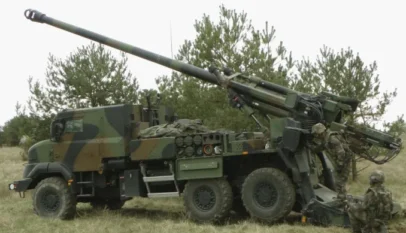
Pakistan Deploys Chinese SH-15 Howitzers Along Eastern Border Amid Military Modernisation
New Delhi, Aug 2026 : Pakistan has reportedly stepped up the deployment of Chinese-made …