In Mitigating Response Time To 04 Days Brazil Looks For 03 Nuclear Submarines In Strategic Atlantic Waters.

Rio De Janeiro; April 2026: Backed by the Navy’s Directorate-General of Nuclear and Technological Development, Brazil has proposed niche technological advancement by which nuclear propulsion would cut redeployment times from up to 15 days to as little as 04, strengthening sea denial capability and protection of critical offshore assets. A 03 submarine rotation model to ensure a continuous operational availability despite maintenance cycles, which directly improves Brazil’s readiness and deterrence posture across its 8,000 km coastline, enabling faster force concentration and persistent underwater presence in the Amazônia Azul maritime zone.
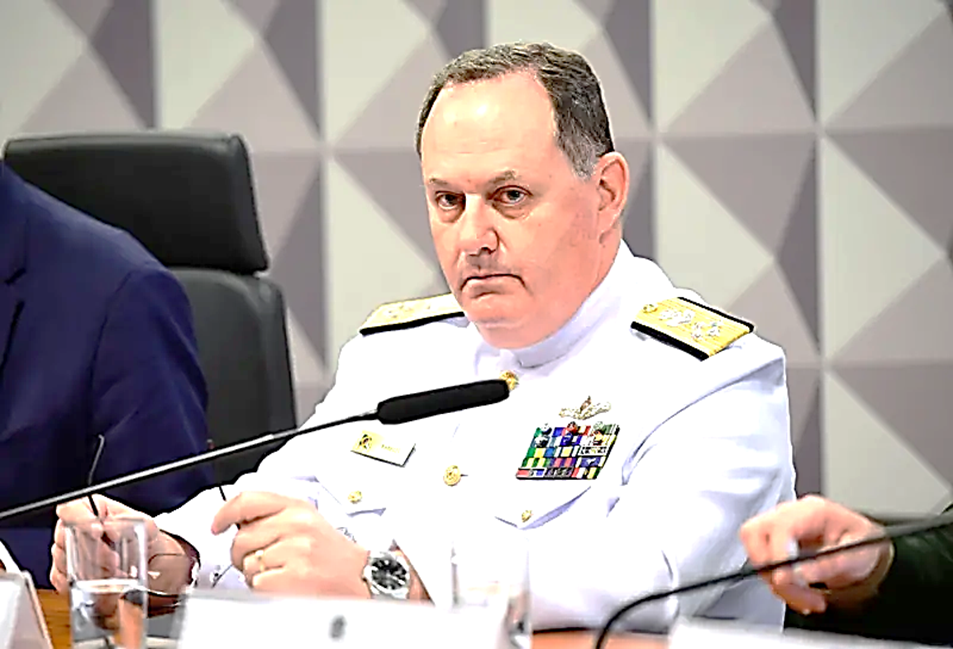
On March 31, 2026, Admiral Alexandre Rabello de Faria argued that Brazil should operate a fleet of three nuclear-powered submarines, rather than the currently planned single unit, in order to sustain a continuous operational presence at sea. As Director-General of Nuclear and Technological Development of the Navy since 2024, he confirmed that the program has absorbed close to R$ 40 billion since 2008 and now faces budget pressure requiring an additional R$1 billion allocation in 2026 to avoid disruption. The requirement is rooted in the need to secure more than 8,000 kilometres of coastline, with the current effort building on an earlier initiative launched in the late 1970s and later expanded under the 2008 PROSUB agreement.
Rabello, a four-star admiral who previously served as chairman of the Inter-American Defence Board between 2021 and 2023, oversees both the submarine development program and the Brazilian Navy’s nuclear propulsion effort, positioning the project within a strategic environment shaped by increased global military spending and ongoing conflicts such as Ukraine and Iran. Rabello’s position on fleet structure is based on a three-unit model designed to maintain one submarine deployed on patrol, one in maintenance or refit, and one in port or training rotation, which ensures a continuous availability despite maintenance cycles and operational fatigue.
This requirement is directly tied to Brazil’s geographic scale, with a coastline exceeding 8,000 kilometres and widely separated maritime zones, creating a need for rapid redeployment capability. Transit time comparisons illustrate the constraint, with Brazil’s 4 to 6 active diesel-electric submarines requiring about 15 days to move from southern bases to northern or northeastern areas, while nuclear-powered submarines can complete the same transit in three to four days, allowing faster concentration of force. According to Rabello, this difference supports a concept of operations centered on sea denial, where submarines are expected to restrict access to maritime zones, particularly within the Amazônia Azul, which includes offshore energy infrastructure, shipping lanes, and resource-rich areas.
Currently, the timeline of the Brazilian nuclear submarine program reflects a sequence of delays tied to funding variability rather than engineering setbacks, with the initial completion target of 2024 revised to 2033 and subsequently to 2037, representing a cumulative delay of more than a decade. Since the formalization of the PROSUB agreement in 2008, expenditures have reached about R$ 40 billion (about $ 7.6–7.8 billion), covering infrastructure, technology transfer, and construction of conventional submarines, while funding gaps have repeatedly forced schedule adjustments. The current schedule indicates reactor prototype testing in progress, hull construction expected to advance after reactor validation, and a launch target set for 2037, with the admiral indicating no expectation of cancellation but acknowledging that continued irregular funding will extend timelines further.
The request for R$ 01 billion ($190 million) in 2026 is intended to stabilize the program’s pace and prevent additional slippage, reflecting the sensitivity of long-cycle naval programs to annual budget fluctuations. Brazil’s technological approach is based on full national control of the nuclear propulsion system, with the country having achieved mastery over the nuclear fuel cycle, including uranium extraction, enrichment through ultracentrifugation, and fuel fabrication, alongside the development of a pressurized water reactor for naval use, enabling independence from foreign suppliers.
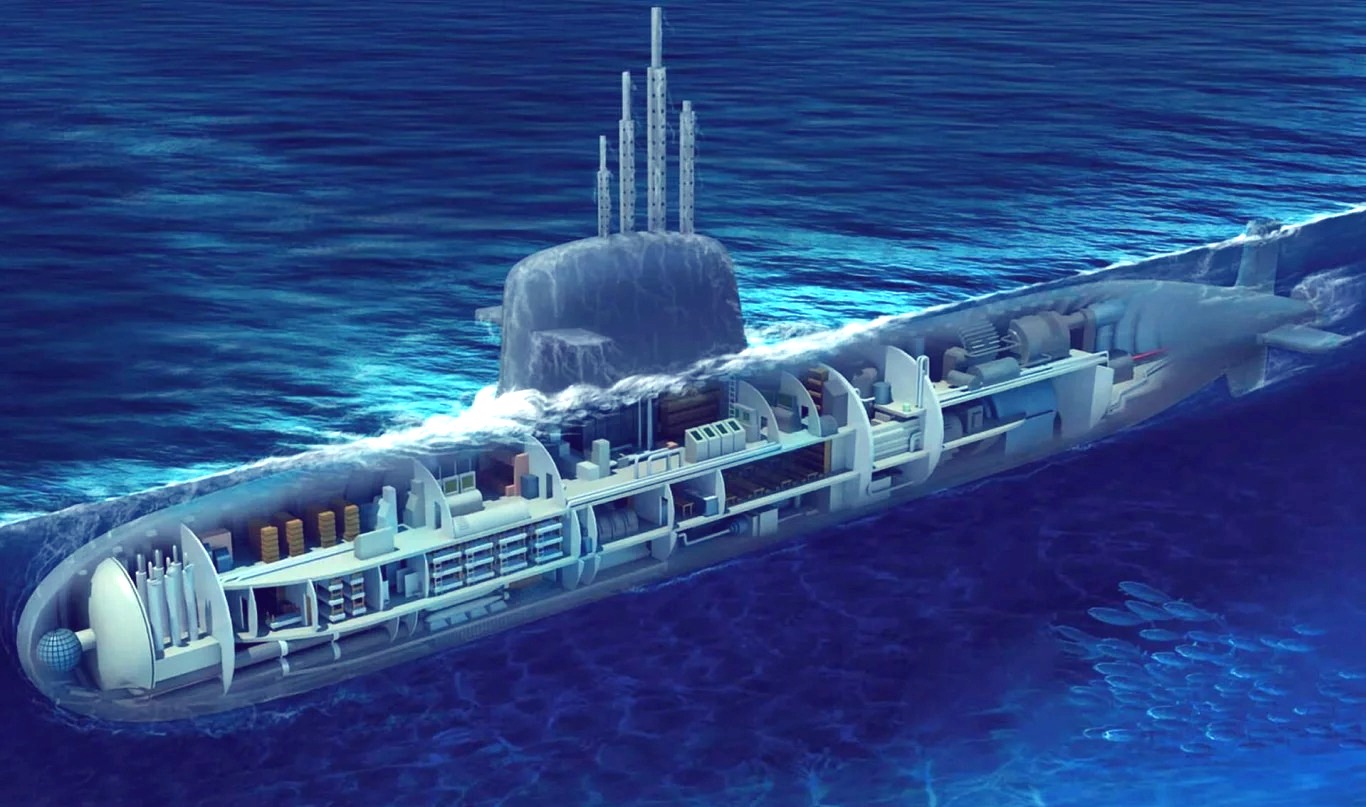
The current focus is the LABGENE facility in Iperó, São Paulo, where a land-based prototype integrates the reactor and propulsion system to test performance, safety, and reliability under operational conditions before installation in a submarine hull. Following validation, the next step involves the construction of a second reactor unit and its integration into a submarine hull at the Itaguaí Naval Base in Rio de Janeiro, marking the transition from experimental operational safety and performance on land to full maritime deployment, reducing risk in a program where the reactor integration is the critical path. The industrial structure of the program is defined by the 2008 Brazil–France strategic agreement, which established the construction of four Riachuelo-class conventional submarines based on the Scorpène design.
The agreement also includes one nuclear-powered unit combining a Brazilian reactor with a modified hull, supported by new infrastructure at Itaguaí. Three conventional submarines have been delivered, with a fourth in testing, forming the Riachuelo class, while the nuclear submarine, identified as SN10 Álvaro Alberto, remains under construction with keel laying planned for 2027 and launch projected for 2037. This strategic agreement also established a clear division of responsibilities, with France providing shipbuilding processes, training, design expertise, and technology transfer for submarine hulls, while Brazil retained full responsibility for the nuclear reactor and associated systems, ensuring autonomy in propulsion technology.
The program’s architecture requires sequential execution of reactor development, hull construction, and system integration, meaning delays in one component directly affect the overall schedule and complicate synchronisation across industrial activities. Infrastructure developed under the program includes a dedicated shipyard and naval base at Itaguaí in Rio de Janeiro, which serves as the centre for the submarines’ construction, integration, and maintenance. For Rabello, the three nuclear-powered submarines could address the limitations of diesel-electric boats, particularly in terms of endurance, speed, and stealth, as nuclear propulsion allows sustained high-speed transit and continuous submerged operations without the need to surface or snorkel.
This eliminates a major vulnerability associated with diesel-electric submarines, which must periodically expose themselves to recharge batteries, increasing detection risk. Nuclear submarines can operate for extended periods, limited primarily by crew endurance and onboard supplies, enabling a persistent presence in distant maritime zones and rapid response to emerging threats. These support missions focused on sea denial and deterrence, where the objective is to create uncertainty for potential adversaries and restrict access to critical maritime areas rather than engage in a direct confrontation.
The program is constrained by Brazil’s commitments under the Nuclear Non-Proliferation Treaty, which restricts the submarine’s armament to conventional torpedoes and excludes nuclear weapons, aligning the vessel with a defensive maritime denial role rather than strategic nuclear deterrence. At the same time, negotiations with the International Atomic Energy Agency (IAEA) focus on defining inspection mechanisms that ensure compliance with non-proliferation requirements while protecting sensitive military information related to reactor design and performance. Key points of contention include whether inspections should be limited to facilities or extend to the submarine itself and how to safeguard classified parameters such as reactor power output.
The agency has supported stricter inspection regimes, while Brazil has rejected measures that would expose sensitive design data, resulting in an unresolved framework that reflects the complexity of regulating nuclear propulsion systems used for military purposes. The broader strategic context influencing the program, cited by Rabello, includes increased global defence spending, heightened competition among major powers, and ongoing conflicts such as Ukraine and Iran, which have contributed to a reassessment of Brazil’s defence posture, particularly in the maritime domain.
Brazilian authorities identify the sea as the country’s most vulnerable frontier due to the absence of a fully integrated surveillance system, with the possibility of foreign vessels approaching the coastline without detection cited as a concern. This vulnerability extends to the protection of offshore resources, including energy reserves, water, and rare earth materials, which are considered critical to national interests. For its part, the United States is viewed as a long-standing partner but also a source of strategic uncertainty due to its evolving posture in the Western Hemisphere. All these factors prompt Brazil to emphasize autonomy in defence capabilities while maintaining cooperative relationships, with the nuclear submarine program positioned as a means to achieve a minimum level of credible deterrence without targeting a specific adversary.
Team Maverick.




AAIB Interim Statement on the Progress of Investigation into the Accident Involving Air India Flight AI-171
Today marks one year since the tragic accident involving Air India Flight AI-171, a Boeing…

AAIB Interim Statement on the Progress of Investigation into the Accident Involving Air India Flight AI-171
Today marks one year since the tragic accident involving Air India Flight AI-171, a …