Safer Tracks, Smarter Systems Boost Rail Travel Trust

Driven by Systemic Changes, “Safety Is a Matter of Public Trust, Not a Technical Metric”: Shri Ashwini Vaishnaw
Rail Fractures Reduced by 92% , Weld Failures Come Down by 93%
Increased Use of Heavier 60 kg Rails, Long Welded Panels and Advanced Flaw Detection Systems Have Decreased Derailment Risk
Impressive Real-time Digital Monitoring and Reliable Operations of 30,000 GPS-based Fog Safety Devices Even in Low Visibility is Helping Build the Public Trust
Every day, Indian Railways moves over two crore passengers across one of the world’s largest and most complex rail networks, running more than 25,000 trains daily across 14,000-plus passenger services. For decades, the public conversation around railways centred on expansion and connectivity. Since 2014, however, a fundamental policy reset placed safety at the core of all operations. The results, now visible in hard data, reflect a transformation that is structural, technological, and financial in equal measure.
The Union Minister for Railways, Shri Ashwini Vaishnaw, writing in a national publication, noted that globally, railway safety is measured through fatalities or accidents per billion passenger-kilometres, allowing comparisons across systems of differing scale. Shri Vaishnaw underscored that During PM Modi’s first term, a clear message was delivered: Safety First. And since 2014, Indian Railways has pursued a comprehensive, tech-led, consistently funded transformation of its safety ecosystem.
The Union Minister also pointed out that in the European Union, widely regarded as a benchmark, the risk of death for a rail passenger is estimated at about 0.09 fatalities per billion passenger-kilometres, making rail travel safer than road transport and comparable with aviation. The Union Minister stated that India’s story is best understood not through claims of parity, but through the pace and intent of change, adding that with the Consequential Accident Index now at 0.01, Indian Railways compares favourably with global averages for large mixed-traffic rail systems tracked by international rail bodies.
A Decade Compared to a Decade: The Structural Shift
Shri Vaishnaw presented what he described as the clearest proof of systemic change, a decade-on-decade comparison of consequential train accidents. The Union Minister highlighted that a key indicator of this transformation is the sharp decline in consequential train accidents. From 135 accidents recorded in 2014–15, the number has reduced drastically to just 16 in 2025–26, marking an impressive reduction of nearly 89%, even as passenger and freight operations have significantly increased. The Consequential Accident Index, measuring accidents per unit of train-running distance, has also dropped from 0.11 to 0.01, an improvement of approximately 91 percent indicating a structurally safer railway system.
He said this places Indian Railways firmly on the trajectory of leading international peers, achieved while operating one of the world’s most complex railway networks where passenger, freight, suburban and express services share the same corridors. The Union Minister was categorical that this has been achieved while simultaneously scaling operations: more trains, more passengers, more distance.
The Union Minister was emphatic by saying what matters most are the lives saved. He added that the scale of fatality reduction signals a system increasingly designed to prevent catastrophic failure, rather than merely respond to it.
The Financial Commitment: Safety Spending as a Non-Negotiable
Shri Vaishnaw underscored that the safety transformation did not happen through intent alone but was backed by financial commitment at an unprecedented scale. Safety-related expenditure has increased from ₹39,200 crore in 2013-14 to ₹1,17,693 crore in 2025-26 and ₹1,20,389 crore planned for 2026-27. This represents a more than threefold increase in annual safety spending, enabling systematic modernisation across tracks, signalling, rolling stock, and safety systems without dilution or delay. The Union Minister stated that this sustained budget commitment over more than a decade through successive annual budgets is what separates a genuine transformation from a one-time intervention.
Kavach: Indigenous Technology at the Heart of the Safety Ecosystem
Among the most consequential of the Union Minister’s safety interventions has been Kavach, India’s indigenously developed Automatic Train Protection system. Certified to the highest international safety integrity level, Kavach intervenes automatically when signals are missed or speed limits are breached. Kavach 4.0 has been commissioned across 1,452 route kilometres on the high-density Delhi-Mumbai and Delhi-Howrah corridors.
Unmanned Level Crossings: A Landmark Elimination
Shri Vaishnaw pointed to the complete elimination of unmanned level crossings on the broad gauge network as a landmark safety achievement, one that removes one of the most historically dangerous points of human-rail interface. All unmanned level crossings on the broad gauge network were eliminated by January 2019, supported by the construction of more than 14,000 road overbridges and underpasses across the country.
Rolling Stock and Track: Safety Built Into Every Component
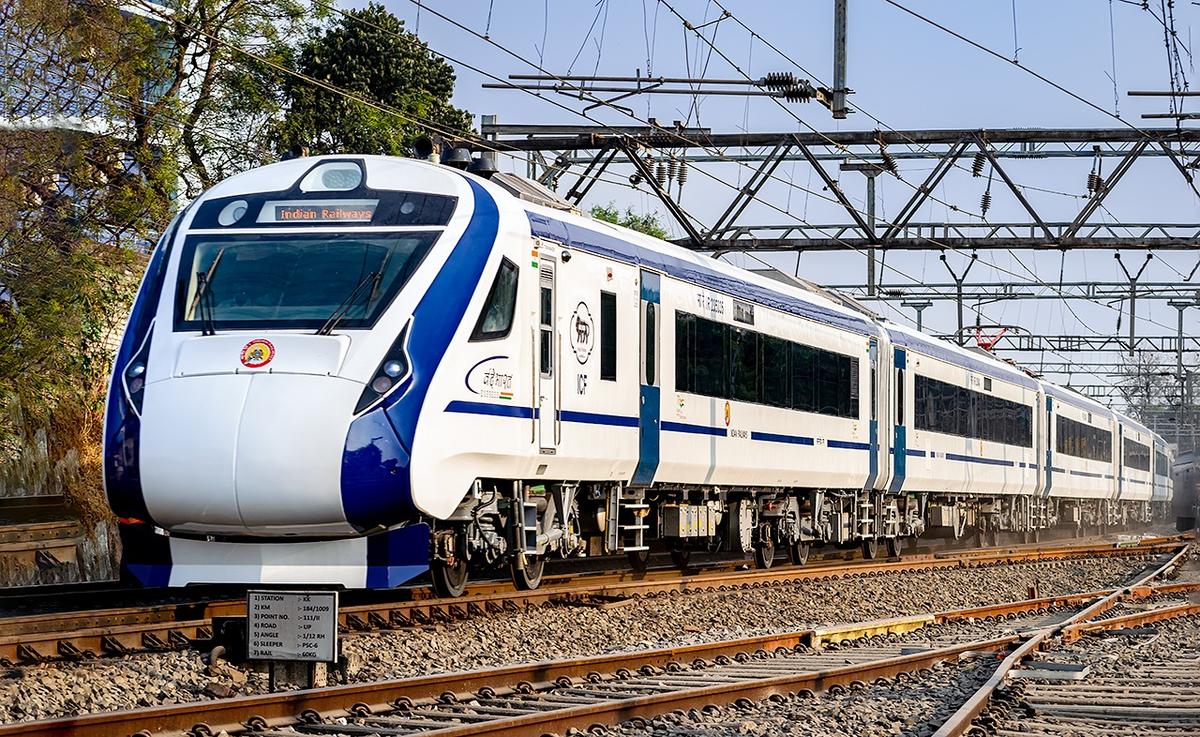
The Union Minister highlighted that safety improvements are embedded not only in systems but also in the physical hardware of Indian Railways. Between 2014 and 2025, Indian Railways produced more than 42,600 LHB coaches, compared to 2,300 coaches manufactured during 2004–2014. LHB coaches are designed to prevent telescoping during collisions, offering significantly superior passenger protection. Indian Railways strengthened its ‘Make in India’ efforts by producing 1,674 locomotives and modernisation of passenger rolling stock also continued, with 6,677 LHB coaches manufactured, contributing to safer and more comfortable travel in FY 2025-26.
On track quality, Shri Vaishnaw noted that the wider adoption of 60 kg rails, longer welded rail panels, improved welding techniques, and advanced ultrasonic flaw detection testing have significantly reduced rail fractures by 92% and weld failures by 93%. This directly lowers the risk of derailments attributable to track defects.
GPS-Based Fog Devices and Digital Stations: Technology at the Field Level
Shri Vaishnaw highlighted technological adoption at the field level as a critical complement to the larger infrastructure investments. GPS-based Fog Safety Devices, critical for loco pilots in low-visibility winter conditions have been scaled up sharply from just 90 units to nearly 30,000 deployed across fog-affected zones. This provides real-time alerts on approaching signals, level crossings, and landmarks. The Union Minister also noted that nearly 4,000 railway stations are now digital, compared to fewer than 900 in the decade before 2014, enabling centralised, real-time operational monitoring that was previously impossible at this scale.
The Human Pillar: Staff Welfare as a Safety Investment
In what the Union Minister described as a dimension of safety that often goes unacknowledged in public discourse, Shri Vaishnaw highlighted that technology cannot substitute for human alertness, and that Indian Railways has therefore invested systematically in better working conditions for running staff. Improved air-conditioned rest rooms, regulated duty hours, counselling support, and better rest facilities have all been expanded across the network. The Union Minister stated: “Safety today is reinforced not only by systems, but by the people who trust them.” This focus on the human element, alongside the technological, reflects what Shri Vaishnaw described as an integrated rather than a purely mechanistic approach to the safety ecosystem.
The Absence of Headlines as the Measure of Success
The Union Minister threw a light on the nature of safety itself, saying that Railway safety rarely draws attention when it works. Trains that do not crash do not make news. Yet this absence of headlines is precisely what truly says that individual life matters. Shri Vaishnaw argued that the best proof of a transformed safety culture is not a single dramatic event but a sustained, data-backed, decade-long decline in accidents and fatalities across vast distances, every single day.





Gautam Adani Reclaims Title of Asia’s Richest Person as Wealth Jumps by $2 Billion
New Delhi, June 2026 : Indian billionaire Gautam Adani has once again emerged as Asia’s ri…
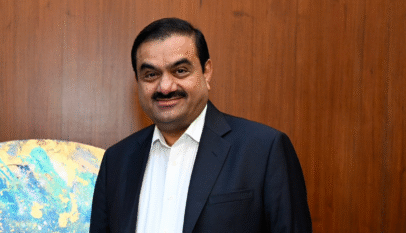
Gautam Adani Reclaims Title of Asia’s Richest Person as Wealth Jumps by $2 Billion
New Delhi, June 2026 : Indian billionaire Gautam Adani has once again emerged as …