Lok Sabha Rejects Constitution Amendment Bill on Women’s Quota and Delimitation

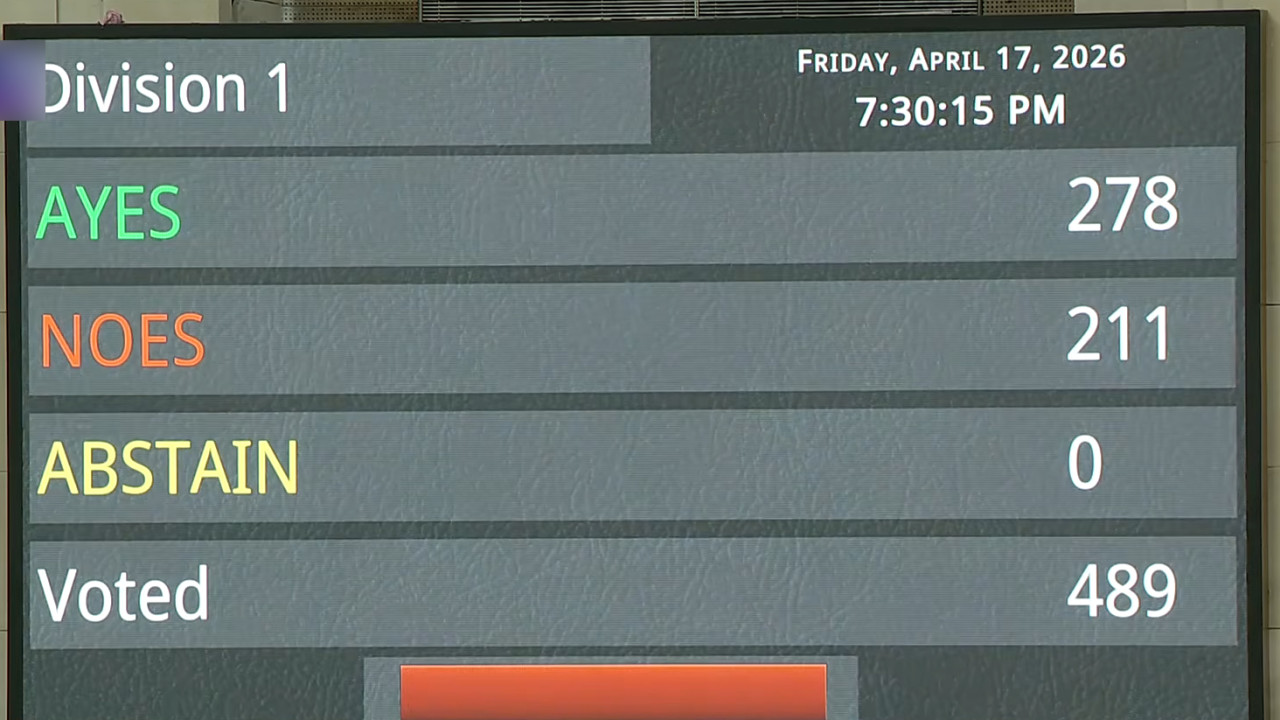
New Delhi, April 2026 : In a dramatic turn of events, the Lok Sabha on Friday rejected the Constitution (131st Amendment) Bill, dealing a setback to the government’s push for expanding parliamentary representation and implementing women’s reservation. Despite securing a majority with 298 votes in favour and 230 against, the Bill failed to meet the mandatory two-thirds majority required for constitutional amendments.
The proposed legislation sought to significantly increase the strength of the Lok Sabha from 543 to 850 seats, linking the expansion to a long-pending delimitation exercise aimed at redrawing constituency boundaries based on updated population data. It also aimed to operationalise 33 per cent reservation for women in the Lok Sabha and state Assemblies starting from 2029.
The government had strongly defended the Bill, arguing that the current distribution of constituencies no longer reflects population realities, as boundaries have remained frozen since the 1971 Census. Prime Minister Narendra Modi and Union Home Minister Amit Shah both advocated for the legislation, stressing that it would correct representation imbalances while fulfilling a long-standing commitment to women’s political empowerment.
Amit Shah accused opposition parties, particularly the Congress, of historically obstructing delimitation efforts and argued that linking women’s reservation to the exercise would ensure fairness and equity in representation. He maintained that the reform was essential to strengthen democratic participation and address disparities between voters and elected representatives.
However, opposition parties mounted a strong resistance, questioning both the timing and intent of the Bill. They argued that tying women’s reservation to delimitation could disproportionately benefit northern states with higher population growth, potentially disadvantaging southern states that have successfully controlled population expansion. Critics alleged that the proposal was politically motivated and could alter the balance of power in Parliament.
The Bill’s defeat also halted progress on two related proposals—the Delimitation Bill and an amendment to extend women’s reservation to Union Territories. Parliamentary Affairs Minister Kiren Rijiju confirmed that the government would not proceed with these measures following the setback.
The outcome underscores deep divisions within Parliament over how to balance regional representation while advancing gender equality. While the constitutional provision for women’s reservation was established earlier, its implementation was contingent on delimitation, leaving its future uncertain after the Bill’s rejection.
For the government, the defeat marks a rare legislative reversal, while for the opposition, it represents a significant political victory. However, for millions of women aspiring to enter legislative bodies, the development means a continued wait for assured representation.
The episode highlights the complexities of achieving consensus on reforms that reshape both the structure of democracy and the promise of inclusive governance, leaving one of India’s most significant political reforms hanging in the balance.
What was the Women’s Quota and Delimitation Bill?
The Constitution (131st Amendment) Bill, 2026 aimed to combine two major electoral reforms:
- Women’s Reservation (Nari Shakti Vandan Adhiniyam)
- Provide 33% reservation for women in the Lok Sabha and State Assemblies.
- Implementation was planned after delimitation, likely from 2029.
- Delimitation Exercise
- Redraw parliamentary and assembly constituencies based on the latest population data.
- Increase Lok Sabha seats from 543 to around 850 to better represent population growth.
The idea was to ensure fairer representation and greater participation of women in politics.
Advantages
1. Greater Women Representation
- Ensures more women in decision-making roles.
- Promotes gender equality in politics.
2. Better Voter Representation
- Delimitation reduces the burden on MPs by balancing voter size across constituencies.
3. Strengthening Democracy
- Reflects current population realities rather than outdated 1971 Census data.
4. Inclusive Governance
- More diverse voices (especially women) could improve policymaking.
5. Long-Term Structural Reform
- Expands Parliament to match India’s growing population.
Disadvantages
1. Regional Imbalance Concerns
- Southern states fear losing influence as northern states (with higher population growth) may gain more seats.
2. Delay in Women’s Reservation
- Reservation is linked to delimitation, meaning implementation gets postponed.
3. Political Motive Allegations
- Critics argue it could reshape electoral boundaries for political advantage.
4. Complexity and Execution Challenges
- Delimitation is a massive exercise involving administrative, legal, and political hurdles.
5. Uncertainty and Conflict
- Lack of consensus among parties may delay reforms further.
In Short
The Bill aimed to modernise India’s electoral system and empower women, but disagreements over timing, fairness, and political impact led to its failure—leaving both reforms uncertain for now.




Insurance Giant Aviva Detects Record £233 Million In Fraud As AI Tools And Ghost Broking Accelerate.
June 2026: On the 04th of this month (June 2026) Maverick News 30 has reported the role of…

Insurance Giant Aviva Detects Record £233 Million In Fraud As AI Tools And Ghost Broking Accelerate.
June 2026: On the 04th of this month (June 2026) Maverick News 30 has …