RBI Adopts Cautious Stance Amid West Asia Tensions, Flags Inflation Risks

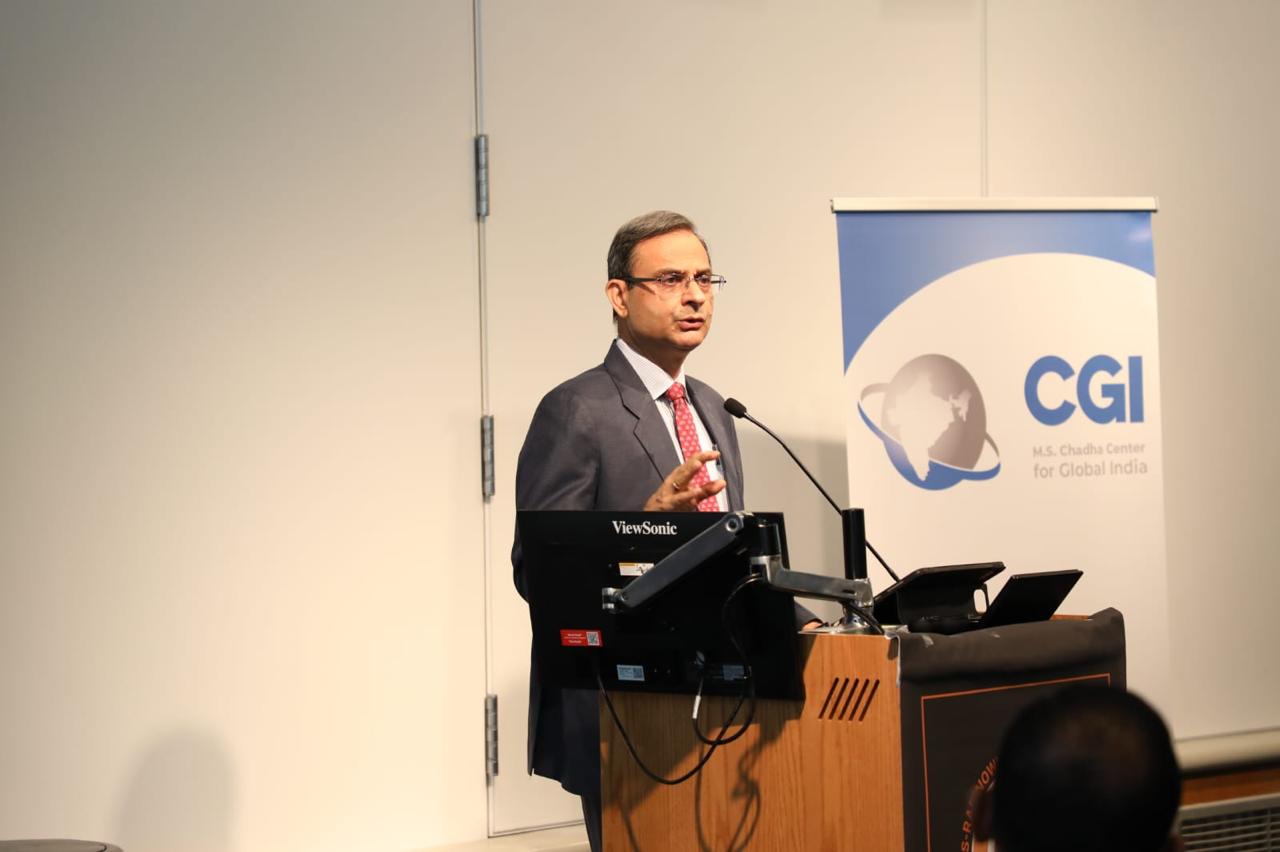
New Delhi, April 2026 : The Reserve Bank of India (RBI) is maintaining a cautious, watchful approach to monetary policy as geopolitical tensions in West Asia continue to unfold. RBI Governor Sanjay Malhotra has indicated that the central bank will avoid making firm commitments on future interest rate movements, citing uncertainties stemming from the ongoing conflict and its potential economic repercussions.
Speaking at Princeton University, Malhotra highlighted that prolonged disruptions in global supply chains—especially in a region as critical as West Asia—could lead to inflationary pressures becoming entrenched in India’s broader price levels. He warned that what initially appears as a temporary supply shock could evolve into sustained inflation if the situation persists.
West Asia holds significant importance for India’s economy. The region accounts for nearly one-sixth of India’s exports and about one-fifth of its imports. It is also a crucial source of essential commodities, supplying nearly half of India’s crude oil imports and a substantial portion of fertilisers. Additionally, remittances from Indians working in the region contribute significantly to the country’s foreign exchange inflows.
Given these deep economic linkages, Malhotra stressed that the “second-round effects” of the conflict are the primary concern. These include rising costs of goods and services, which could eventually impact consumer prices and overall inflation stability.
Reflecting this uncertainty, the RBI has adopted a “wait-and-watch” stance. The Monetary Policy Committee (MPC) will remain data-driven, continuously evaluating evolving risks before making any policy adjustments. The central bank has maintained a neutral policy stance since mid-2025, following cumulative rate cuts of 125 basis points earlier that year.
On the currency front, the RBI Governor defended the central bank’s interventions in the foreign exchange market. He clarified that the RBI does not aim to maintain any fixed or “indefensible peg” for the Indian rupee, which has depreciated by over four percent since the conflict escalated in March. Instead, interventions are aimed at ensuring orderly market conditions and preventing excessive volatility.
Despite global uncertainties, India’s external position remains relatively strong. The country’s foreign exchange reserves stand at approximately $710 billion, providing a comfortable cushion equivalent to more than 11 months of import cover.
Malhotra also outlined the RBI’s ongoing efforts to strengthen India’s financial and digital infrastructure. He noted the remarkable growth of the Unified Payments Interface (UPI), which recorded over 22 billion transactions in March alone. Building on this success, the central bank is developing the Unified Lending Interface (ULI), aimed at enabling faster and easier access to credit for small businesses and farmers.
On the fiscal front, the Governor pointed to improvements in government finances, with the fiscal deficit declining significantly over recent years. He also noted that India’s debt-to-GDP ratio remains manageable compared to many major global economies.
In conclusion, while India’s macroeconomic fundamentals remain stable, the RBI is treading carefully in the face of global uncertainties. The evolving situation in West Asia will remain a key factor shaping the central bank’s policy decisions in the months ahead.





Alvarez, Lautaro Fire Argentina Past 10-Man Switzerland in Extra Time, Set Up Blockbuster World Cup Semi-final Against England
Score: Argentina 3 (Alexis Mac Allister 10′, Julian Alvarez 112′, Lautaro Mart…

Alvarez, Lautaro Fire Argentina Past 10-Man Switzerland in Extra Time, Set Up Blockbuster World Cup Semi-final Against England
Score: Argentina 3 (Alexis Mac Allister 10′, Julian Alvarez 112′, Lautaro Martinez 120+1′) beat …