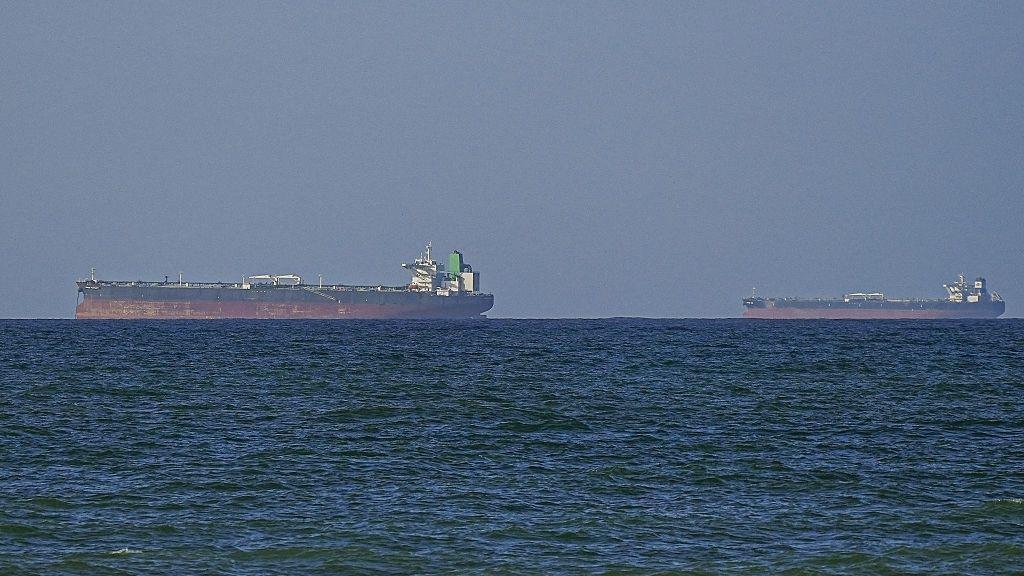
US Expands Maritime Crackdown on Iran, Seizes Oil Tanker in Indian Ocean

Washington, April 2026 : The United States has significantly escalated its confrontation with Iran by extending its maritime enforcement operations far beyond the Persian Gulf, signaling a new and more aggressive phase in the ongoing conflict. In a major development, US forces seized a large oil tanker in the Indian Ocean on Tuesday, suspecting it of transporting Iranian crude in violation of sanctions.
According to reports, the intercepted vessel — capable of carrying nearly 2 million barrels of oil — was boarded by US personnel in international waters between Sri Lanka and Indonesia. The operation was carried out without resistance, highlighting the expanding operational reach of American forces and their intent to disrupt Iran’s global oil supply network.
The seizure is part of a broader strategy directed by US President Donald Trump to target Iran’s so-called “dark fleet” — a network of vessels allegedly used to bypass international sanctions and sustain its oil exports. This effort forms a key pillar of Washington’s economic pressure campaign aimed at curbing Tehran’s revenue streams and forcing it back to the negotiating table.
In parallel, the United States has intensified its naval blockade of Iranian ports, backed by coordinated naval and aerial deployments. Officials indicate that since the blockade began on April 13, at least 28 vessels have either been intercepted or compelled to turn back, underscoring the scale and seriousness of the operation.
President Trump has described the campaign as a “tremendous success,” asserting that US forces now exercise substantial control over critical maritime routes, including the strategically vital Strait of Hormuz. The waterway remains a key artery for global oil shipments, and any disruption there has far-reaching implications for international energy markets.
Despite the military pressure, Washington has maintained a fragile ceasefire with Tehran, recently extended to allow room for diplomatic engagement. However, the continuation of the naval blockade alongside the ceasefire has drawn sharp criticism from Iran.
Iranian Foreign Minister Abbas Araghchi condemned the US actions, calling the blockade an “act of war” and accusing Washington of violating the terms of the truce by targeting commercial shipping. Tehran has also warned of potential retaliation, with reports suggesting it may consider forceful measures to break the blockade if restrictions persist.
The expansion of US operations into the Indian Ocean marks a notable shift in the geographical scope of the conflict, bringing it closer to major international shipping lanes connected to South Asia. This raises concerns about broader regional stability and the security of global trade routes.
Diplomatic efforts remain stalled, with Iran refusing to rejoin negotiations unless the blockade is lifted. The standoff, which began on February 28, continues to revolve around control of energy flows and strategic maritime chokepoints.
As tensions remain high, the situation presents a delicate balance between military pressure and diplomatic resolution, with the risk of escalation looming over one of the world’s most critical energy corridors.
(The content of this article is sourced from a news agency and has not been edited by the Mavericknews30 team.)



Deepti’s Five-Wicket Magic Powers India to Dominant Win Over Pakistan
Birmingham, June 2026 : India launched their ICC Women’s T20 World Cup 2026 campaign in co…

Deepti’s Five-Wicket Magic Powers India to Dominant Win Over Pakistan
Birmingham, June 2026 : India launched their ICC Women’s T20 World Cup 2026 campaign …