Strong Focus on Tribal Upliftment: Faster Development in Naxal-Free Areas, ‘Niyad Nella Nar 2.0’ Coming Soon

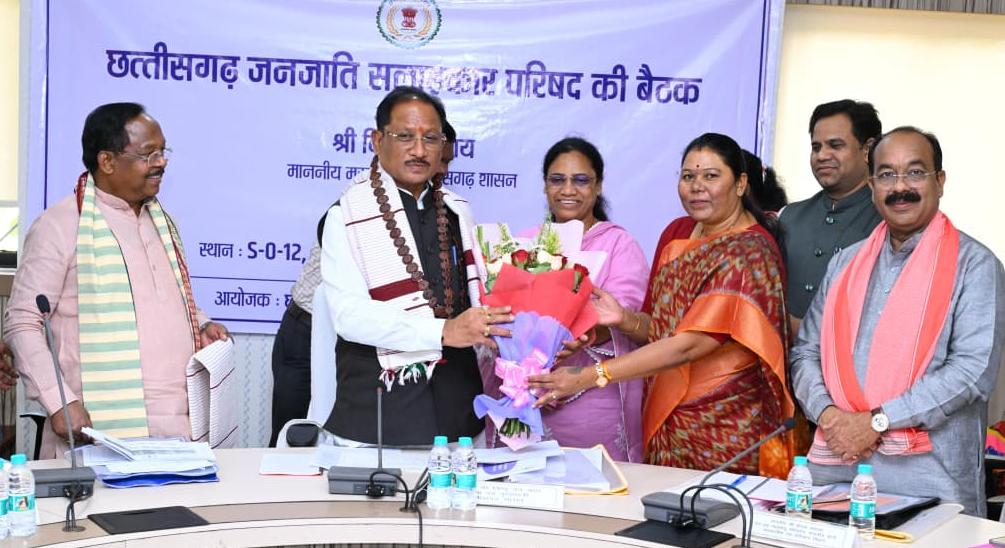
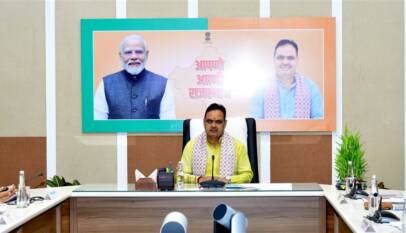
Raipur, April 2026: The Chhattisgarh Tribal Advisory Council, chaired by Chief Minister Vishnu Deo Sai, held a key meeting at Mahanadi Bhawan to deliberate on the comprehensive development of tribal communities, leading to several important decisions aimed at accelerating growth in remote regions.
The Chief Minister highlighted that Bastar, geographically larger than Kerala, remained deprived of development for decades but is now witnessing rapid expansion of welfare schemes and the emergence of a new wave of progress.
Emphasising the preservation of tribal culture and traditions, Sai directed officials to ensure the protection of sacred sites such as Devgudi and Sarna locations, while also taking strict measures to prevent illegal encroachments. He noted that under the “Dharti Aaba Gram Utkarsh Yojana,” education and healthcare facilities are being strengthened in 6,600 villages. Additionally, 32,000 houses have been sanctioned under the PM Janman Yojana.
Reviewing the success of the “Niyad Nella Nar” scheme, the Chief Minister announced the imminent rollout of its upgraded version, “Niyad Nella Nar 2.0.” The new phase aims to further expand access to basic amenities such as electricity, drinking water, roads, and ration supplies in remote tribal areas. Meanwhile, under the “Mukhyamantri Swasth Bastar Yojana,” health screening of 3.6 million people is progressing steadily.
Sai also ordered an investigation into cases involving long-term leasing and exploitation of tribal lands. He directed that proposals to include the Korwa and Sansari Oraon communities in the Scheduled Tribe list be promptly forwarded to the Central government.
To strengthen education and infrastructure, the Chief Minister stressed increasing hostel capacities, improving their maintenance, and ensuring adequate availability of teachers. He also issued clear instructions to establish proper schooling facilities in Naxal-free areas and to avoid conducting classes in open spaces.
Expressing dissatisfaction over delays in the Ambikapur National Highway project, Sai instructed authorities to ensure timely and quality completion. He also emphasised the need for special attention to roads that become inaccessible during the monsoon season.
Tribal Welfare Minister and Council Vice-Chairman Ramvichar Netam noted that for decades, Naxalism had hindered development in regions like Bastar and Surguja. With the situation improving, welfare schemes are now being implemented more effectively, directly benefiting local communities.
He added that better coordination among departments has ensured timely execution of approved projects. Representatives and officials have been instructed to address sensitive issues on priority. Netam further observed that basic facilities are now reaching even the most remote tribal settlements, and the construction of new hostels is creating better opportunities for youth.
The meeting was attended by Deputy Chief Minister Arun Sao, Forest Minister Kedar Kashyap, and several senior officials, legislators, and council members, reflecting a unified push toward inclusive tribal development in the state.
Chief Minister Hemant Soren Reviews Food, Public Distribution and Consumer Affairs Department
Chief Minister directs faster implementation through technology-based monitoring systems; …
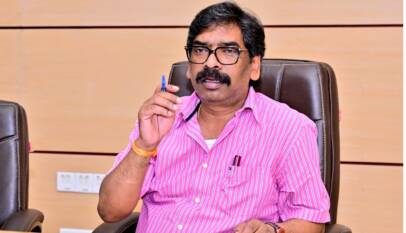
Chief Minister Hemant Soren Reviews Food, Public Distribution and Consumer Affairs Department
Chief Minister directs faster implementation through technology-based monitoring systems; asks officials to establish Dal-Bhat …