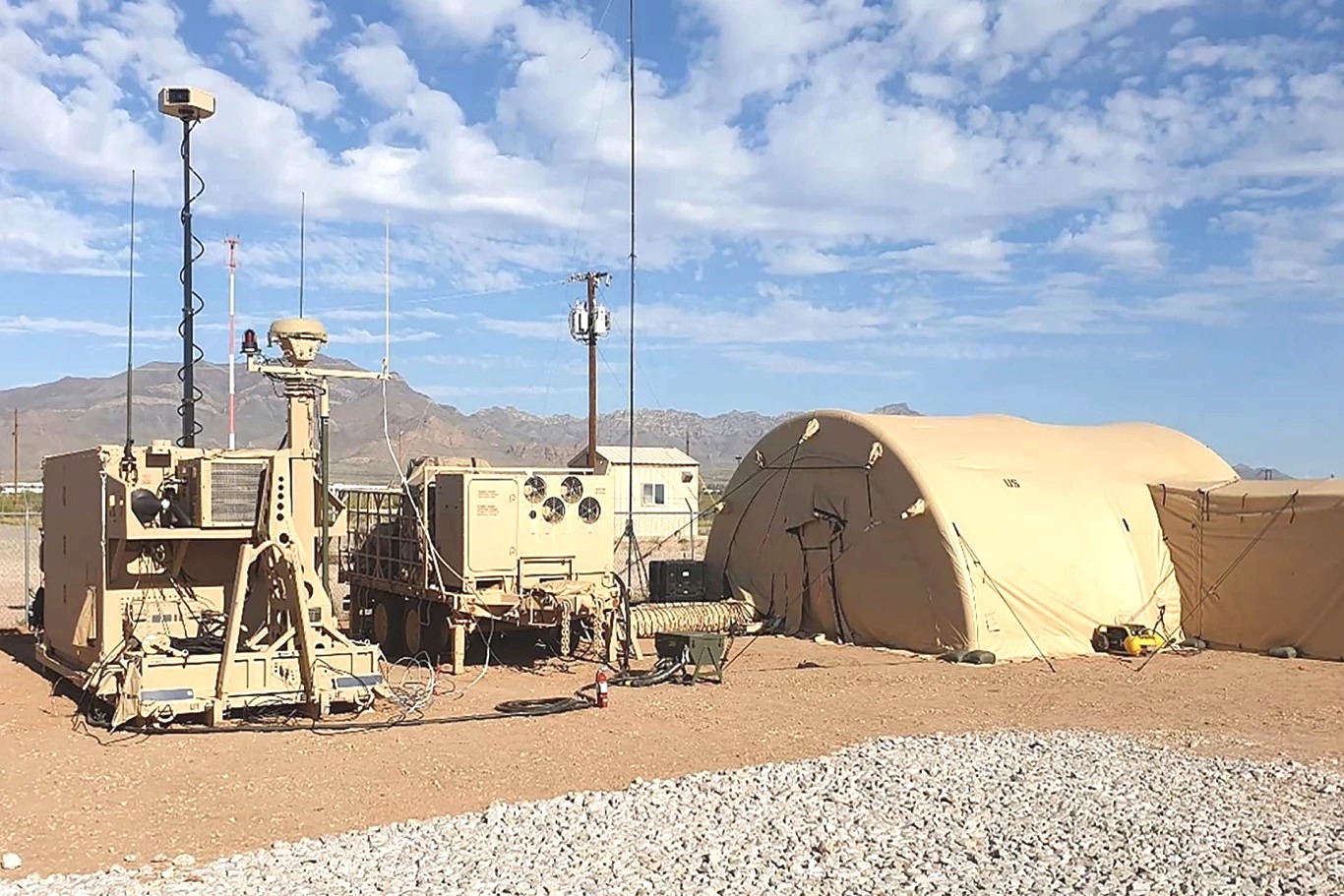
US Has Approved IBCS Network to Kuwait, Boosting Patriot Defence Against Missiles and Drone Swarms.

Washington DC/Kuwait City; May 2026: United States has approved a $2.5 billion sale of the Integrated Battle Command System to Kuwait, linking its air and missile defence assets into a unified network that can react faster and survive complex attacks, the US State Department confirmed on May 1, 2026. This upgrade directly strengthens Kuwait’s ability to counter simultaneous threats from ballistic missiles, cruise missiles, aircraft, and one-way attack drones in a region facing escalating strike risks.
The system connects Patriot launchers, sensors, and future radars into a single battle network that improves targeting accuracy and reduces response time under pressure. By enabling real-time data sharing across dispersed units, it enhances survivability and reflects a broader shift toward integrated, network-centric air defence in modern warfare.
Kuwait’s planned acquisition of the US Integrated Battle Command System will strengthen its Patriot air and missile defence network by linking radars, launchers, and command centres into a faster, more resilient shield against ballistic missiles, cruise missiles, drones, and aircraft amid rising Gulf tensions.
The Kuwaiti request covers 06 dismounted IBCS engagement operations centres, 02 hosted IBCS engagement operations centres, 06 dismounted IBCS Integrated Collaborative Environments, 02 hosted ICE nodes, 14 mounted integrated fire unit modification kits, 35 launcher integrated network kits on enhanced launcher electronic system kits, and 24 KIV-77 or KIV-79 identification friend-or-foe encryptors. Northrop Grumman, RTX, and Lockheed Martin are identified among the principal contractors tied to the Kuwaiti sale.
IBCS is the nerve centre rather than the interceptor itself. Its battlefield value comes from fusing radar tracks, identification data, launcher status, and engagement options into a single fire-control picture. Instead of each Patriot battery fighting largely through its own radar and engagement control station, Kuwait would be able to distribute sensing, command, and firing decisions across a wider network.
IBCS is designed to connect sensors and effectors not originally built to work together, allowing operators to select the best available weapon against each incoming threat. The US Army approved IBCS for full-rate production in April 2023 after operational testing, confirming its role as a core element of American integrated air and missile defence modernisation.
For Kuwait’s Patriot force, the armament relevance is direct. Patriot PAC-3 MSE interceptors are optimized for hit-to-kill engagements against tactical ballistic missiles, while GEM-T missiles remain important against aircraft, cruise missiles, and some ballistic missile threats. IBCS does not replace these missiles; it improves how they are cued, assigned, and fired, reducing wasted shots and increasing the probability that the right interceptor engages the right target.
The launcher-integrated network kits are especially important because they allow Patriot launchers to become nodes in a wider fire-control network. In tactical terms, this means a launcher may receive engagement-quality data from a sensor other than the radar traditionally assigned to its fire unit. That changes Kuwait’s air defence from battery-centric protection into a distributed shield with better survivability under saturation attack.
The engagement operations centres and Integrated Collaborative Environments give Kuwaiti commanders a common operating picture across multiple fire units. This improves decision speed in the first minutes of an attack, when ballistic missiles and drones may arrive from different azimuths and altitudes. The KIV-77 or KIV-79 encryptors and IFF elements also matter because misidentification and unsecured links can be as dangerous as missile shortages in dense Gulf airspace.
The sale follows Kuwait’s March 2026 request for up to 08 Lower Tier Air and Missile Defence Sensor radars, a separate $8 billion package designed to strengthen Patriot sensing with advanced 360-degree detection and tracking. The radar layer is central to defeating mixed attacks combining ballistic missiles, low-flying cruise missiles, and drones, especially when hostile fire is designed to overwhelm legacy radar sectors and compress decision time.
Kuwait’s requirement is shaped by geography and alliance commitments. The country sits close to Iran, borders Iraq, faces the northern Gulf, and hosts key US facilities including Camp Arifjan, Ali Al Salem Air Base, and Camp Buehring. These sites make Kuwait both a sovereign target and a strategic transit hub in any Gulf crisis involving US, Iranian, or allied forces.
Iranian doctrine has repeatedly emphasised missiles, drones, and proxy-enabled pressure as tools to complicate US and allied operations. Kuwait does not need IBCS because it seeks war with Iran; it needs IBCS because any US-Iran or Israel-Iran escalation can rapidly place Kuwaiti airspace, bases, ports, oil infrastructure, and population centres inside the threat envelope.
The operational logic is deterrence through denial. If Kuwait can complicate Iranian strike planning by improving detection, fire distribution, and interceptor efficiency, it raises the cost of coercion. This is particularly relevant after months of regional missile and drone attacks forced Gulf capitals to reassess the limits of isolated national air defence systems and the need for interoperable, layered protection.
At the tactical level, IBCS would allow Kuwaiti air defenders to manage saturation more intelligently. A ballistic missile aimed at a military air base, a cruise missile approaching a refinery, and drones probing Patriot radar coverage are different targets requiring different weapons and timelines. A networked command system helps prioritise threats, prevent duplicated engagements, and preserve high-value PAC-3 MSE missiles for the targets that demand them.
The procurement also strengthens interoperability with US forces in Kuwait and across US Central Command. In a crisis, shared doctrine, compatible command networks, and common engagement procedures can shorten the kill chain between detection and interception. This makes the Kuwaiti acquisition part of a broader Gulf effort to move from isolated national batteries toward coordinated regional air and missile defence.
Strategically, Kuwait is moving from ownership of capable air defence equipment toward ownership of an integrated defensive system. That distinction matters. Modern missile defence is no longer defined only by the number of launchers or interceptors; it is defined by sensor quality, data fusion, command resilience, and the ability to fight through electronic attack, drone swarms, and simultaneous missile salvos.
For United States, the sale reinforces a major non-NATO ally while binding Kuwait more closely into the US-led air and missile defence architecture in the Gulf. For Kuwait, it is a practical answer to the new regional battlefield: threats are faster, more numerous, and more varied, and the country’s defensive response must be networked before the first missile leaves its launcher.
Team Maverick.





Gold for Inclusion, Gold for Abhi: Telangana Skater Shines at Gurugram Camp
Gurugram, May 2026: In a moment that celebrated both sporting excellence and the power of …

Gold for Inclusion, Gold for Abhi: Telangana Skater Shines at Gurugram Camp
Gurugram, May 2026: In a moment that celebrated both sporting excellence and the power …