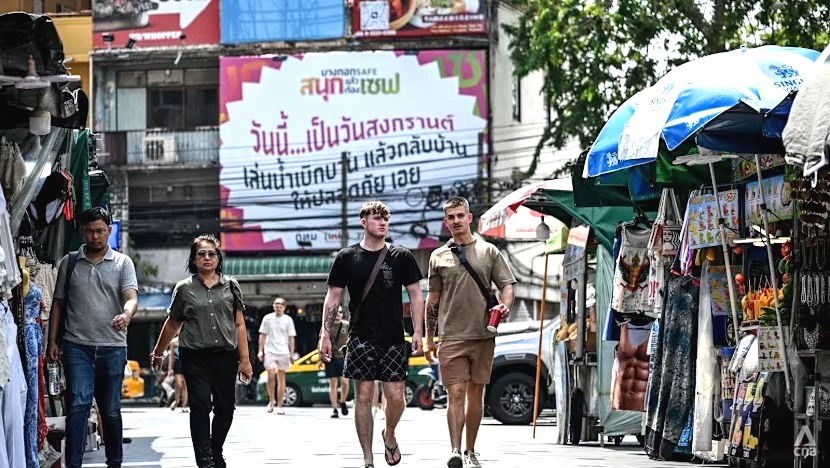
Thailand Makes Travel Insurance Mandatory For Tourists.

Bangkok; May 2026: For all these years travellers to Thailand, have inculcated serenity with freedom; the kingdom offers an adventurous escape; a place where riding a motorcycle along a coastal road, or scuba diving around a colourful coral reef is a rite of passage. But such experiences come with risk. But that risk is not always front of mind for tourists on the trip of a lifetime.
That is about to undergo a change, as Thailand considers requiring foreign tourists to carry accident insurance. Rising numbers of uninsured patients have left hospitals increasingly absorbing the cost of care. Some serious cases can run into millions of baht. Unpaid medical bills from foreign patients cost Thailand at least 100 million baht (US$3 million) annually, according to the Ministry of Public Health, with the burden falling heavily on tourism centres like Phuket and Chiang Mai, as hospitals are ethically bound to provide care even if patients cannot afford to pay for urgent and necessary treatment.
Health insurance is not mandatory for visitors to Thailand. However, it is required for some long-stay Thai visa applications. Despite relatively low premiums, many travellers still arrive in Thailand without insurance, often underestimating the risks or choosing to self-insure. A 33 years old tourist from Canada who declined to give his full name, said he is committed to pay out of his own pocket in the event of an accident. “I’ve had accident insurance in the past when I first started travelling 10 years ago and found that financially the return wasn’t there, so at some point I just didn’t renew”, he said.
Thailand has not yet indicated how its insurance requirement will work, what the minimum coverage would be or when it might be rolled out. Somruk Jungsaman, the permanent secretary of Thailand’s Public Health ministry, said the government is still seeking clear data to assess the scale of the problem and design appropriate measures, as reported by the Bangkok Post last month. The ministry will discuss the extent of insurance and related mechanisms with relevant agencies, he said.
Experts say the proposal reflects a broader rethink of the country’s tourism model, shifting some of the financial burden from the state to visitors. The policy was first raised in 2020 during the COVID-19 pandemic and has gained momentum again as Thailand looks to pivot towards higher-value tourism rather than pure volume, said Gary Bowerman, a tourism policy and consumer trends analyst.
“I don’t think it will significantly shock the market”, Bowerman said. “But it signals that the government is re-appraising how to develop its tourism industry in a changing world. Most of the pre-2020 certainties that enabled its visitor economy to grow so fast are gone and aren’t coming back”, he said.
Mandatory insurance coverage already exists in other tourism markets in various forms. Some countries, such as Cuba, already require mandatory insurance for all visitors. The European Schengen area requires minimum coverage of 30,000 euros (US$35,000) for medical emergencies and repatriation for those travelling on a Schengen visa. Countries including Russia, Turkey and Iran also require insurance as part of visa approval, while Qatar mandates cover from a locally approved provider, either online or on arrival, before being granted entry.
It is mention worthy that Thailand remains one of the world’s most visited destinations, with a record 32.9 million tourists visited in 2025, although tourists influx began receding after the post-pandemic rebound. While the sector remains large, momentum has slowed with arrivals slipping in 2025 by 7.2% compared to 2024, the first drop since the pandemic recovery. Early 2026 data shows growth continuing at a slower pace, with arrivals slightly down again year-on-year, as the cost of sustaining mass tourism, from healthcare to infrastructure, has come under increasing scrutiny.
In the past, Thailand’s tourism industry was heavily driven by volume, said Thanapol Cheewarattanaporn, president of the Association of Thai Travel Agents (ATTA). It meant that measures seen as barriers to entry, such as mandatory insurance, were not seriously pursued, as there were concerns about discouraging arrivals, he said. “The private sector is beginning to recognise the need for a policy like this. The proposal is generally seen as understandable and increasingly justified in today’s context”, he told press reporters.
Bowerman said the economic consequences of the war in the Middle East, which have not yet been fully realised or factored in, will reinforce the fact that volume tourism goal-setting is not going to deliver the perceived economic benefits or political cachet that it once did. This suggests visitors may need to take greater responsibility for their own burden on the country’s healthcare system. “The challenge will be enforcing the policy without appearing intrusive or slowing down entry procedures,” he said.
While industry experts have unifiedly reiterated that they accept the need for mandatory insurance, they also warned that poor implementation could deter travellers, especially in a highly competitive regional market. The ATTA is looking for a “balanced approach”, with concerns that if verification systems are unclear or if the process becomes overly complicated, it could create friction for travellers.
Thanapol said the industry is willing, to some extent, to support implementation. This could include bundling insurance into travel packages or assisting with pre-departure checks, as long as the government provides a clear, standardised, user-friendly system. “What may matter more is the perception that travel to Thailand has become more complicated”, he said, especially for budget-conscious travellers, spontaneous visitors and short-haul group tours from nearby markets. “Ease of entry remains a critical factor in destination choice”, he added.
Noor Ahmad Hamid, the CEO of the Pacific Asia Travel Association (PATA), was less concerned about possible impediments to travel, describing the potential move as “part of a broader strategic reset”. He further asserted, “It reflects Thailand’s intent to position itself as a destination that prioritises quality, resilience, and responsible tourism practices, aligning with measures already adopted in other countries”.
Team Maverick.

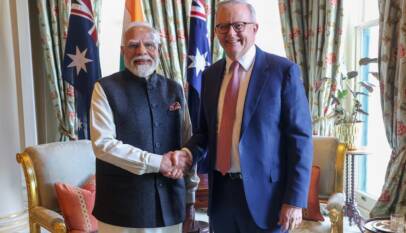





PM Modi, Australian Opposition Leader Angus Taylor Reaffirm Bipartisan Commitment to Stronger India-Australia Ties
Melbourne, July 2026 : Prime Minister Narendra Modi on Friday met Australian Opposition Le…
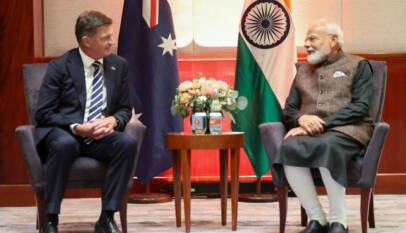
PM Modi, Australian Opposition Leader Angus Taylor Reaffirm Bipartisan Commitment to Stronger India-Australia Ties
Melbourne, July 2026 : Prime Minister Narendra Modi on Friday met Australian Opposition Leader …