Space X Debris Heading To The Moon: What Happens After Collision?

Florida; May 2026: The upper stage of a SpaceX Falcon 9 rocket is on a collision course with the Moon. According to scientific calculations, the object will crash into the lunar surface in August this year at a speed more than seven times (7X) the speed of sound.
Renowned astronomer Bill Gray identified and tracked the object in September 2025 using specialised software. The collision trajectory has also been confirmed by data from the US Space Force cataloging system. The debris is the second stage of a Falcon 9 rocket launched on January 15, 2025.
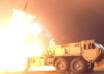
The main purpose of that mission was to deliver 02 private lunar spacecraft: the Blue Origin Mission 1 lander from Blue Origin, which successfully landed on the Moon, and the Japanese Hakuto-R Mission 2 module from ispace, which failed and crashed onto the lunar surface.
The spent stage is now traveling at approximately 8,700 km/h. Due to the enormous kinetic energy of the impact; the metal will be completely vapourised, leaving only a small fresh crater and scattered rock debris.
This is not the first such case; earlier in March 2022, a similar Chinese Chang’e-5 T1 rocket stage also crashed into the Moon.
Why random impacts on the Moon are becoming a problem?
A single Falcon 9 impact itself does not pose a danger, but it highlights a growing future issue. As NASA prepares to establish a permanent lunar base near the Moon’s south pole, the number of missions in that direction is rapidly increasing.
If government agencies and private companies do not implement controlled deorbiting of rocket stages, uncontrolled debris could pose a direct threat to future lunar settlements and astronauts.
Currently, NASA closely tracks space debris only around Earth to protect the International Space Station (ISS), which regularly performs avoidance manoeuvres. In the future, the U.S. Space Force will need to expand monitoring to the entire space between Earth and the Moon.
Space debris crisis –
According to a report by the European Space Agency (ESA), the situation in near-Earth orbit traffic has sharply worsened due to the deployment of large commercial satellite constellations. In particular, SpaceX has already surpassed 10,000 active Starlink satellites this year (2026). This high density is causing more accidental micro-collisions between operational satellites and remnants of old rockets, producing thousands of small debris fragments that are difficult to track.
Scientists are already developing theoretical concepts for cleaning space using giant nets, electro-magnets, or harpoons, but none have yet been implemented in practice. Meanwhile, debris those which are uncontrolled, threatens not only space but also Earth. On January 17, 2025, a large unidentified fragment, which is likely part of an Indian rocket had felled directly onto a village in Kenya.
For safe disposal of decommissioned spacecraft, international agencies usually use a remote area in the South Pacific known as the “Point Nemo”. However, thousands of uncontrolled objects remain in orbit and may re-enter Earth’s atmosphere at any time.
Now, the Space X debris (upper stage of a Falcon 9 rocket). which is rapidly heading to the moon, is likely to hit the moon on the 05th August, 2026 at 06:44 UTC [corresponds to 12:14 PM in India Standard Time (IST)].
The Falcon 9 is SpaceX’s workhorse rocket. These rockets have two stages:
- The first, larger stage gets the payload (and upper stage) most of the way to orbit, and then comes back to earth and lands on a barge, and can be re-used.
- The upper, smaller stage goes into orbit and can’t be re-used. As it is seen in the below mentioned image, it’s still quite a large object, roughly the height of a five-story building.

Over 600 Falcon 9 rockets have been launched. Most of the upper stages are either in orbits close to the earth or have already re-entered the earth’s atmosphere. A few are orbiting the sun. The object that will be hitting the moon has been orbiting the earth for a little over a year.
This object has spent almost all of its time at distances similar to that of the moon. Generally speaking, such objects are very poorly tracked. The US military mostly tracks objects using radar. That does a superb job of tracking low-orbiting junk; they’ve tracked gloves and tool bags that astronauts have lost over the years. But the moon, and objects like 2025-010D, are about 400 times further away; the radar signals are about 25.6 billion times fainter. (If an object is 400 times further away, it receives 1/400 squared, or 1/160000, as much radar energy. And of that, only 1/160000 as much is returned to earth)
However, these objects are entirely observable by the asteroid surveys, and even by amateur astronomers with suitably advanced gear and techniques. Basically, the radar works well for “close” stuff, and the telescopes work better for more distant objects.
The asteroid surveys would actually prefer not to observe space junk. Their job is to find and track rocks that might hit the earth (“planetary defense”). Time spent observing junk is time not spent finding rocks. But both the rocks and the high-altitude space junk are slowly moving points of light in their images; they aren’t easy to distinguish. So, the asteroid surveys find this sort of junk whether they want to or not.
Where and when will it hit the moon?
As of 25th April, 2026, it have been computed, that the impact on 05th August, 2026 would be at 06:44 UTC (Universal Time). Locally, that will be :
- 2:44 AM (US) Eastern Daylight Time;
- 1:44 AM (US) Central Daylight Time;
- 12:44 AM (US) Mountain Daylight Time;
- 11:44 PM (US) Pacific Daylight Time on August 4;
- 7:44 AM Western European Summer Time;
- 8:44 AM Central European Summer Time;
- 9:44 AM Eastern European Summer Time;
- 4:44 PM Australia Eastern Standard Time;
- 4:14 PM Australia Central Standard Time;
- 2:44 PM Australia Western Standard Time;
- 12:14 PM Indian Standard Time.
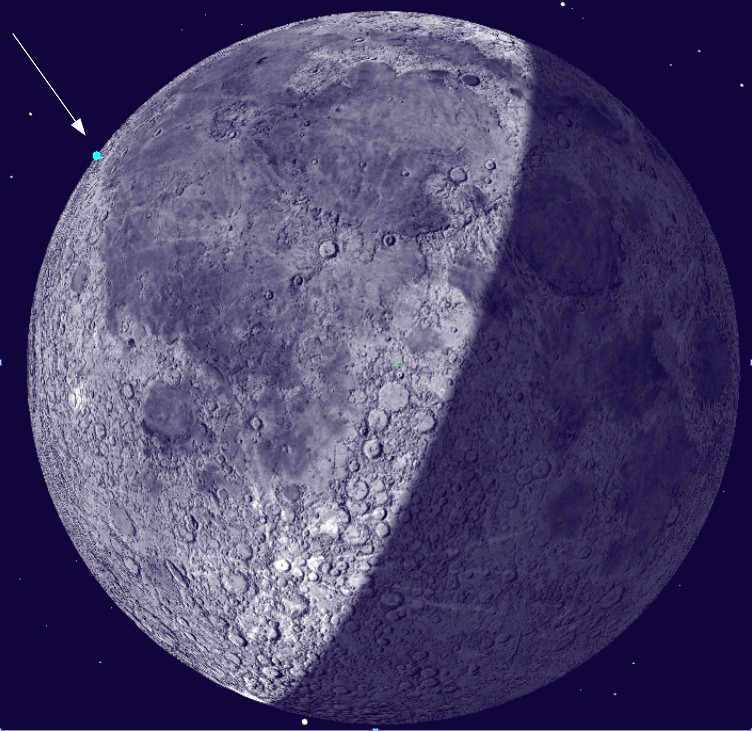
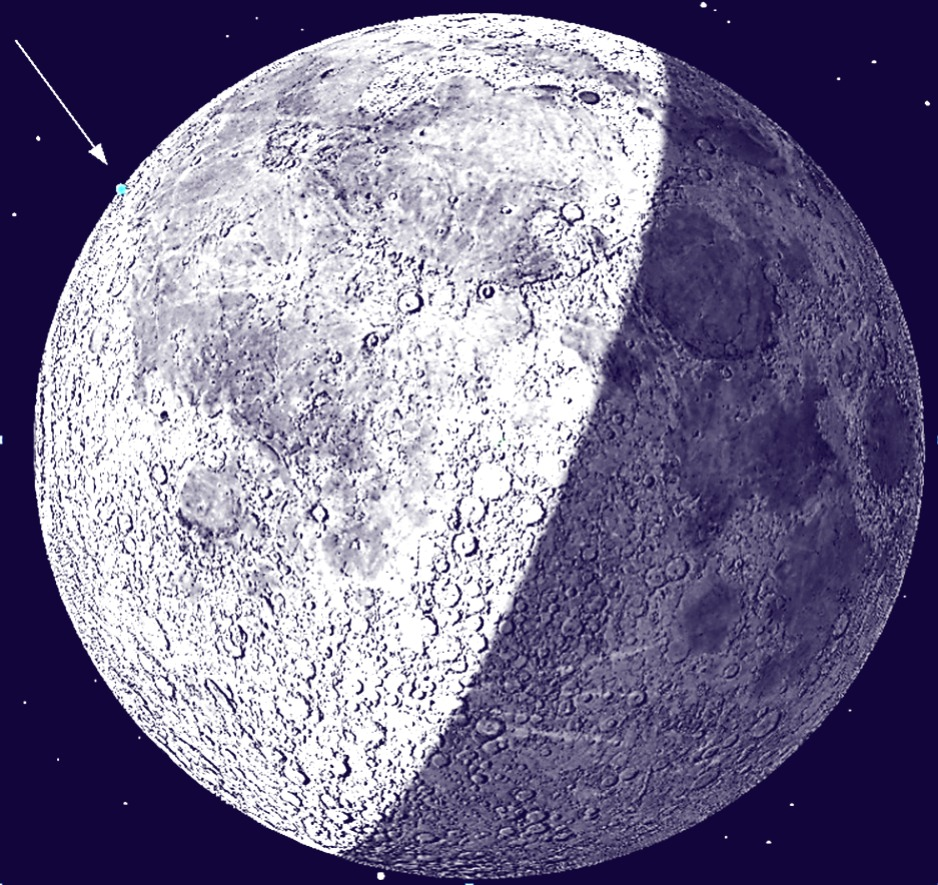
The impact point will be at lunar latitude 15 N, longitude 272 E = 88 W. The first image shows how it’ll look from the earth, with the impact at the blue dot pointed to by the arrow. Somewhere close to that place and time, anyway; as described above, some parts of the motion of this object aren’t entirely predictable, though we’ll have a very exact answer a bit before it hits. It will be close to the edge (limb) of the moon as seen from earth, on the sunlit part. The moon will be a little more than half illuminated at the time.
Team Maverick.








Chandrababu Naidu Reviews Preparations for PM Modi’s August 1 Inauguration of Bhogapuram International Airport
Amaravati, July 2026 : Andhra Pradesh Chief Minister N. Chandrababu Naidu on Monday conduc…

Chandrababu Naidu Reviews Preparations for PM Modi’s August 1 Inauguration of Bhogapuram International Airport
Amaravati, July 2026 : Andhra Pradesh Chief Minister N. Chandrababu Naidu on Monday conducted …