Iran Says Strait of Hormuz Restrictions Remain Despite Trump’s Claim of Blockade Removal

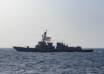
Tehran, May 2026 : Iran has stated that restrictions on maritime traffic through the strategically vital Strait of Hormuz remain in force, contradicting recent claims by US President Donald Trump that a naval blockade on the country had been lifted.
According to reports from Iran’s semi-official Tasnim News Agency, Iranian sailors have continued to receive warnings from the United States Central Command, advising vessels not to enter certain areas of the waterway. The report cited maritime personnel who said that restrictions affecting Iranian shipping remain unchanged despite Trump’s public announcement.
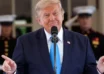
On Friday, Trump wrote on his Truth Social platform that the US naval blockade against Iran “will now be lifted.” In the same message, he outlined conditions for a potential agreement with Tehran, insisting that Iran must commit to never acquiring nuclear weapons.
Trump also called for the immediate reopening of the Strait of Hormuz, urging unrestricted navigation for commercial vessels in both directions. He further proposed the removal of any water mines in the region and suggested that Iran’s enriched uranium stockpiles be identified and destroyed in coordination with Tehran and the International Atomic Energy Agency (IAEA).
However, Iranian officials have maintained that nuclear-related matters are not currently part of ongoing discussions with the United States.
Meanwhile, Iran’s main military command, the Khatam al-Anbiya Central Headquarters, reiterated on Saturday that the country retains full authority over navigation through the Strait of Hormuz. In an official statement, the command said all vessels, including commercial ships and oil tankers, must travel only through routes designated by Iran and obtain clearance from the Navy of the Islamic Revolutionary Guard Corps (IRGC).
The IRGC Navy also reported that 20 vessels had successfully crossed the strait during the previous 24 hours in coordination with Iranian maritime authorities. According to Iran’s semi-official Fars News Agency, these vessels were granted passage after obtaining the necessary permissions, largely because their countries required the transportation of essential commodities, including chemical fertilizers.
The Strait of Hormuz, one of the world’s most critical energy transit routes, has remained at the centre of regional tensions. Iran tightened its control over the waterway on February 28 following joint military strikes on Iranian territory. Since then, vessels linked to the United States and Israel have faced increased scrutiny and restrictions.
At the same time, the United States has maintained naval measures in the region that continue to affect shipping traffic to and from Iranian ports, underscoring the ongoing tensions despite diplomatic signals from both sides.
(The content of this article is sourced from a news agency and has not been edited by the Mavericknews30 team.)








A New Threat Posed To Israel-US Joint Air Operations In The Form Of Chinese QW-12 ADM To Iran.
Beijing/Washington DC; August 2026: As per information provided by trusted PLA sources, Ir…

A New Threat Posed To Israel-US Joint Air Operations In The Form Of Chinese QW-12 ADM To Iran.
Beijing/Washington DC; August 2026: As per information provided by trusted PLA sources, Iran is …