UN Security Council’s Emergency Meeting After Emanuel Macron’s Urgent Call.

New York; June 2026: As Maverick News 30 has reported yesterday (Monday – 01st June 2026) that French President has urged for an emergency United Nations Meeting in wake of the Israeli attacks on Lebanon amidst the ceasefire as earlier negotiated, casting a shadow over the Iran-US negotiations.
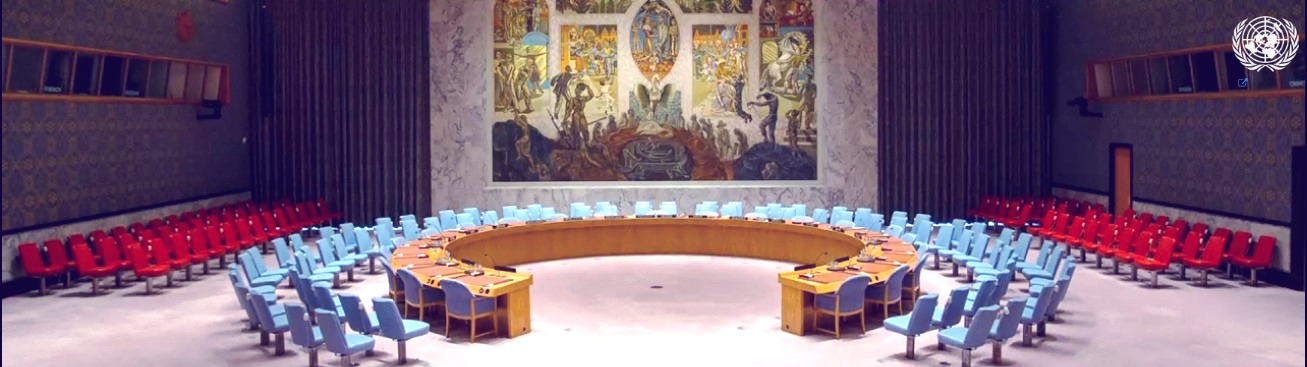
Accordingly, The Security Council met today (Tuesday – 02nd June 2026) at France’s request, as concern grows over escalating violence in Lebanon between Israel and Hezbollah amid warnings of Israeli strikes on Beirut’s southern suburbs, and confusion over the status of US-Iran peace talks linked to the faltering ceasefires.
The Council met after Israel pushed farther into Lebanon, including Beaufort Castle, while Hezbollah expanded rocket, drone and missile attacks into Israel. UN official Martha Pobee said both trends are escalating fast, with heavy civilian casualties in Lebanon.
Why it matters: The crisis threatens to collapse resolution 1701: Israel’s presence north of the Blue Line violates Lebanese sovereignty, while Hezbollah’s attacks and refusal to disarm also breach the framework. Beaufort Castle is especially symbolic because it recalls Israel’s 1982–2000 occupation.
Council members broadly urged de-escalation, protection of civilians and respect for UNIFIL, but split on blame: some focused on Hezbollah and Iran; others on Israel’s expanding operation. The immediate risk is a wider Lebanon war overtaking diplomacy.
Israel: Ambassador Danny Danon of Israel said his country “did not wake up one morning and decide to enter Lebanon”, stressing that it “had no choice” after Hezbollah fired on Israel on 02nd March. He said the Iranian regime continues to use Hezbollah as its proxy to keep northern Israel under attack, adding that over the past weekend, attacks on Israel’s northern communities intensified to “the heaviest levels of fire since the April ceasefire”.
For residents of northern Israel, he said, there was no real ceasefire because Hezbollah “never really stopped” firing rockets and drones. Thousands of Israeli schoolchildren remain at home because Hezbollah has made it unsafe for them to attend school, he said, asking France’s delegate to imagine his country under attack from Spain: “Would you wait until the drones were buzzing over Paris” or would you eliminate the threat?
Lebanon: Ahmad Arafa of Lebanon said that, despite efforts by his Government to contain the current crisis, Israel — “capitalising, as usual, on a tense regional climate”, has engaged in a dangerous military escalation.
Israel, he stressed, continues its “systematic campaign of destruction”, deliberately striking medical personnel, hospitals, journalists, schools, security agencies, UNIFIL forces, places of worship, archaeological sites and “countless other targets that embody Lebanon’s collective memory and civilisational identity”.
Condemning these practices — “in many instances, they amount to war crimes” — he stressed that this is the result of a collective failure to generate solutions, coupled with a lack of accountability. “That, in turn, emboldens the perpetrator to commit the very same crimes time and time again,” he observed.
Israel must commit to a ceasefire so that the Government can extend its control over all of Lebanon. “The State pledges that, once this is achieved, it alone will be held accountable and answerable for any subsequent violations” Ahmad Arafa said.
United States: Michael G. Waltz of the United States highlighted President Donald J. Trump’s personal leadership and ongoing diplomatic efforts, including another round of talks. He said “the legitimate Government of Lebanon is demonstrating real courage and leadership” as it seeks to free the country from “a terrorist organisation that answers to Tehran. Both de-escalation and peace will come quickly if Hezbollah immediately ceases its attacks, as apparently it promised”, he said.
“The path is clear”, he concluded: Hezbollah must stop attacking Israel; the Lebanese Armed Forces and Government must assert control over Lebanese territory; and Iran must stop using Lebanon as “a forward operating base”, so the Lebanese people can rebuild “a country that belongs to them, not Hezbollah and certainly not to Tehran”.
Bahrain: Jamal Fares Alrowaiei of Bahrain welcomed “an agreement has been reached to put a stop to the attacks”, in an apparent reference to reports emerging as the meeting unfolded that United States President Donald Trump had announced Israel and Hezbollah agreed to stop firing at each other.
“We consider this a positive step towards de-escalation and an end to hostilities, and it is a step towards enhancing peace, stability, and security in the Republic of Lebanon and the region”, he said, alongside rejecting “any chaos or division”, he also stressed the need to respect relevant Security Council resolutions and the need to exert international efforts to put an end to the military operations, and to guarantee the protection of civilians and the unobstructed delivery of aid in accordance with international law and international humanitarian law.
Denmark: Christina Markus Lassen of Denmark said sovereignty and territorial integrity are not merely theoretical principles, but “at the very foundation of the international order we have fought to uphold within this Chamber for the last 80 years. What we are witnessing in Lebanon today is what happens when those principles erode”, she said, warning that the “ripple effects” for Lebanon, the region and the Council’s credibility are clear, and that protecting those principles remains a collective responsibility.
Russia: Vassily A. Nebenzia of Russian Federation said “the ceasefire reached on April 17 between West Jerusalem and Beirut, brokered by Washington, has unfortunately turned out to be a smokescreen” for Israel’s aggression against Lebanon.
While the world was awaiting another round of negotiations scheduled for 02nd June, there has been an almost identical replay in Lebanon of the clearing of the Gaza Strip and forced displacement of the population. Therefore, it is not surprising that the idea of armed resistance as the only alternative to occupation is gaining popularity, he warned.
The further occupation of Lebanon brings with it the risk of a dangerous escalation of ethnic and religious tensions and the outbreak of civil war. The deterioration of the situation in Lebanon is a direct consequence of the unjustified aggression by the United States and Israel against Iran, Vassily Nebenzia added.
France: Jérôme Bonnafont of France, said his delegation requested this meeting. While recognising Israel’s right to self-defence, he said “nevertheless, nothing can justify the continuation and scale of its military operations in Lebanon” – thousands of civilian deaths and injuries, and the forced displacement of populations, or its ever deeper occupation of Lebanese territory. This constitutes a major strategic mistake on Israel’s part”, he said.
Furthermore, he added, these operations are contrary to the commitments Israel undertook on 17th April, and to the resolutions of this Council. It is urgent that the guns fall silent. This headlong rush took a symbolic dimension yesterday by planting its flag on the Beaufort fortress, which served as a base during its occupation of southern Lebanon until 2000. “Israel is returning to a period that many believed was behind us”, he warned, stressing: “History is instructive. The same causes are highly likely to produce the same effects”.
Martha Ama Akyaa Pobee, Assistant Secretary-General, Departments of Political and Peacebuilding Affairs and Peace Operations, United Nations has said that “The situation in Lebanon is deeply alarming. Israeli ground troops pushing further north into Lebanese territory, and intensified Hezbollah attacks reaching deeper into Israel”.
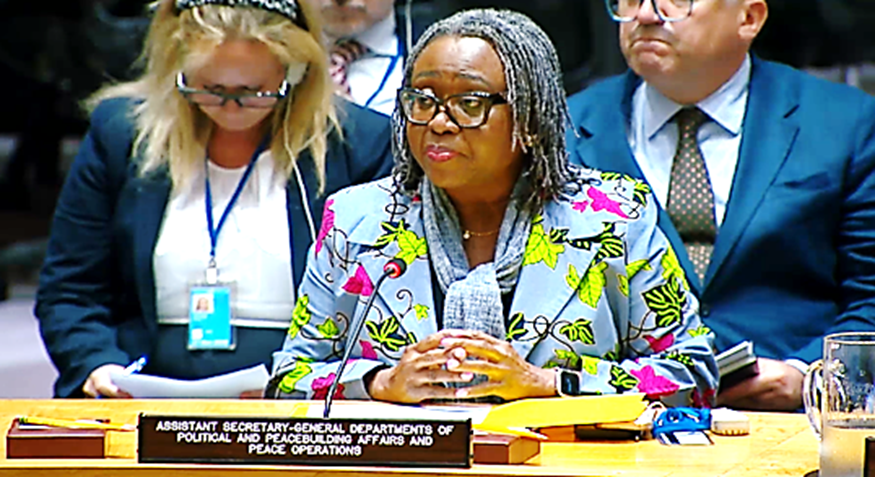
She said recent Israeli incursions included the capture of Beaufort Castle, advances north of the Litani River in the “Yohmor triangle”, intensified air strikes across southern Lebanon, the Beqaa Valley and the outskirts of Beirut, and sweeping “urgent warnings” for civilians to evacuate areas south of the Zahrani River.
She also cited extensive military activity reported by the United Nations Interim Force in Lebanon (UNIFIL) north of the Blue Line, including 992 Israel Defence Forces projectile trajectories recorded on 30th May, the highest number since the 17 April cessation of hostilities.
Hezbollah has continued to launch dozens of rockets, anti-tank guided missiles, and drones, including increasingly deadly fibre-optic drones, she said. It has also used surface-to-air missiles and improvise explosive devices (IED) against Israeli troops and assets inside Lebanese territory, while escalating strikes deeper into Israel in recent days.
“These developments mark a dangerous and alarming escalation”, she said, as they directly undermine the cessation of hostilities understanding announced by the United States on 16th April and eroding fragile diplomatic efforts to deescalate the situation.
Team Maverick.




Iran, US Pause Hostilities for Second Night as Diplomatic Efforts Gather Momentum
Tehran, July 2026 : Iran and the United States avoided launching fresh military strikes fo…
Iran, US Pause Hostilities for Second Night as Diplomatic Efforts Gather Momentum
Tehran, July 2026 : Iran and the United States avoided launching fresh military strikes …