Second BRICS Culture Working Group Meeting Concludes in Varanasi with Renewed Commitment to Cultural Cooperation

BRICS Nations Strengthen Cultural Partnerships Through Dialogue on Heritage, Cooperation and Sustainable Development
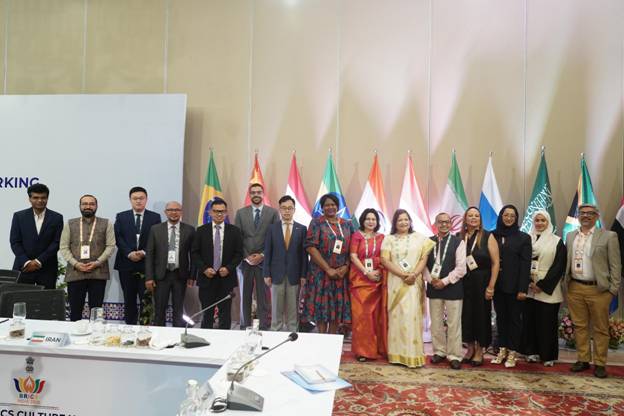
Today, the second day of the 2nd BRICS Culture Working Group’s Meeting commenced with opening remarks by Dr. Arvind Kumar, Joint Secretary, Ministry of Culture, Government of India. The deliberations continued the substantive discussions initiated on the first day, reflecting the shared commitment of BRICS Member States towards strengthening cultural cooperation and advancing common priorities in the cultural sector.
The first panel discussion, titled “Institutional Strategies for Cultural Heritage Protection and Return of Cultural Property” and moderated by Prof. Ramesh C. Gaur, Dean, Indira Gandhi National Centre for the Arts (IGNCA), provided a platform for Member States to exchange experiences and best practices concerning the protection, preservation, and restitution of cultural property. Participants reaffirmed their commitment to enhanced cooperation in addressing challenges associated with the return of cultural property and underscored the importance of heritage protection as a shared responsibility. Discussions highlighted the role of cultural heritage in fostering identity, safeguarding community rights, and strengthening intercultural understanding.
The subsequent panel, “Collaborative Approaches for Safeguarding Shared Heritage: Joint Nominations under the UNESCO World Heritage Convention, Intangible Cultural Heritage, and the Memory of the World Programme”, moderated by Dr. Arvind Kumar, explored opportunities for collaborative nominations among BRICS countries. Delegates discussed the potential of joint nominations as a means to promote the safeguarding, recognition, and transmission of shared intangible and tangible cultural heritage, while further strengthening international cooperation within the BRICS framework.
The final panel of the day, “Culture as a Driver of Sustainable Development: Post-2030 Agenda”, moderated by Smt. Amrita Sarbhai, Additional Secretary, Government of India, examined the growing recognition of culture as an enabler and catalyst of sustainable development. The discussion highlighted the interlinkages between culture, social inclusion, environmental sustainability, economic resilience, and community well-being, while exploring pathways for integrating cultural dimensions into the emerging global development discourse beyond 2030.
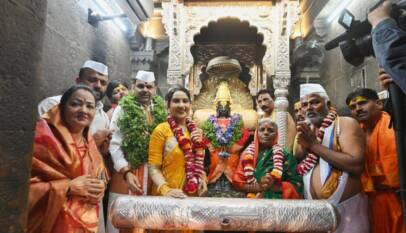
The day further featured a cultural programme showcasing the rich civilizational and living heritage of Kashi. Delegates witnessed the Ganga Aarti, visited the Kashi Vishwanath Corridor, and attended a Light and Sound Show, offering an immersive experience of India’s vibrant cultural traditions and enduring heritage. The programme served as a fitting culmination to the deliberations and marked the successful conclusion of the 2nd BRICS Culture Working Group Meeting, reaffirming the shared commitment of BRICS Member States to strengthening cultural cooperation and fostering deeper people-to-people ties.
India Beat Pakistan 3-1 to Clinch FIH Youth Hockey5s Asian Championship Title
Muscat, July 2026: India’s Sub-Junior men’s hockey team delivered a commanding performance…
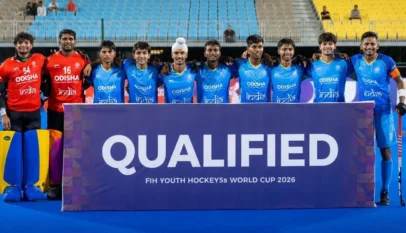
India Beat Pakistan 3-1 to Clinch FIH Youth Hockey5s Asian Championship Title
Muscat, July 2026: India’s Sub-Junior men’s hockey team delivered a commanding performance to defeat …