Trump, Macron Hail Iran Deal as Breakthrough for Peace and Global Stability

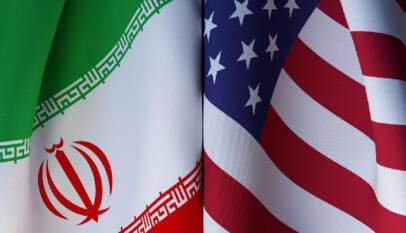
Evian, June 2026 : US President Donald Trump and French President Emmanuel Macron on Monday welcomed the newly signed agreement between the United States and Iran, describing it as a significant diplomatic breakthrough that could ease tensions in the Middle East, reopen the Strait of Hormuz and prevent Tehran from developing nuclear weapons.
The two leaders made the remarks during a bilateral meeting on the sidelines of the G7 Summit in the French resort town of Evian, where discussions centered on regional security, energy markets and global stability.
French President Emmanuel Macron termed the agreement a landmark development with far-reaching implications for international peace.
“I think yesterday was a very important agreement, a peace deal with Iran,” Macron said at the beginning of the meeting. “It will address the nuclear issue first, and that is a very important matter for peace and for the whole world.”
Macron expressed optimism that the agreement could help stabilize the Middle East and contribute to broader peace efforts in the region, particularly in Lebanon.
“It will provide peace in Lebanon, and we are ready to take our fair share of the burden and be part of the international community’s commitment to support this deal,” he said.
President Trump also emphasized the significance of the accord, stating that it was already yielding tangible results. According to him, commercial shipping had begun resuming operations through the Strait of Hormuz, one of the world’s most strategically important maritime routes for oil and gas transportation.
“The deal is all signed, and the Strait is already partially opened,” Trump said. “Ships are starting to go out now. On Friday, it’ll be completely opened.”
The Strait of Hormuz is a critical chokepoint through which a large share of the world’s energy supplies pass. Disruptions in the waterway over recent months had triggered volatility in global oil markets and raised concerns about wider regional instability.
Trump revealed that the agreement had been reached after negotiations with what he described as a new leadership group in Iran.
“We found the third set to be very smart and strong, but we ended up making a deal,” he said.
The US President reiterated that the central objective of the agreement was to ensure that Iran would never acquire nuclear weapons.
“The main thing is that Iran will not have a nuclear weapon. They fully agreed to that with strong policing powers, and they won’t have a nuclear weapon,” Trump asserted.
Trump also pointed to the immediate economic benefits of the agreement, arguing that easing tensions in the Gulf region was already influencing global markets.
“I think a lot of great things are going to happen in the Middle East right now, and very importantly, oil is plummeting down and the stock market is shooting up like a rocket today,” he said.
Asked about the public release of the agreement’s details, Trump indicated that the memorandum of understanding would soon be made available.
“I want it to be released because it’s a very powerful document,” he said. “Probably pretty soon, sometime after Friday.”
The President added that US Vice President JD Vance would likely represent the administration at the formal signing ceremony.
“JD is coming in for it,” Trump said, adding that his own participation would depend on summit commitments. “I may be involved, I may not.”
Trump also suggested that his administration would now shift greater focus toward ending the Russia-Ukraine conflict.
“I had two very good conversations yesterday,” he said, referring to discussions with Russian President Vladimir Putin and Ukrainian President Volodymyr Zelenskyy. “Now that this is finished, we’re going to be focusing on that.”
Macron noted that G7 leaders would continue discussions on a range of strategic issues during the summit, including Ukraine, critical minerals, trade and artificial intelligence, as global leaders seek coordinated solutions to emerging challenges.
(The content of this article is sourced from a news agency and has not been edited by the Mavericknews30 team.)




Iran, US Pause Hostilities for Second Night as Diplomatic Efforts Gather Momentum
Tehran, July 2026 : Iran and the United States avoided launching fresh military strikes fo…
Iran, US Pause Hostilities for Second Night as Diplomatic Efforts Gather Momentum
Tehran, July 2026 : Iran and the United States avoided launching fresh military strikes …