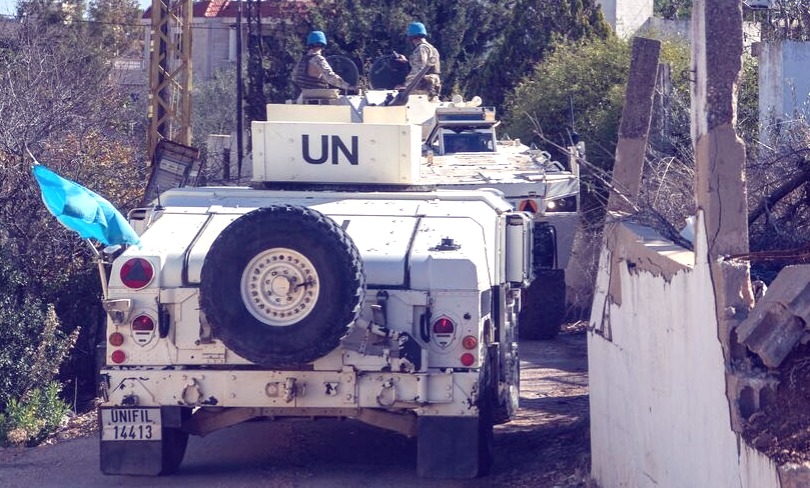
United Nations Upholds Freedom Of Movement For The Peacekeepers.

Rome; June 2026: The United Nations has again called for freedom of movement for its never tiring peacekeepers in Lebanon who continue to closely monitor developments in the south of the country, including in the wake of the recent provisional agreement signed by the United States and Iran.
UN Spokesperson Stéphane Dujarric updated journalists on the activities of the UN Interim Force in Lebanon (UNIFIL) and ongoing humanitarian support to people displaced by hostilities between Israeli troops and Hezbollah militants.
He said UNIFIL peacekeepers reported observing 143 trajectories of projectiles on Thursday (18th June 2026) with 119 attributed to Israel and the remainder to Hezbollah, and no violations of Lebanese airspace.
On Wednesday (17th June 2026) they have observed 364 projectile launches, with 330 attributed to Israel and 34 to Hezbollah, as well as 38 airspace violations.
Peacekeepers also continue to observe extensive Israeli ground activities throughout the mission’s area of operations, he said, noting that a UNIFIL convoy was obstructed by two Israeli tanks in Tiri on Wednesday (17th). One of the tanks had aimed its weapon at a UNIFIL vehicle, while soldiers signalled the convoy to halt, forcing the patrol to stop and reverse. The convoy was later allowed to take an alternate route to its intended destination.
“We reiterate once again that UNIFIL peacekeepers must have unrestricted freedom of movement throughout their area of operations, as they are doing their work on behalf of the Security Council”, he said.
Meanwhile, the UN Deputy Special Coordinator and top humanitarian official in Lebanon, Imran Riza, together with UNIFIL head Major General Diodato Abagnara, held talks with President Joseph Aoun and Speaker of Parliament Nabih Berri in Beirut on Wednesday.
“General Abagnara stressed that UNIFIL remains committed to supporting, in close coordination with the Lebanese Armed Forces, the full implementation of resolution 1701, which continues to be the framework for restoring stability and security in south Lebanon,” the Spokesperson said.
Resolution 1701 (2006) –
The key elements of the resolution include the Security Council’s call for a full cessation of hostilities based upon, in particular, the immediate end by Hezbollah of all attacks and by Israel of all offensive military operations.
The resolution called for Israel and Lebanon to support a permanent ceasefire and a long-term solution based on the following principles and elements:
- full implementation of the relevant provisions of the Taif Accords and of resolutions 1559 (2004) and 1680 (2006), requiring the disarmament of all armed groups in Lebanon, so there will be no weapons or authority in country other than that of the Lebanese State,
- no foreign forces in Lebanon without the Government’s consent,
- no sales or supply of arms and related materiel to Lebanon except as authorised by its Government,
- provision to the UN of all remaining maps of landmines in Lebanon in Israel’s possession,
- full respect by both parties for the Blue Line and security arrangements to prevent the resumption of hostilities, including an area free of any armed personnel, assets and weapons other than those of the Lebanese authorities and UNIFIL between the Blue Line and the Litani River.
Blue Line –
Stretching for 120km along Lebanon’s southern frontier and Israel’s northern border, the so-called “Blue Line” is “a key to peace in the region” and one of the central elements of resolution 1701 since the war in 2006, with UNIFIL peacekeepers being its temporary custodian, according to UN Peacekeeping.
Based on various historical maps, some dating back almost a century, the Blue Line is not a border, but a temporary “line of withdrawal” set by the UN in 2000 for the practical purpose of confirming the withdrawal of Israeli forces from southern Lebanon.
Whenever Israeli or Lebanese authorities wish to undertake any activities close to the Blue Line, UNIFIL requests that they provide advance notice, allowing the UN mission to keep authorities on all sides informed, to minimise any misunderstandings that could lead to increased tensions.
Now, while emphasising on humanitarian developments, Dujarric said UNIFIL has facilitated nine (09) humanitarian missions on Wednesday (17th June) in the western sector of its area of operations.
The UN humanitarian affairs chief Tom Fletcher has also announced an additional $12 million allocation from the Central Emergency Response Fund (CERF) to help hundreds of thousands of people displaced by the conflict.
“The funding will help people access healthcare and protection from gender-based violence, among other critical services. It will also help address the growing food insecurity that we are seeing among some of the displaced population in Lebanon”, said Dujarric.
Nearly 50,000 people have returned to their homes in Nabatieh and South Governorates since the announcement of the regional ceasefire, according to the UN humanitarian agency OCHA. Yet, more than 106,000 remain in collective sites across the country, and many others are seeking shelter elsewhere. Moreover, OCHA said partners warn that continued insecurity, widespread destruction and limited access to basic services are continuing to prevent many people from returning home.
Team Maverick.


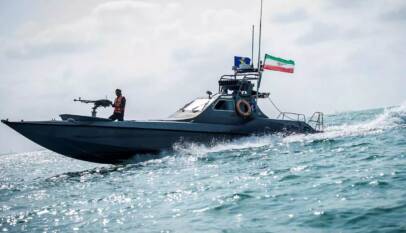


US Ends Maritime Blockade Around Iranian Ports Following New Agreement with Tehran
Washington, June 2026 : The United States has officially lifted its blockade on maritime t…
US Ends Maritime Blockade Around Iranian Ports Following New Agreement with Tehran
Washington, June 2026 : The United States has officially lifted its blockade on maritime …