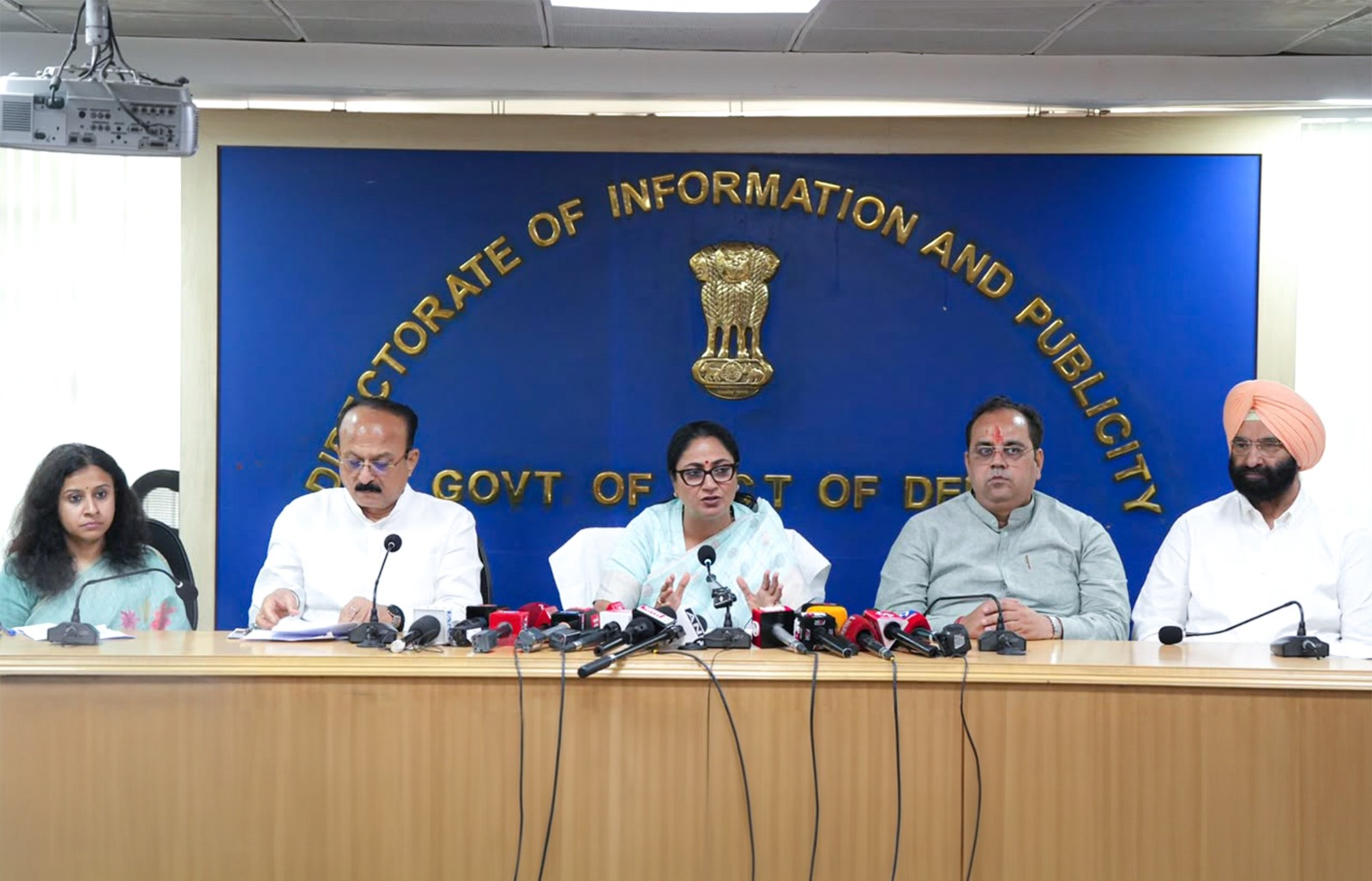
Chief Minister Rekha Gupta announced the ‘Delhi EV Policy-2026’, Policy to Remain in Force from July 1, 2026 to March 31, 2030

Delhi to Invest ₹7,000 Crore in EV Policy Over the Next Four Years, Citizens to Receive Overall Benefits Worth ₹15,000 Crore
Registration of New 3-Wheelers to Shift to Electric from 2027, All New Two-Wheelers from 2028, School Buses to Be Electrified in a Phased Manner
Delhi Will Emerge as India’s Largest Zero-Emission Mobility Capital: Chief Minister Rekha Gupta
This Is Not Just an Environmental Initiative, but an Economic and Strategic Investment in an Atmanirbhar Bharat: Power Minister Ashish Sood
New Delhi, June 2026 : The Cabinet, under the leadership of Delhi Chief Minister Smt. Rekha Gupta, on Monday approved the Delhi Electric Vehicle (EV) Policy-2026. Announcing the decision at a press conference at the Delhi Secretariat, the Chief Minister said the policy will come into effect on July 1, 2026, after receiving the approval of the Hon’ble Lieutenant Governor. It will remain in force for the next four years, until March 31, 2030. Describing it as a historic and visionary decision for the Capital, the Chief Minister said Delhi had long needed a comprehensive policy that could simultaneously address three key objectives, controlling pollution, creating a modern transport system and delivering economic benefits to citizens. The new EV Policy has been designed with these objectives at its core.
Expanding Clean and Modern Mobility
Delhi Power Minister Shri Ashish Sood, Transport Minister Dr. Pankaj Kumar Singh, Environment Minister Sardar Manjinder Singh Sirsa and senior government officials were present on the occasion. The new EV Policy is entirely focused on promoting zero-emission electric vehicles and will help the Capital make significant progress towards becoming a pollution-free city in a phased manner. The policy has been prepared by the Group of Ministers after extensive consultations and multiple rounds of meetings with the Transport Department, various government departments, industry representatives and other stakeholders, incorporating their suggestions into the final policy.
Benefits Worth Nearly ₹15,000 Crore for Citizens
Chief Minister Rekha Gupta said the Delhi Government will make a direct investment of more than ₹7,000 crore under the policy over the next four years. In addition, by combining incentives related to charging infrastructure, exemptions from road tax and registration fees and other benefits, citizens will receive total benefits of nearly ₹15,000 crore. For the first time in the country, a state is implementing an EV policy backed by such a large investment and such wide-ranging incentives. Hybrid vehicles have been kept outside the scope of this policy.
The Chief Minister said the policy covers two-wheelers, three-wheelers, four-wheelers, N1 category goods vehicles (carrying goods of up to 3.5 tonnes), N2 category trucks (carrying goods between 3.5 tonnes and 12 tonnes) and Gramin Sewa vehicles. The government has not imposed any cap on the number of incentives under any category. The more citizens purchase electric vehicles, the more beneficiaries will receive incentives under the policy.
Purchase Incentives, Scrappage Benefits and Tax Relief
The Chief Minister said buyers of electric two-wheelers will receive purchase incentives of up to ₹30,000 in the first year of the policy, up to ₹20,000 in the second year and up to ₹10,000 in the third year. Similarly, buyers of electric three-wheelers will be eligible for incentives of up to ₹50,000 in the first year, up to ₹30,000 in the second year and up to ₹20,000 in the third year. Buyers of N1 category electric trucks will receive a purchase incentive of up to ₹1 lakh.
She also said the government has introduced attractive scrappage incentives to phase out older polluting vehicles. Under the policy, owners scrapping BS-IV or older two-wheelers will receive ₹10,000, three-wheelers ₹25,000, four-wheelers ₹1 lakh, N1 trucks ₹50,000 and Gramin Sewa vehicles ₹15,000. In addition, all electric vehicles will be exempt from road tax and registration charges. For four-wheelers, this exemption will apply only to electric vehicles with an ex-showroom price of up to ₹30 lakh. All incentives will be transferred directly to beneficiaries’ bank accounts through Direct Benefit Transfer (DBT). To claim the subsidy, buyers will have to apply through the EV portal. The incentive amount will be credited through DBT within 60 days of submitting the application. The portal will be launched after July 1.
Phased Registration of Electric Vehicles from 2027
Chief Minister Rekha Gupta also announced that from January 1, 2027, only L-5M and L-5N category electric passenger and goods-carrying auto-rickshaws (three-wheelers), along with N1 category electric goods vehicles, will be registered in Delhi. From April 1, 2028, only electric two-wheelers will be registered in the Capital. School buses will also be electrified in a phased manner. The policy aims to ensure that electric buses account for at least 10 percent of school bus fleets by the end of the second year after the notification is issued, 20 percent by the end of the third year and 30 percent by March 31, 2030.
This will promote cleaner, safer and more environment-friendly public transport across the Capital.
Strong Focus on Charging Infrastructure
The Chief Minister said a significant share of Delhi’s air pollution comes from emissions generated by commercial goods vehicles as well as two-wheelers and three-wheelers. For this reason, these categories have been given special priority under the policy to achieve a meaningful reduction in pollution. To reduce emissions from heavy vehicles, the first 1,000 N2 category electric trucks purchased within three months of the policy notification will be exempt from ‘no-entry’ time restrictions for 10 years.
Chief Minister Rekha Gupta said a robust charging network would be the foundation of the policy’s success. Accordingly, more than 30,000 EV charging points will be installed across Delhi during the policy period. The required land has already been identified and charging infrastructure will be developed across the city on a large scale in the coming months. She said the policy is not limited to promoting the purchase of electric vehicles. It brings together clean energy, modern transport, environmental protection and financial savings for citizens. It will help reduce fuel costs, lower pollution levels and transform Delhi into a smart, sustainable and future-ready city.
The Chief Minister thanked Transport Minister Dr. Pankaj Kumar Singh, Power Minister Shri Ashish Sood, Environment Minister Sardar Manjinder Singh Sirsa, officials of the concerned departments and all stakeholders for their valuable contribution to the formulation of the policy. She said the policy had been finalised after carefully considering every suggestion.
Expressing confidence in the initiative, Chief Minister Rekha Gupta said the Delhi EV Policy-2026 would usher in a new era of clean mobility in the Capital and play a significant role in building a developed Delhi in line with the vision of Viksit Bharat. She said Delhi would emerge as the country’s leading zero-emission capital in the years to come.
Speaking on the occasion, Delhi Power Minister Shri Ashish Sood said every electric vehicle delivers a double dividend. It gives our children cleaner air to breathe while reducing India’s dependence on imported fossil fuels. It is not merely an environmental decision but an economic and strategic investment in Atmanirbhar Bharat. It is good for the planet and equally beneficial for India’s economy.



India Marks Largest-Ever Participation at North America’s Summer Fancy Food Show 2026 with Inauguration of India Pavilion
Indian Mango Showcase Highlights Six Premium Export Varieties at India Pavilion Basmati Cu…

India Marks Largest-Ever Participation at North America’s Summer Fancy Food Show 2026 with Inauguration of India Pavilion
Indian Mango Showcase Highlights Six Premium Export Varieties at India Pavilion Basmati Culinary Showcase …