End of an Era: Cristiano Ronaldo Bids Farewell to the FIFA World Cup After a Record-Breaking International Career

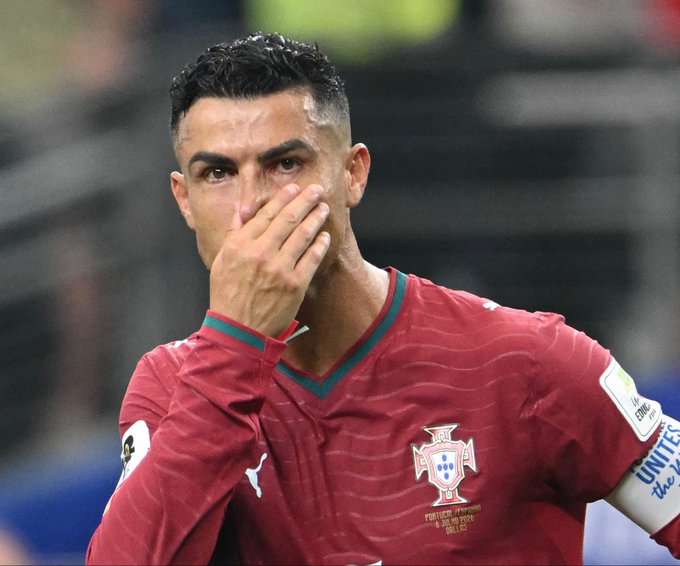
Dallas, July 2026 : One of football’s greatest chapters came to a close on Tuesday as Cristiano Ronaldo’s remarkable FIFA World Cup journey ended following Portugal’s 1-0 defeat to Spain in the Round of 16 of the 2026 FIFA World Cup. The loss marked the conclusion of a World Cup career that spanned two decades, six tournaments, and countless milestones, cementing Ronaldo’s place among the greatest players the game has ever produced.
For 23 years, Ronaldo carried the hopes of Portugal on the international stage with unmatched consistency, determination and longevity. Since making his senior debut against Kazakhstan on August 20, 2003, as an 18-year-old, he evolved from a promising youngster into one of the most decorated footballers in history. His first international goal came at UEFA Euro 2004 against Greece, a tournament that introduced him to the world and signalled the arrival of Portugal’s next superstar.
Recognised early for his leadership qualities, Ronaldo was appointed captain of the Portuguese national team ahead of UEFA Euro 2008. Over the next 18 years, he became the face of Portuguese football, inspiring a golden generation while setting standards that transformed the national team’s global stature.
Throughout his international career, Ronaldo repeatedly rewrote football’s record books. In 2014, he became Portugal’s all-time leading scorer after surpassing Pauleta’s record of 47 international goals. Seven years later, he overtook Iran’s Ali Daei to become the highest goalscorer in the history of men’s international football. Even after becoming the first men’s player to reach 200 international appearances in 2023, his hunger for success remained undiminished.
The 2026 FIFA World Cup added another historic achievement to his extraordinary résumé. Earlier in the tournament, Ronaldo scored against Uzbekistan to become the first footballer ever to score in six different editions of the FIFA World Cup. He concluded his World Cup career with 11 goals, overtaking Portuguese legend Eusébio’s tally of nine to become Portugal’s highest scorer in World Cup history.
His longevity on the international stage remains virtually unmatched. Ronaldo represented Portugal in six FIFA World Cups — Germany 2006, South Africa 2010, Brazil 2014, Russia 2018, Qatar 2022 and the 2026 tournament — becoming the only player to feature in six editions of both the FIFA World Cup and the UEFA European Championship. He also represented Portugal in the FIFA Confederations Cup in 2017 and featured prominently in two successful UEFA Nations League campaigns.
Ronaldo signs off from international football with staggering world-record numbers. He made 233 appearances for Portugal, scoring 146 goals and registering 10 international hat-tricks, all unmatched in men’s international football. He also holds the record for the most victories by any player in international football, reflecting not just his individual brilliance but also Portugal’s rise as a consistent force in world football during his era.
The UEFA European Championship occupies a special place in Ronaldo’s legacy. He remains the competition’s all-time leading scorer with 14 goals in the finals and captained Portugal to its first-ever major international title at Euro 2016. Despite suffering an injury in the final against France, his inspirational presence from the sidelines became one of the tournament’s defining images.
Ronaldo’s achievements in the European Championship extend beyond that historic triumph. He won the Golden Boot at Euro 2020, was selected in the Team of the Tournament on three occasions, and remains the highest scorer in European Championship qualifying history with 41 goals.
His contribution to the UEFA Nations League was equally significant. As captain, Ronaldo led Portugal to titles in both 2019 and 2025. He finished as the top scorer during both victorious campaigns, including an impressive haul of eight goals in nine matches during the 2025 edition. He also etched his name into history by scoring the first-ever goal in a UEFA Nations League Finals match against Switzerland in 2019.
Across every level of international competition, Ronaldo delivered consistently for Portugal. He scored 41 goals in FIFA World Cup qualifying and another 41 in UEFA European Championship qualifying, demonstrating his ability to guide Portugal to major tournaments year after year. On football’s biggest stages, he added 14 goals in European Championship finals, 11 in FIFA World Cups, 15 in the UEFA Nations League, two in the FIFA Confederations Cup and 22 in international friendlies.
Despite collecting virtually every major individual and international honour available, one trophy remained beyond his grasp — the FIFA World Cup. While he lifted the UEFA European Championship in 2016 and the UEFA Nations League titles in 2019 and 2025, football’s greatest prize ultimately eluded the Portuguese icon.
Yet, the absence of a World Cup winner’s medal does little to diminish Ronaldo’s extraordinary legacy. His relentless pursuit of excellence, unmatched longevity, record-breaking achievements and unwavering commitment to Portugal have inspired generations of footballers around the world.
As Ronaldo leaves the FIFA World Cup stage for the final time, he does so not merely as Portugal’s greatest footballer, but as one of the defining figures in the history of the sport. His remarkable journey has set benchmarks that may stand for decades, ensuring that his influence on world football will endure long after his final appearance in the famous red shirt of Portugal.
Team Maverick



Permanent Court of Arbitration Signs Host Country Agreement with Spain, Paves Way for New Office in Madrid
The Hague/Madrid, July 2026: The Permanent Court of Arbitration (PCA) and the Kingdom of S…

End of an Era: Cristiano Ronaldo Bids Farewell to the FIFA World Cup After a Record-Breaking International Career
Dallas, July 2026 : One of football’s greatest chapters came to a close on …