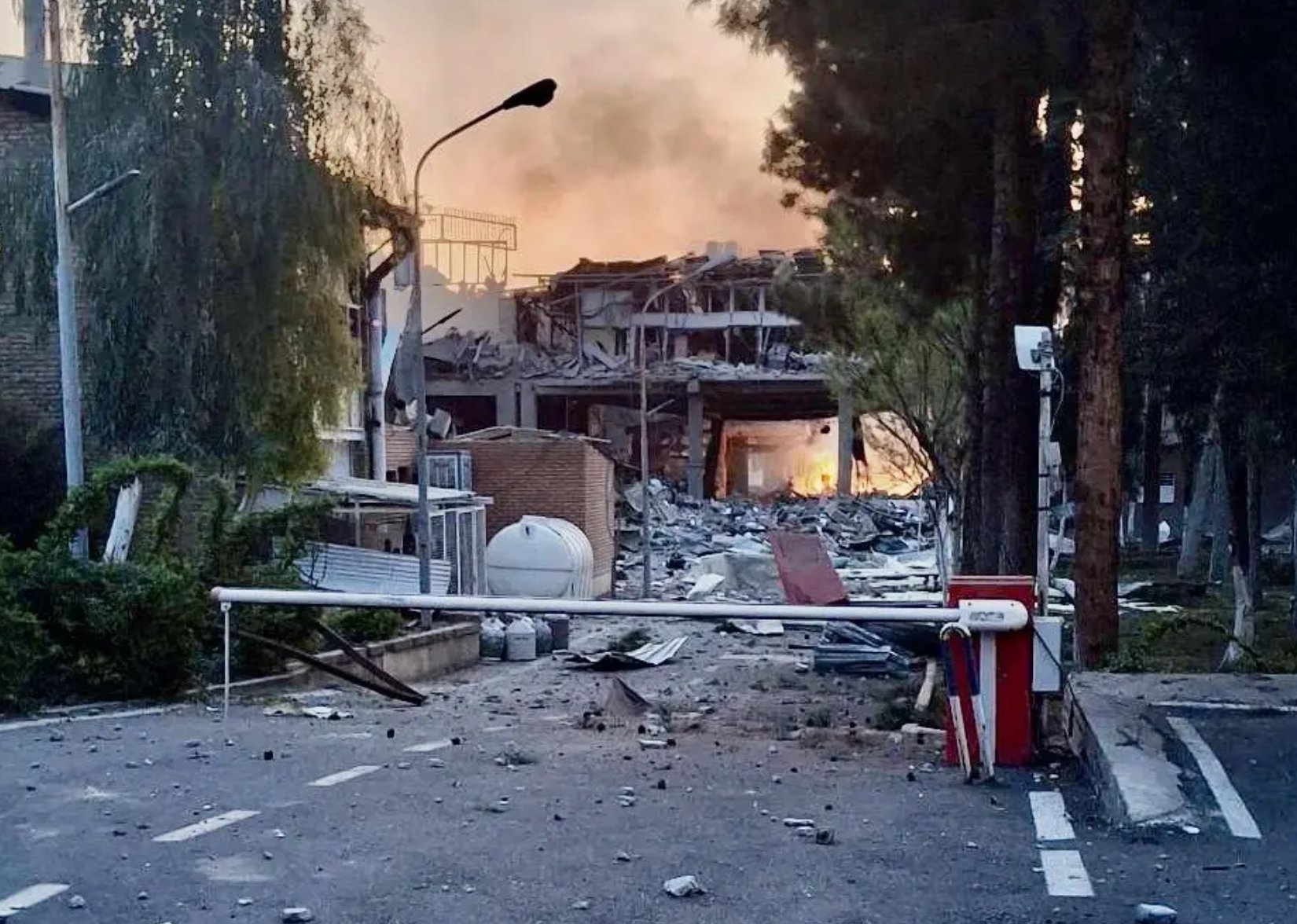
US Launches Fresh Strikes on Iran as Gulf Tensions Escalate Amid Retaliatory Missile Attacks

Washington, July 2026: The United States has launched a fresh wave of military strikes against Iran, intensifying an already volatile confrontation in the Gulf region as both countries continue exchanging attacks. The latest operation, announced by the US Central Command (CENTCOM), comes amid growing concerns over maritime security in the strategically important Strait of Hormuz.
According to CENTCOM, American forces began the new round of strikes at 4 p.m. Eastern Time under the direction of President Donald Trump. The military said the operation was specifically aimed at weakening Iran’s military capabilities allegedly used to threaten commercial shipping in the Strait of Hormuz, one of the world’s busiest energy transit routes.
In a statement posted on X, CENTCOM said the strikes were intended to “further degrade Iranian military capabilities used to attack commercial shipping in the Strait of Hormuz,” underscoring Washington’s stated objective of protecting freedom of navigation and safeguarding international maritime trade.
The latest offensive follows several days of sustained US military operations against Iranian targets. Earlier, CENTCOM had announced that American naval and air assets were continuing operations in the Arabian Sea as part of a campaign designed to enforce what it described as a naval blockade against Iran while restricting maritime movement to and from Iranian ports.
The US military said personnel aboard the amphibious assault ship USS Boxer (LHD-4) have been conducting continuous day-and-night flight operations in support of the mission. CENTCOM further claimed that, as of July 20, US forces had redirected seven commercial vessels and disabled one ship in an effort to prevent maritime traffic from entering or leaving Iranian ports.
Washington maintains that the campaign is aimed at reducing Iran’s ability to threaten international shipping lanes, particularly in the Strait of Hormuz, through which a substantial portion of global oil exports passes every day.
The escalation comes shortly after Iran’s Islamic Revolutionary Guard Corps (IRGC) announced a series of retaliatory missile and drone attacks targeting American military assets in the region.
According to statements released through the IRGC’s official news outlet, Sepah News, Iranian forces launched ballistic missiles against US military aircraft stationed at Jordan’s port city of Aqaba. Tehran claimed that Boeing C-17 Globemaster III transport aircraft and Boeing P-8 Poseidon maritime patrol aircraft were among the targets and alleged that several were heavily damaged.
Iran also claimed to have conducted drone strikes against American facilities in Kuwait. The IRGC said it destroyed an early-warning radar installation and targeted a warehouse storing military equipment and aircraft spare parts at Ali Al Salem Air Base. Iranian officials further claimed that a hangar housing MQ-9 Reaper unmanned aerial vehicles was struck, causing multiple drones to catch fire.
Tehran described the attacks as retaliation for what it called repeated American aggression against Iranian territory and military infrastructure.
Earlier on Monday, CENTCOM had stated that US forces had successfully completed their ninth consecutive evening of strikes against Iran. According to the command, those operations targeted a broad range of Iranian military infrastructure, including command-and-control centres, coastal surveillance facilities, missile and drone launch sites, air defence systems, communications networks and maritime capabilities.
US officials argue that degrading these assets is essential to reducing Iran’s capacity to launch attacks against commercial vessels and civilian shipping operating in the Strait of Hormuz.
The latest exchange of military action marks another significant escalation in the ongoing confrontation between Washington and Tehran. With both sides continuing offensive operations and issuing competing claims regarding battlefield damage, tensions across the Gulf region remain at one of their highest levels in recent years.
The continued hostilities have heightened international concern over regional stability, the security of global energy supplies and the safety of commercial shipping routes, with the Strait of Hormuz remaining at the centre of the unfolding crisis.
(The content of this article is sourced from a news agency and has not been edited by the Mavericknews30 team.)




Barwani Emerging as National Model of Agriculture, Entrepreneurship and Innovation : CM Dr. Yadav
Chief Minister Dr. Mohan Yadav has said that nature is embedded in the very name of Barwan…

Barwani Emerging as National Model of Agriculture, Entrepreneurship and Innovation : CM Dr. Yadav
Chief Minister Dr. Mohan Yadav has said that nature is embedded in the very …