South Korea Tests AI-Powered Humanoid Robot to Steer Warships Amid Growing Manpower Crunch

Seoul, July 2026 : South Korea has taken a significant step towards integrating artificial intelligence into its naval operations by beginning trials of a humanoid robot capable of steering warships. The initiative reflects the country’s broader effort to modernise its armed forces while addressing an increasingly severe shortage of military personnel caused by a declining birth rate and an ageing population.
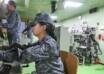
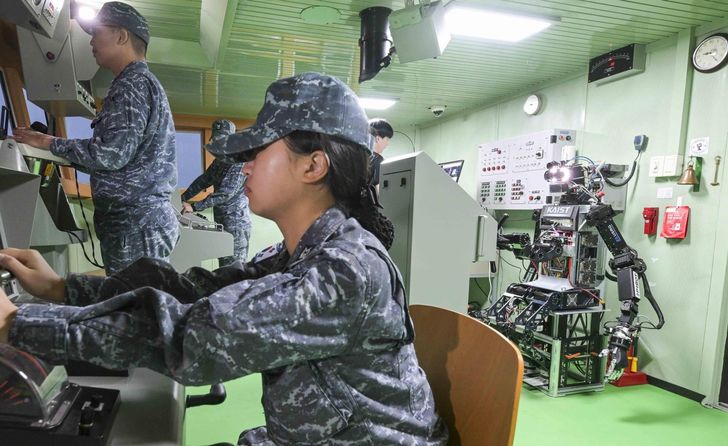
The humanoid robot, named PIBOT, recently completed its first bridge simulation at a naval training facility in Changwon. During the trial, the AI-powered system successfully responded to spoken navigation commands, repeated instructions to minimise communication errors, and physically operated a ship’s steering controls while navigating through a range of simulated maritime conditions.
According to reports, PIBOT demonstrated its ability to handle challenging scenarios, including rough seas, restricted waterways, low-visibility environments, and night-time navigation. The successful simulation marks an important milestone in South Korea’s ambition to deploy intelligent robotic systems alongside human sailors in future naval operations.
Developed by the Korea Advanced Institute of Science and Technology (KAIST), PIBOT is part of a long-term collaboration with the South Korean Navy to automate routine shipboard operations. The project aims to improve operational efficiency by allowing robots to perform repetitive and physically demanding tasks while human personnel focus on critical decision-making and combat responsibilities.
The development comes at a time when South Korea is grappling with one of the world’s lowest fertility rates. The shrinking pool of conscription-age citizens has emerged as a major concern for defence planners, forcing the military to explore innovative ways to sustain operational readiness despite declining manpower.
The demographic challenge has prompted discussions on expanding the role of women in the armed forces and accelerating the adoption of artificial intelligence, autonomous systems and robotics across all branches of the military. Defence experts increasingly view these technologies as essential to maintaining military capability over the coming decades.
Military officials believe AI-enabled crew members can significantly reduce the workload on sailors by handling navigation assistance, routine monitoring and other labour-intensive functions. Such systems are also expected to improve operational accuracy and reduce the risk of human error during extended missions.
PIBOT’s latest trial forms part of the Navy’s broader Sea GHOST programme, an ambitious initiative aimed at creating hybrid naval fleets in which human crews work alongside autonomous systems. The programme envisions intelligent robots supporting sailors in various operational roles without completely replacing human personnel.
The bridge simulation represents the first phase of a four-stage testing programme. Future evaluations will involve trials aboard docked naval vessels before progressing to operational warships sailing under real maritime conditions. These stages will assess the robot’s performance in increasingly complex environments before any wider deployment is considered.
South Korea’s investment in AI-driven defence technologies reflects a global trend as militaries seek to harness automation, machine learning and robotics to enhance combat readiness and operational efficiency. While PIBOT is not intended to replace sailors entirely, officials see it as an important force multiplier capable of supporting naval crews in demanding situations.
As artificial intelligence continues to reshape modern warfare, South Korea is positioning itself at the forefront of military innovation. By combining advanced robotics with human expertise, the country aims to build a technologically advanced navy capable of overcoming demographic challenges while strengthening its maritime security and future defence capabilities.
(The content of this article is sourced from a news agency and has not been edited by the Mavericknews30 team.)






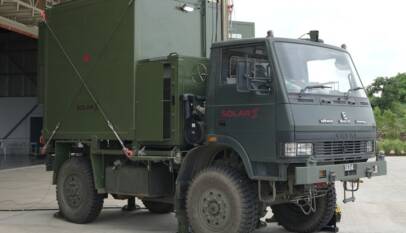
Solar Defence Showcases Indigenous ‘Bhargavastra’ Counter-Swarm Drone System to Indian Army
New Delhi, July 2026 : Solar Defence and Aerospace Ltd. (SDAL) on Friday showcased its ind…
Solar Defence Showcases Indigenous ‘Bhargavastra’ Counter-Swarm Drone System to Indian Army
New Delhi, July 2026 : Solar Defence and Aerospace Ltd. (SDAL) on Friday showcased …