Cabinet approves new industrial development policy of Chhattisgarh

The new industrial policy will be applicable from 01 November 2024 to 31 March 2030
Provision of incentives for setting up of service enterprises
Special incentives to retired soldiers, Agniveers, weaker sections, Naxal victims and third gender entrepreneurs in Industrial Policy 2024-30
Raipur : Chhattisgarh’s new Industrial Development Policy 2024-2030 was approved in the cabinet meeting held at Mahanadi Mantralaya Bhawan today under the chairmanship of Chief Minister Shri Vishnu Dev Sai. In the new industrial policy, the Chhattisgarh government has made several provisions with the aim of realizing the vision of the Government of India 2047 and to accelerate the industrial development of the state. A provision of training stipend reimbursement of Rs 15 thousand per person has been made for industries to convert trained persons of the state into formal employment. The new industrial policy will be applicable from 01 November 2024 to 31 March 2030.
Industry Minister Shri Lakhanlal Devangan informed that the new industrial policy has provision for interest subsidy, cost capital subsidy, stamp duty exemption, electricity duty exemption, value added tax reimbursement in investment promotion. Provisions have also been made in the new policy for Mandi duty exemption, Divyang (disabled) employment subsidy, environmental project subsidy, transport subsidy, reimbursement of net state goods and service tax.
Minister Shri Dewangan informed that in the new industrial policy, a B-spoke package has been provided for industries in specific areas on the basis of generating more than one thousand local jobs, with the aim of generating employment for the youth of the state. There is a provision to provide more incentives to the residents of the state, especially the Scheduled Castes, Scheduled Tribes, women entrepreneurs, retired Agniveer soldiers, ex-servicemen, including paramilitary, under the new industrial policy. Naxal-affected, weaker sections, third gender entrepreneurs will also be eligible for special incentives under the new industrial policy.
For the first time in the new industrial policy, provision has been made for separate incentives for MSME service enterprises and large service enterprises under the service sector. Activities related to engineering services, research and development sector, tourism and entertainment sector etc. have been included under the service sector. In this policy, a large number of service category enterprises have also been considered eligible for industrial investment promotion, which also includes tourism, entertainment and other social services sectors and home-stay services in Surguja and Bastar divisions.
In this policy, the definition of micro, small and medium enterprises has been made in line with MSME defined by the Government of India. The incentives received by these enterprises have been made competitive as compared to other states. For the convenience of investors, separate industrial investment incentive provisions have been made for micro, small and medium industries and large industries.
The new industrial policy provides attractive separate industrial investment incentives for pharmaceuticals, textiles, agro & food processing and non-timber forest produce (NTFP) processing, compressed biogas, green hydrogen, electrical & electronics, artificial intelligence (AI), robotics & computing (GPU), IT, ITES, data centres, hydro power projects, solar energy projects etc.
Through this policy, provision of Udyam Kranti Yojana has been made to make the youth self-reliant by starting their own business. Under this scheme, there is a provision to provide subsidy based loan to the educated unemployed youth of the state to set up their own enterprise.
There is a provision of additional incentives for thrust sector industries where the state has a competitive advantage and where future jobs are coming. There is a provision for setting up an industrial corridor to give the state’s Korba-Bilaspur-Raipur a place on the country’s industrial map.
It is worth mentioning that for the formulation of the new industrial policy, the Department of Industry held intensive consultations with all the concerned stakeholders, industrial organizations, industrial groups, concerned departments for one year. After studying the industrial policies of the leading states of the country, the best provisions have been included in it keeping in mind the essential local requirements of the state.
The Industry Minister said that through the new policy, development blocks have been classified into three groups keeping in mind the overall, balanced and inclusive industrial development of all the regions of the state. The first group includes 10 developing development blocks, the second group includes 61 backward development blocks and the third group includes 75 development blocks which are extremely backward in terms of industry.


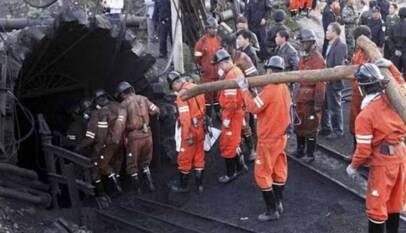
Coal Mine Gas Explosion in China’s Shanxi Province Kills 82, Rescue Ops Continue
Taiyuan, May 2026 : A devastating coal mine gas explosion in north China’s Shanxi Province…
Coal Mine Gas Explosion in China’s Shanxi Province Kills 82, Rescue Ops Continue
Taiyuan, May 2026 : A devastating coal mine gas explosion in north China’s Shanxi …