Caste enumeration

The Central Government on Wednesday has announced that caste enumeration will be part of the next population census, with the inclusion of caste details for the first time since independence hailed by the BJP and its allies as a “historic” step to help design “truly equitable and focused” policies. The decision taken by the Cabinet Committee on Political Affairs (CCPA) at its meeting here presided by Prime Minister Narendra Modi comes ahead of assembly elections in Bihar, where caste is a key political issue and several parties including some BJP allies have been coming out in support of the caste census.
The proposed caste census–the latest manifestation of pro-OBC politics–to be undertaken in a “transparent manner” in a major policy shift was welcomed by the BJP as a reflection of its commitment to social equality and the rights of every section of society.
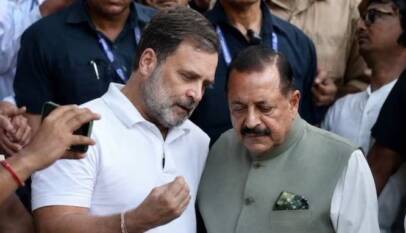
Leader of the Opposition Mr. Rahul Gandhi told reporters that he welcomes the government’s “sudden” decision to include caste enumeration in the next census after “11 years of opposing it” but said it should give a timeline for its implementation. Mr. Gandhi has vehemently opined for ‘Caste Census’ from the very first day of the parliament session.
The first caste enumeration in independent India was conducted in 2011 and was known as the Socio Economic and Caste Census (SECC) 2011. The census during the British rule between 1881 and 1931 included caste enumeration, but post independence the government decided in 1951 not to include caste in the census, except for the SCs and STs. A decade later in 1961, the central government asked states to conduct their own surveys and prepare state-specific lists of OBCs if they wished so.
Over six decades later now and after demands from several quarters and various parties, the government has now decided to include caste enumeration in the next nationwide census. The last nationwide caste enumeration took place in 2011 under Socio-Economic and Caste Census (SECC) in a bid to gather detailed information about the socio-economic status of households and individuals, including their caste.
Here is a look at history, politics, and recent developments What is a Caste Census? A caste census involves the systematic collection of data on the caste identities of individuals during a national census exercise. In India, where caste has historically shaped social, economic, and political dynamics, such data can provide insights into the demographic distribution, socio-economic conditions, and representation of various caste groups. This information can be used to inform policies on affirmative action, reservations, and social justice.
What is its historical context? Caste enumeration in India has a long history: British India (1881–1931):
The British colonial administration included caste enumeration in census exercises conducted every decade between 1881 and 1931. These surveys categorized the population by caste, religion, and occupation, providing detailed demographic data. The exercise was partly driven by the colonial need to understand and govern India’s complex social structure.
Post-Independence Shift (1951):
After India gained independence in 1947, the first census of independent India in 1951 marked a significant departure. The government, under then Prime Minister Jawaharlal Nehru, decided to discontinue caste enumeration except for Scheduled Castes (SCs) and Scheduled Tribes (STs). This decision was rooted in the belief that focusing on caste could perpetuate divisions and hinder national unity in a newly independent nation.
1961 Directive:
A decade later, in 1961, the central government allowed states to conduct their own surveys to prepare state-specific lists of Other Backward Classes (OBCs). This was in response to demands for affirmative action for socially and educationally backward groups beyond SCs and STs. However, no nationwide caste census was undertaken.
How caste census evolved into a political issue? Mandal Commission (1980):
The Mandal Commission’s recommendation to provide 27% reservation for OBCs in central government jobs brought caste back into the political spotlight. The lack of comprehensive caste data made it challenging to accurately identify and quantify OBC populations, fuelling demands for a caste census.
Socio-Economic and Caste Census (SECC) 2011:
In 2011, the UPA government conducted the Socio Economic and Caste Census, the first attempt since 1931 to collect caste data nationwide. However, the caste data from SECC 2011 was never fully released or utilised, leading to criticism from opposition parties and caste-based organizations.
State-level initiatives:
In the absence of a national caste census, states like Bihar, Telangana, and Karnataka have conducted their own caste surveys in recent years. These surveys aimed to gather data to support state-specific reservation policies and welfare programs. Bihar’s caste survey in 2023 revealed that OBCs and Extremely Backward Classes (EBCs) constituted over 63 per cent of the state’s population.
Why does caste census matter?
A caste census is more than a demographic exercise; it is a politically charged issue with deep social implications: Activists said that the inclusion of caste in the census could have far-reaching implications for reservation policies, political representation, and social justice initiatives. It may also reshape electoral strategies, as parties vie for support from various caste groups. “Much of access to essential services in India – education, healthcare, nutrition, and social protection is shaped by structural inequalities of caste, region, religion, and economic status. A caste census is critical to uncover these intersectional disparities and to design policies and programs that are truly equitable and inclusive”, said Poonam Muttreja, Executive Director of the Population Foundation of India.
Accurate caste data can help tailor affirmative action policies, such as reservations in education and jobs, to address current socio-economic disparities. Many consider caste census essential to identify and uplift marginalized communities but people also warn that it could entrench caste identities and deepen divisions.
What lies ahead?
The announcement marks a major policy pivot after over 70 years of resistance to comprehensive caste enumeration but how the data will be collected, categorized, and used remains to be seen. The inclusion of caste data in the upcoming census is poised to have far-reaching implications for governance, electoral politics, and India’s ongoing struggle with inequality. But it is yet to decided when the exercise would be carried out.
Team Maverick




HAL Set to Increase TEJAS MK-1A Production to 30 Jets Annually as GE Commits Higher Engine Deliveries
New Delhi, July 2026 : Hindustan Aeronautics Limited (HAL) is preparing to significantly r…

HAL Set to Increase TEJAS MK-1A Production to 30 Jets Annually as GE Commits Higher Engine Deliveries
New Delhi, July 2026 : Hindustan Aeronautics Limited (HAL) is preparing to significantly ramp …