India importing Electricity from Nepal.


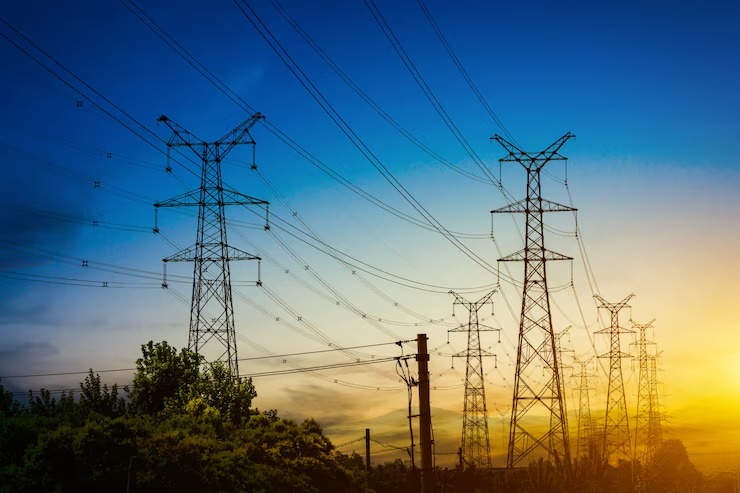
The Nepal Electricity Authority has begun to export power to India at the real-time market price owing to an increase in production during the rainy season, an official said. The NEA have started exporting electricity to India between 150 MW and 200 MW daily from Saturday onwards, as stated by Rajbhai Shilpakar, the spokesperson at NEA.
“We have started selling electricity to India for the last five days as the production from our hydroelectricity plants has increased due to the rising water levels in our rivers”, Shilpakar said. Most of the hydropower projects in Nepal are based on a run-of-river system. The NEA has been exporting its surplus electricity to India since 2021, when the country got permission to export energy.
Nepal exports energy to India mainly from June to November, as the country’s electricity generation exceeds the domestic consumption during the rainy season. Nepal’s current electricity generation almost equals its peak-time demand, allowing the country to sell the power when the demand is less than production. Currently, Nepal’s peak time demand stands at 1950 MW, while its production is 1920 MW.
Last year, Nepal made a net profit from selling electricity to India as the revenue generated from the export exceeded the cost of importing the energy. During the period, NEA made a net profit of NRs. 120 million (INR 75 million) from the export of electricity.
WHY DOES INDIA NEED TO IMPORT –
With the objective of introducing competition, protect consumer’s interests and provide power for all, the Electricity Act 2003 has been enacted and came into force from 15.06. 2003. The Act provides for National Electricity Policy, Rural Electrification, Open access in transmission, phased open access in distribution, mandatory SERCs, license free generation and distribution, power trading, mandatory metering and stringent penalties for theft of electricity. The Electricity Act 2003 is a comprehensive legislation replacing the century old – Electricity Act 1910, Electricity Supply Act 1948 and Electricity Regulatory Commission Act 1998.
It is mention worthy that the Electricity Act, 2003 has been amended on two occasions by the Electricity (Amendment) Act, 2003 and the Electricity (Amendment) Act, 2007. The aim is to push the sector onto a trajectory of sound commercial growth and to enable the States and the Centre to move in harmony and coordination. The trajectory has experienced certain topsy-turvy since 2009 – 2010.
During the period, the total generation (including renewable sources) were 808.50 BU (Billion Unit). Till 2019 – 2020 the growth rate was around 5.50%. But, during the next 2020 – 2021 it had declined by 0.50% to 1381.86 BU. However, it rose marginally by 8.45% from 2021 – 2022.
During the fiscal year 2025 – 2026 the target has been set at 1725 BU (Billion Unit).
At present, India’s largest source of clean electricity is hydro at 9%; Wind and solar combined accounted for 10%. In 2024, with fossil fuels accounting for 78% of generation, the power sector is India’s largest emissions contributor. Power sector emissions have grown over the last two decades due to expansion of coal generation. Despite this, the country’s per capita emissions are well below the global average due to low per capita electricity use.
However, coal’s share in meeting new electricity demand is now falling. In 2024, Coal generation met 64% of India’s electricity demand growth, a sharp drop from 91% in 2023.
India is also one of the world’s top coal mine methane emitters. To meet growing energy demand and address energy security concerns, the Ministry of Coal plans to expand domestic coal mining. While this will significantly increase methane emissions, India could still mitigate these emissions by more than 1.6 Mt by 2030 by introducing regulatory reforms and incentives that promote capture and utilisation of fugitive methane using available technologies.
While industry experts have flagged that India has made significant progress with the rapid adoption of renewables. But the country now faces a key challenge – ensuring its clean generation grows fast enough to meet rising demand. Two facets of that challenge are to finance the renewables capacity required, and build enough flexibility to accommodate them through storage and an enhanced & augmented electricity grid.
Alike many countries across the world, India has also sweltered under severe heatwaves in 2024. Extreme heat drove the use of air conditioning to a record high, increasing electricity demand and putting pressure on grids. In India, heatwaves added tens of terawatt-hours to electricity demand during critical summer months. In India, increased air cooling contributed an estimated 30% of the year-on-year demand increase from April to June 2024 compared to the same period in 2023 and over a third of the demand increase in the month of May alone. India endured an extreme heatwave season from April to June 2024, with northern and eastern regions experiencing double the usual number of heatwave days. This period saw some of the highest population-weighted temperatures in a decade, averaging 30.9°C, which is a sharp 1.5°C increase compared to April-June 2023. May 2024 was the hottest, with temperatures averaging 31.7°C – a 1°C increase from May 2023.
ADDRESSING THE CHALLENGES –
Team Maverick, upon conducting an extensive analysis, heralded three policies that could help in mitigating the growing challenge & future risks:
- Energy-efficient air conditioners: Encouraging the sale of more efficient air-conditioners is crucial. Current models often operate at half the efficiency of the best available technology, but cost barriers prevent many from upgrading. Incentivising energy-efficient units can help reduce the strain on the grid.
- Rooftop solar: Promoting rooftop solar offers households and businesses the potential to generate cheaper, cleaner electricity. During peak demand hours, when cooling needs are highest, solar power can help reduce reliance on the grid and provide a sustainable solution for powering air-conditioners. Since peak demand often extends into the evening, batteries can help store solar energy for later use, ensuring a smoother, more efficient power supply.
- Seller-Department Coordination: The respective governments should implement rules vide which –
- Every purchaser should obtain a clearance certificate from the Electricity Department – wherein the details of the installed meter; capacity of the Air-Conditioner (which the purchaser wishes to buy),
- Every Air-Conditioner seller should intimate, the local electricity boards, about the details of the buyer – his residential address; a copy of the afore mentioned clearance certificate, enabling the department to be apprised about the eventualities. Today, the electricity department gets to know much later – even after years.
Team Maverick








Netanyahu Meets Trump at White House for Eighth Bilateral Talks Amid Regional Tensions
Jerusalem/Washington, July 2026 : Israeli Prime Minister Benjamin Netanyahu arrived at the…

Netanyahu Meets Trump at White House for Eighth Bilateral Talks Amid Regional Tensions
Jerusalem/Washington, July 2026 : Israeli Prime Minister Benjamin Netanyahu arrived at the White House …