Trump Announces Ceasefire Between Iran and Israel After 12 Days of Missile Warfare

U.S. Airstrikes on Iran’s Nuclear Sites Precede Truce; Peace Deal Awaits Global Endorsement
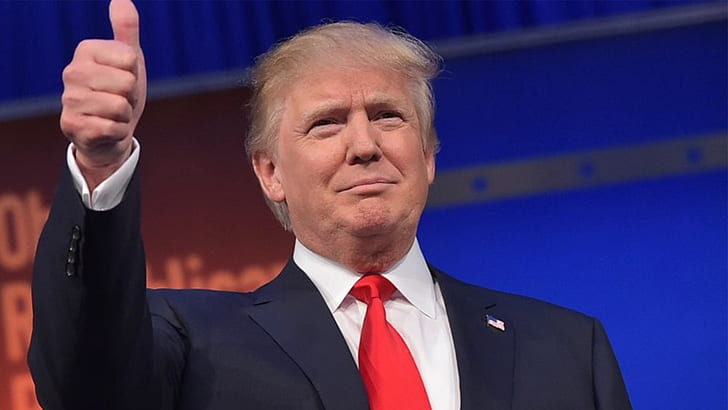
New York : In a dramatic turn of events, U.S. President Donald Trump announced a complete and total ceasefire between Iran and Israel following a 12-day missile conflict that drew global concern and briefly dragged the United States into direct military engagement.
Posting on his social media platform, Truth Social, late Monday evening, Trump declared, “It has been fully agreed by and between Israel and Iran that there will be a Complete and Total CEASEFIRE.” The truce is expected to take effect six hours from the announcement—around midnight in Washington, or 9:30 a.m. Indian Standard Time—after both countries complete their final military operations.
The agreement marks a pivotal moment in Middle Eastern geopolitics, coming after the U.S. bombed Iran’s key nuclear facilities in Isfahan, Natanz, and Firdo, significantly degrading Tehran’s nuclear capabilities. The decision to strike followed Israel’s initial military campaign and a subsequent warning from Washington that retaliation from Tehran would be met with force.
Despite years of tension and fiery rhetoric, Trump took an unexpectedly conciliatory tone. “I want to thank Iran,” he wrote, adding, “On the assumption that everything works as it should—and it will—I would like to congratulate both countries, Israel and Iran, on having the stamina, courage, and intelligence to end what should be called ‘THE 12 DAY WAR’.”
A Symbolic Iranian Retaliation
Trump revealed that Iran had launched 14 missiles at a U.S. base in Qatar, but that 13 were intercepted, and no casualties were reported. According to Trump, Iran had given prior notice to the United States, rendering the strike largely symbolic. “They’ve gotten it all out of their ‘system’, and there will, hopefully, be no further HATE,” he said.
What made the ceasefire particularly surprising was Trump’s shift in tone. Having previously warned of “dire consequences” if Iran retaliated, he appeared mollified by what he described as a non-threatening gesture. “I was ‘set free’ because it was headed in a non-threatening direction,” he noted.
However, Trump provided few specifics about how the ceasefire was negotiated or who brokered the deal. There was no mention of any role by international intermediaries, allies, or diplomatic channels—only the assurance that both nations had agreed to stand down.
Ceasefire Mechanism and Global Response
According to Trump’s statement, the ceasefire would proceed in stages. First, Iran will pause its operations, followed by an Israeli cessation 12 hours later. After 24 hours, the ceasefire is expected to become permanent, with Trump adding, “an Official END to THE 12 DAY WAR will be saluted by the World.”
This truce, if sustained, will mark one of the few times in recent history that a high-intensity conflict in the Middle East deescalated with such speed. Notably, the United Nations Security Council is scheduled to meet on Tuesday to discuss the 2015 Joint Comprehensive Plan of Action (JCPOA)—the Iran nuclear deal that Trump himself had previously dismantled. The timing of the ceasefire may add new dimensions to that discussion.
Strategic Isolation of Iran
Exhausted by 12 days of missile exchanges and crippled by targeted U.S. airstrikes, Iran appears to have lost the appetite for continued confrontation. Despite its alliance with Russia—notably its drone support in the Ukraine war—neither Moscow nor Beijing came to Tehran’s defense as U.S. bombs struck deep into Iranian territory. The silence from its key allies further underscored Iran’s diplomatic isolation at a critical moment.
Meanwhile, Trump’s gamble—joining Israel’s military campaign even without backing from traditional U.S. allies—may pay off if the ceasefire holds. By demonstrating military resolve while also pushing for de-escalation, Trump positioned himself as both aggressor and peacemaker.
An Uncertain Path Ahead
The long-term success of the ceasefire remains to be seen. Skepticism persists over whether Israel will hold back if provoked, or if hardliners within Iran will accept the loss without further retaliation. Complicating matters is the fact that Israel had launched its initial strikes just two days before a scheduled U.S.-Iran diplomatic meeting—effectively derailing any chance of a negotiated resolution at the time.
Since the 1979 Iranian Revolution, anti-American sentiment has been a pillar of Tehran’s ideological stance. The chant “Death to America” still echoes in the streets of Iran, a reflection of decades of resentment following the U.S.-backed coup against Prime Minister Mohammad Mosaddegh in 1953 and subsequent support for the Shah.
Yet now, even amid such deep-rooted animosity, Tehran appears to be stepping back. With its nuclear capabilities severely damaged, no active support from global powers, and economic strains worsening, Iran may have decided that the cost of continued escalation outweighs the benefits.
Whether this marks a new chapter in Middle East diplomacy or merely a pause before further conflict, one thing is clear: the 12-day missile war between Iran and Israel has left scars—and a fragile truce that the world will be watching closely.







Iran Warns UK Against Military Cooperation With US in Any Strikes on Tehran
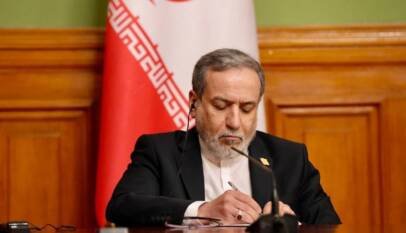
Tehran, Aug 2026 : Iranian Foreign Minister Seyed Abbas Araghchi has warned Britain agains…
Iran Warns UK Against Military Cooperation With US in Any Strikes on Tehran
Tehran, Aug 2026 : Iranian Foreign Minister Seyed Abbas Araghchi has warned Britain against …