Small opposition, populist party set to surge in the Japan’s Upper House Election.

Japan’s small opposition Democratic Party for the People and the right-leaning populist group Sanseito are set to make significant gains in Sunday’s House of Councillors election, according to Kyodo News projections, apparently reflecting voter frustration with mainstream parties and cost-of-living pressures. Out of the 125 seats contested in the 248-member upper house, the DPP is projected to win 12 seats, up from the four it held before the election, while Sanseito is likely to secure at least nine, up from one.
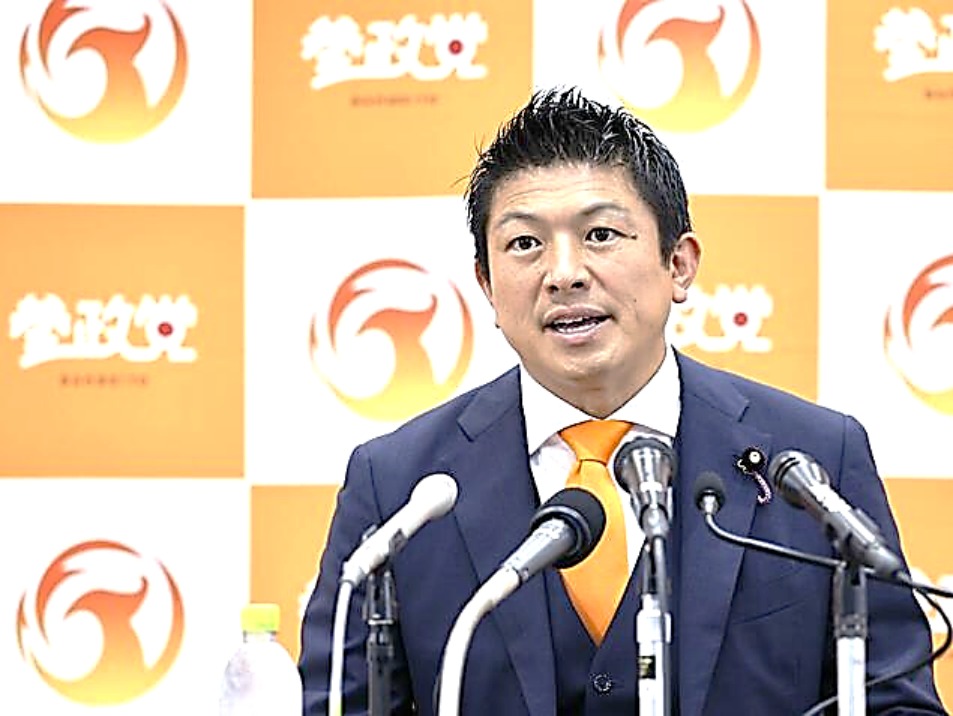
Sanseito, which emerged in 2020 and is led by Sohei Kamiya, who was first elected to the upper house in 2022, has gained traction during the campaign with its “Japanese First” banner and controversial rhetoric, particularly targeting foreigners. Kamiya, 47, has claimed that globalisation is the “reason behind Japan’s poverty“, arguing that foreigners are buying up land and company stocks, and that the number of foreign workers has grown excessively due to labour shortages.
In the more powerful 465-member House of Representatives, the fledgling party won three seats in the general election in October while the DPP quadrupled its seats to 28. The surge in small opposition parties, also seen in the most recent national election, deals a blow to the ruling Liberal Democratic Party and its coalition partner Komeito, which no longer hold a majority in the lower house.
Japan’s ruling coalition is struggling to retain its majority in the House of Councillors in Sunday’s election, dealing a severe blow to Prime Minister Shigeru Ishiba as several small opposition parties make breakthroughs amid frustration over inflation. Despite what he described as a “severe” election outcome, Ishiba vowed to stay on as prime minister, even as senior figures in the country’s major opposition parties expressed reluctance to help the embattled ruling camp by forming an expanded coalition.
The Liberal Democratic Party and its coalition partner the Komeito party must win at least 50 of the 125 contested seats to clear the majority line. Failure to do so would plunge Japan into political turmoil, as Ishiba would have to seek support from opposition parties in the upper house. The ruling bloc has already lost its majority in the more powerful House of Representatives, blamed by the public for failing to take effective measures to tackle price hikes outpacing wage growth.
The election serves as a gauge of voter confidence in Ishiba’s minority government, with his leadership under scrutiny over the cost-of-living crisis as well as ongoing tariff negotiations with the United States.
“We have to take the projected outcome humbly”, Ishiba said on a TV program, adding that the LDP must fulfill its responsibility as the ruling party. His comments came after LDP Secretary General Hiroshi Moriyama, the No. 2 figure in the party, said during a separate TV program, “We should not create a political vacuum”.
As early returns and media projections came in, Democratic Party for the People leader Yuichiro Tamaki said that forming a coalition with the ruling camp is “out of the question”.
The leaders of the major opposition Constitutional Democratic Party of Japan and the Japan Innovation Party took a similar stance. As reiterated earlier, it is now a matter of concern, as to how many seats minor populist opposition forces, including the right-leaning Sanseito party, will pick up amid the projected headwind for Ishiba’s government. Furthermore, Sanseito is expected to make the biggest gains while the DPP, which has engaged in policy coordination with the ruling coalition, is projected to gain more than the four seats it previously held.
Team Maverick






Parle Products Thanks PM Modi as “Melody” Toffee Gift Goes Viral on Global Stage
New Delhi, May 2026 : Parle Products Pvt Ltd on Wednesday expressed gratitude to Prime Min…

Parle Products Thanks PM Modi as “Melody” Toffee Gift Goes Viral on Global Stage
New Delhi, May 2026 : Parle Products Pvt Ltd on Wednesday expressed gratitude to …