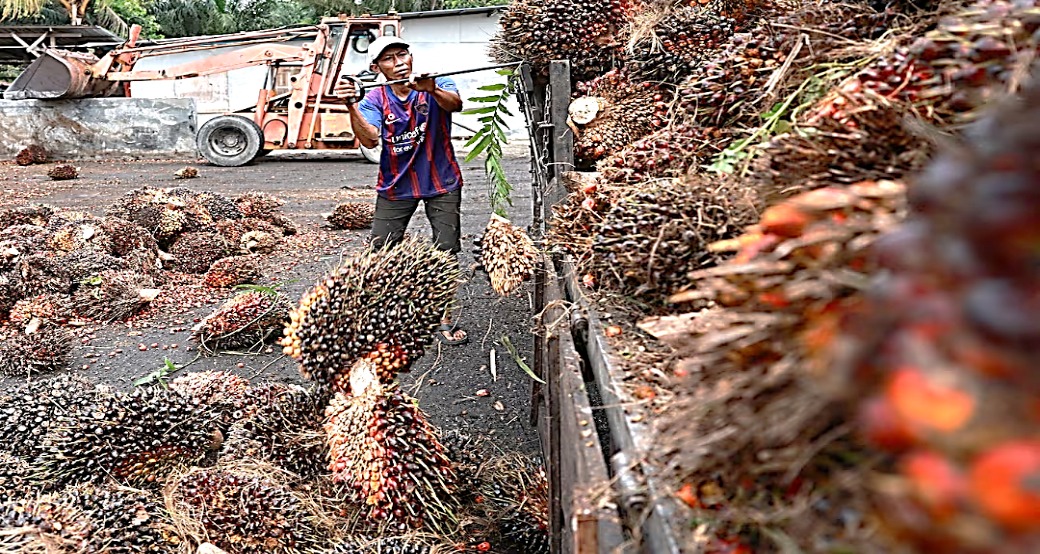
Malaysian Top Palm Oil Exporters flags “Old trees and ageing farmers” for decline in the industry.

Malaysian farmer Suratmen Mosman faces a dilemma that threatens to cap supplies from the world’s top palm oil exporters and drive up prices of the vegetable oil essential to billions of consumers worldwide in the next five years.
The ageing trees on his plantation 300 km (185 miles) south of Kuala Lumpur are bearing less fruit, but the 85-year-old is holding off replacing them as he doesn’t want to lose income while waiting the three to five years it takes for new trees to start yielding a crop and the years beyond that it will take for them to reach peak production. Government subsidies to encourage replanting are not as high as they once were and he needs to support his family.
Used mostly as a cooking oil, but also to make cakes, cosmetics and cleaning products, palm oil makes up more than half of the world’s vegetable oil supply and 85% of the crude product comes from Malaysia and Indonesia. But after decades of soaring output, the market is now at a tipping point as combined exports from the two producers are set to slow sharply, the result of stagnating production and efforts by Indonesia to divert more palm oil into the production of biodiesel.
While financial markets have factored in the slowdown, there is growing evidence that plantations run by smallholders like Suratmen may be in worse condition than previously thought as ageing and lower-yielding trees are not replaced, which will add to the decline. Smallholders make up 40% of the plantations across Malaysia and Indonesia, so they play a vital role in the supply chain.
Supplies to global markets from Indonesia and Malaysia could fall as much as 20% over the next five years, according to industry experts based on government and industry projections, some previously unpublished. Future output from smallholders may well be over-estimated because the condition of trees and the rate of planting new trees is worse than estimates by the governments in Kuala Lumpur and Jakarta, according to industry experts.
In Indonesia, just 10% of a 2016 government target to replant 2.5 million hectares (9,653 square miles) by 2025 had been met as of last October, publicly available government data showed.
As a result, over one-third of oil palms among both smallholders and industrial plantations are either at or past their most productive years. Acreage for trees older than 21 years is set to rise 11% next year in Indonesia, according to previously unreleased data from state research firm Riset Perkebunan Nusantara (RPN).

Reluctance in Malaysia and Indonesia to replace old trees, plus Indonesia’s increased biodiesel mandates, point to a sharp drop in palm oil exports in the coming five years. Calculations based on Malaysian and Indonesia palm oil body estimates suggest combined exports are likely to drop to about 37 million metric tons by 2030, down by a fifth since 2024.
Indonesia is likely to have around 20 million tons available for export, down by nearly a third from last year, according to forecasts from RPN and the Indonesia Palm Oil Association (GAPKI).
There are no official forecasts for Malaysian palm exports by 2030, but Mistry said expectations are now that they will remain steady or decline slightly, reflecting a lack of consistent replanting and in contrast to earlier estimates of modest annual increases. State-run industry regulator the Malaysian Palm Oil Board said it did not agree with the assessment that over 50% of smallholders’ oil palm trees are beyond peak yielding age.
“According to MPOB’s 2024 data, only 36.2% of smallholders’ oil palm trees are over 18 years old, and many smallholders have already begun replanting with government support“, the board said in a response to questions from Reporters. To ease replanting costs, the government offers a 50% grant and 50% loan, it added.
Industry projections indicate global demand will rise by 50 million tons by 2050, requiring minimum annual supply growth of 2%. However, as per estimates, production is on track to grow at just 1.5% annually based on ageing trees and slow replanting rates in both countries. The contrast to palm’s earlier growth is stark. Palm doubled its share of the global vegetable oils market to 30.6% in the three decades to 1995, with Indonesian production growing an annual 8.1% and Malaysian output rising 3% over the same period. Already, strained palm oil supplies are pushing up costs for alternatives including soybean, rapeseed and sunflower oil.
Last year, crude palm oil traded at a $39/ton premium to soybean oil compared to a $160 discount in 2023, according to the Malaysian Palm Oil Board. Top buyer India’s annual palm oil imports are set to drop below other edible oils for the first time this year as rising palm costs push refiners toward alternatives.
Team Maverick








China Open: Lakshya, Sindhu and Ayush Shetty Advance to Second Round After Gritty Wins
Changzhou (China), July 2026 : India’s top badminton stars Lakshya Sen, P.V. Sindhu …

China Open: Lakshya, Sindhu and Ayush Shetty Advance to Second Round After Gritty Wins
Changzhou (China), July 2026 : India’s top badminton stars Lakshya Sen, P.V. Sindhu and …