Rebuilding Communities with IFAD in Odisha.

The Lanjia Saora are among the 13 tribal communities in Odisha classified by the government as Particularly Vulnerable Tribal Groups (PVTGs). These traditional communities typically live in remote and hard-to-access areas, with limited services and few economic opportunities. Considered to be the custodians of traditional knowledge, a rich culture and ways of life, were threatened by poverty and malnutrition. Many had no choice but to leave their homes in search of wage labour.
In 2018, the Government of Odisha and International Fund for Agricultural Development (IFAD) embarked on Odisha Particularly Vulnerable Tribal Groups Empowerment and Livelihoods Improvement Programme (OPELIP), a project that aims to reduce poverty and improve the living conditions of rural communities in the state, particularly PVTGs. This was the first time an external development partner was invited to work in PVTG areas of Odisha.
The overall goal of the programme was to achieve better living conditions and to reduce poverty for the most vulnerable in Odisha’s heavily forested Eastern Ghats and Northern Plateau regions. The
Tribal populations inhabiting in the target area derive their livelihood from shifting cultivation, rainfed agriculture and from gathering non-timber forest products (NTFPs). Farming practices are basic, and mostly include growing rainfed rice and millet. Many tribal people are landless.
The programme’ s objectives was to:
- Build the capacity of target households
- Secure entitlements to land and forest
- Improve agricultural practices
- Promote income-generating microenterprises
- Ensure access to services such as education and health
- Improve community infrastructure
Poverty is particularly severe among tribal populations in India. With over 11 Crores, which is almost 08% of India’s population, tribal people are traditionally concentrated in forests, hills and other remote and inaccessible rural areas. They have reduced access to basic services and few opportunities for economic development. The programme was to improve the livelihoods and food and nutrition security for over 62,000 households.
Project Area OPELIP interventions were implemented in 17 Micro-Project Agency (MPA) areas located in 12 districts of Odisha namely Malkangiri, Rayagada, Angul, Deogarh, Ganjam, Nuapada, Keonjhar, Sundergarh, Gajapati, Kandhamal, Kalahandi and Mayurbhanj covering 13 PTGs living in some
1,019 villages and hamlets and 84 Gram Panchayats (GPs). Overall, the programme has covered approximately 62,356 households, including PTG and other ST and SC households.
During the project, 14,446 households received legal title to land, both for agriculture and their homesteads. With their right to their land now assured, PVTG households are starting to use agricultural practices that will secure better yields – and a better income.
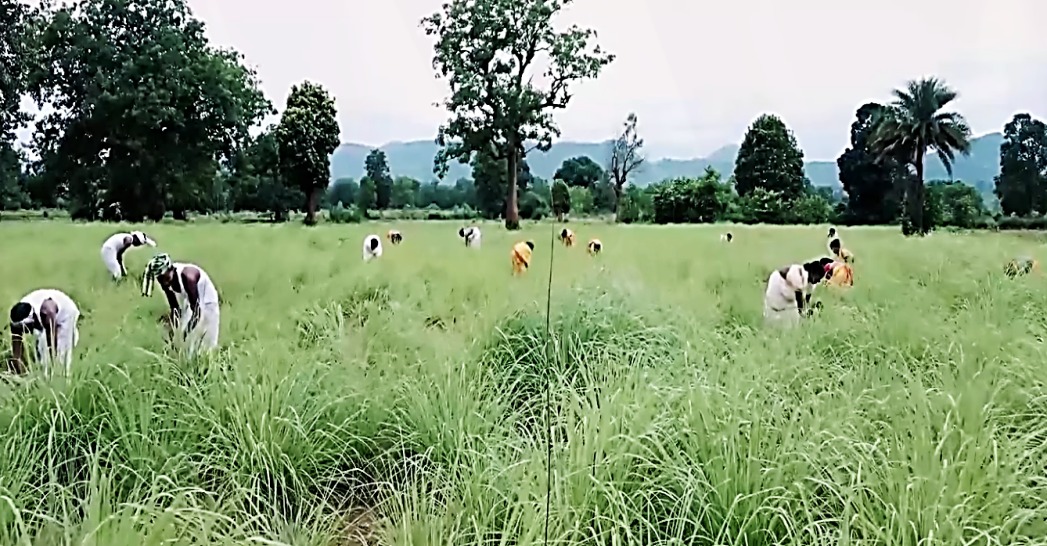
The Saora Development Agency has allocated forest land to cultivate, facilitating growing maize, millet and rice. Better yields were possible through line-sowing rice. Farmers had also explored new crops like lemongrass, which grows on otherwise barren soil, and producing and selling its oil. Training delivered through OPELIP has enabled them to better understand the market for their products and demand a fairer price.
As a result, over 40,000 households have increased their food production from 510 kg per year to over 1,300 kg. The average incomes that PVTG households earn have grown nearly six-fold, from INR 2,865 to INR 17,580 (US$33 to US$203). “Prior to this, we had no idea that lemongrass could grow“, said a local farmer further adding, “The entire area of the village was uncultivated and desolate. It was completely parched and had been suffering from droughts for some years“.
OPELIP has constructed 1,071 drinking water schemes, 493 km of roads and 4,186 solar-powered lighting systems. These infrastructural improvements have been life-changing for Bali and other members of the Lanjia Saora.
As jobs were created, working parents needed childcare support, and at nurseries set up through OPELIP, 915 children are thriving. Trained staff prepare delicious, nutritious meals for the children, using foods grown locally. As a result of OPELIP’s support, fewer people are forced to leave their rural communities to seek work elsewhere. Opportunities to thrive are now emerging at home.
With rights to the land they nurture, improved infrastructure and better, more sustainable livelihoods, PVTG communities are equipped to safeguard their traditional ways of life.
Outputs –
The project had several interventions and the major out puts are;
- Out of 1,012 planned VDAs, 1,011 were registered with 7,715 VDC members (49% men, 51% women). 518 CRPs were recruited.
- 17 NGOs were appointed for VDA/VDC facilitation, with one terminated for non -performance.
- Training and capacity-building initiatives reached 333,875 individuals cumulatively, including 47,301 PVTG men and 49,678 women.
- 6,741 SHGs were functional (1710 PVTG SHGs) out of a target of 6,500.
- The PVTG Empowerment Fund (PEF) was introduced, benefiting 1,776 SHGs, with a loan recovery rate of 71%.
- A late marriage incentive benefited 575 girls who were counseled against early marriage.
- 99.8% of 22,467 PVTG households were surveyed for land rights and over all 19,464 HHs received agricultural lands and 18,227 HHs received homestead lands, exceeding project targets of 75% PVTG HHs receiving land titles.
- 2,262 Farmer Field School (FFS) were organized, reaching 46,347 farmers. Improved cereal and millet practices were adopted on 12,459 ha, benefiting 49,836 HHs. Pulses, oilseeds, and tuber crops were promoted on 11,891 ha, surpassing targets. 27,487 kitchen gardens were established. 591 Agricultural Intensification Clusters (AICs) were formed, benefiting 15,213 HHs.
- 61 Matru Sishu Poshan Kendra (MSPK) crèches were functional against the target of 107, with 915 children enrolled, and 161 maternal spot-feeding centers were operational.
- 516 Community Service Providers (CSPs) were recruited, including those focusing on poultry, goatery, and agriculture. 45,279 poultry units and 1,500 goatery units were distributed.
- 6,313 households established Income generation activity (IGA) far exceeding the target of 3,000. 86% of units were operational.
- 38 producer groups were established, with 2,266 members (all women, including 1,591 PVTGs). 70 Van Dhan Vikas Kendra’s (VDVKs) were set up, but marketing services remain underdeveloped.
- 21 types of community infrastructure totaling 23,807 interventions were implemented, including 1,071 drinking water schemes and 493 km of roads. 4,186 solar lighting units, 442 SHG work sheds, and 1225 irrigation systems were installed.
- Gas cylinders were distributed under the Ujwala scheme, benefiting 5,060 families reducing the drudgery of women. 33 youth dormitories, 492 sacred site fences, and 217 sets of cultural equipment were provided to promote tribal culture. The design targets were largely achieved.
Outcomes –
OPELIP has achieved most of the targets for the outcomes set out at design; the results are largely drawn from the end line survey carried out by a professional agency.
The project goal of improving living conditions and reducing poverty has been mostly achieved with 77,068 households have improved food security as against the target of 72,488 households. The stunting in children is reduced by 6.3% as against the target of 5 to 10%, 49,708 households have improved household asset index as against the target of 72,488.
The development objective of improved food and nutrition, security and livelihood opportunities has been achieved, with 41,850 household reporting 1328 kg of production per household, the average farm income from agriculture, livestock and IGA have exceeded the target set and as against the target of 75% PVTG household having housing units and access to drinking water supply, and roads by project completion, 98.80% have household units and 84% having access to drinking water supply. There is a reduction overall in migration from 27% at baseline to 19.7% at the end line.
The targets related to land for cultivation and Homestead and improved land productivity have largely been achieved. 41,325 households have improved the quality of diets as compared to the target of 31,000. 28,917 Households have reported significant reduction in drudgery as against the target of 20,000 households.
The paddy yields increased from 1,518 kg per hectare at baseline to 2,690 kg per hectare at end line. Maize productivity rose from 1617 kg/ha to 3201 kg/ hectare. Both being staple food crops have contributed to achieving better food security to the PVTG households.
The average number of goats and poultry maintained by the households have also significantly increased.
To combat early marriages, OPELIP introduced an incentive program for girls who delayed marriage
beyond 18. A first in the country this is being scaled up through the Women and Child Development Department,
OPELIP engaged with 13 government departments to converge services and programs, ensuring that PVTG villages received essential facilities like roads and drinking water. This scale of convergence is considered an innovation.
Team Maverick

Rahul Gandhi, INDIA Bloc Hold Candlelight Vigil at Gandhi Smriti Over NEET Paper Leak Row
New Delhi, July 2026 : The Opposition intensified its campaign over the alleged NEET exami…
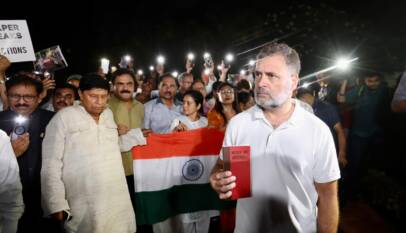
Rahul Gandhi, INDIA Bloc Hold Candlelight Vigil at Gandhi Smriti Over NEET Paper Leak Row
New Delhi, July 2026 : The Opposition intensified its campaign over the alleged NEET …