ICAR-CIFRI Initiatives to Boost Competence in Fisheries Sector

In February, 2019, Government of India had institutionalised a separate Department of Fisheries. This was followed by the pioneering of a new Ministry of Fisheries, Animal Husbandry and Dairying in June, 2019. Much earlier since 2015, the Government of India has substantially stepped up investment in fisheries sector through new schemes and programs worth Rs. 32572 crore in fisheries sector.
Thrust was generated for frame working a modern fisheries infrastructure at a total investment of more than Rs 15,000 Crores under Blue Revolution, PMMSY and FIDF. Since then, under the aegis of the Blue Revolution, PMMSY and FIDF, 69 modern fishing harbours and fishing landing centres have been commissioned at a total cost of Rs 7229 Crores. Following the implementation success, in 2019 Government of India had extended Kishan Credit Cards (KCC) facility to fishermen and fish farmer for meeting their working capital requirements. Till the end of October 2022, 1,13,744 KCC cards have been issued, as per Government sources. The relentless strive on the platform of impeccable planning, and mobilisation of resources, has catapulted the Indian Fisheries to never before scales. Certain takeaways of the trajectory:
India as a global leader in fisheries sector –
- 1st. in Inland Capture fish production;
- 1st. in cultured shrimp export;
- 2nd. largest aquaculture producer globally;
- 4th. largest exporter of Marine Fish products;
- 6th. largest producer of marine capture fish production;
- Contributes approximately 8% to the global fish production;
- Average annual growth rate of 8.81% from FY 2014-15 to FY 2021-22;
- All time high fish production of 175.45 lakh tonnes in FY 2022-23;
- Comprising 44.32 lakh tonnes from marine fisheries and 131.13 lakh tonnes from inland.
Contribution to National Economy –
- Exports: Rs. 63,969.14 crore (US$ 8.09 billion) in FY 2022-23.
- Average annual export growth of about 14% in the last decade.
- Constitutes 1.07% of the national GVA and 6.86% of the agricultural GVA.
- Employs about 2.80 crore fishers and fish farmers directly
While the above mentioned figures are self-explanatory, India’s vast marine resources are bespoken which constitutes with an extensive coastal line of 8,118 kilometres facilitates 20.2 Square Kilometres of Exclusive Economic Zone (EEZ). An area of 5.3 Square Kilometre is earmarked as Significant Continental Shelf accommodating 53.10 lakh tons of fisheries. Moreover, 3432 villages encompass a Brackish water area of 12.5 lakh hectares, offering opportunities for shrimp aquaculture.
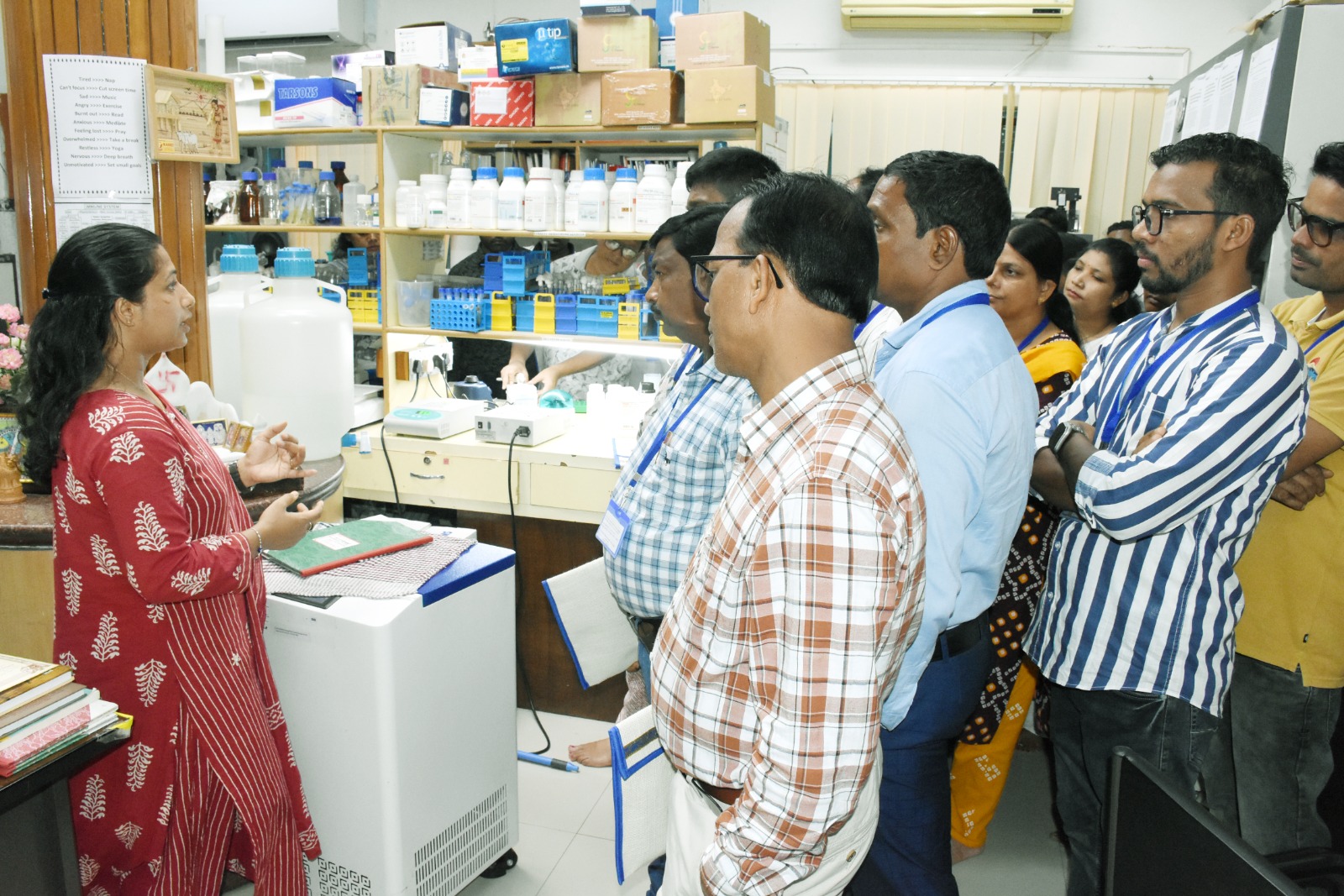
Upholding the legacy, ICAR-CIFRI had organised a FIVE DAYS TRAINING PROGRAMME at it headquarter in Barrackpore, West Bengal.
From 04th. to 08th. August 2025, ICAR-CIFRI conducted a five-day training programme for 29 officials from the Department of Fisheries, Government of Odisha, aimed at enhancing their skills in disease diagnosis and laboratory testing.
Designed for new joiners, the programme featured 11 classroom sessions, 02 applicative sessions, and 02 field visits, including one to the East Kolkata Wetland. The participants were made acquainted with inland fisheries management, water quality analysis, fish disease diagnosis, and GIS applications.
Dr. B.K. Das, Director of CIFRI, stressed the importance of hands-on training for improving fisheries productivity. The participants found the training highly effective and professionally enriching.
ICAR-CIFRI also conducted a hands-on training programme on “Data Analysis and Visualisation in R” from 06th. to 08th. August. The training focused on applicative sessions covering key topics such as the fundamentals of ‘R software’, data preparation and cleaning (process of transforming raw data into a usable format for analysis by correcting errors, handling missing values, and removing irrelevant or duplicate entries), exploratory data analysis (EDA), data visualisation, basic statistics, multiple correlation, regression, and ecological data analysis.
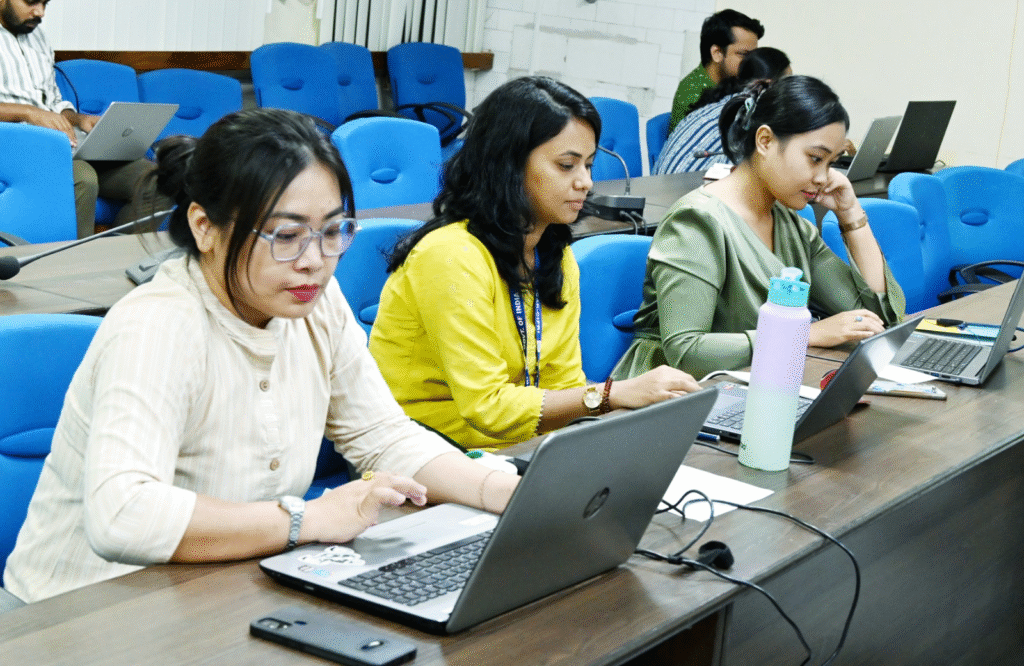
Special emphasis was given to the use of ggplot (a system for declaratively creating graphics, based on The Grammar of Graphics. When the data is provided, a command is necessary for ggplot – to map variables to aesthetics, nature of graphical primitives to use), and it takes care of the details for creating high-quality graphics.
09 trainees participated, including two from Manipur, and received extensive hands-on support throughout the sessions to strengthen their analytical skills.
A Hands-on Training Programme on “Molecular Tools for Aquatic Resource Management” was conducted during 04th. to 08th. August, for equipping 20 participants including 14 women participants from leading universities and research institutions with essential skills in modern molecular techniques.
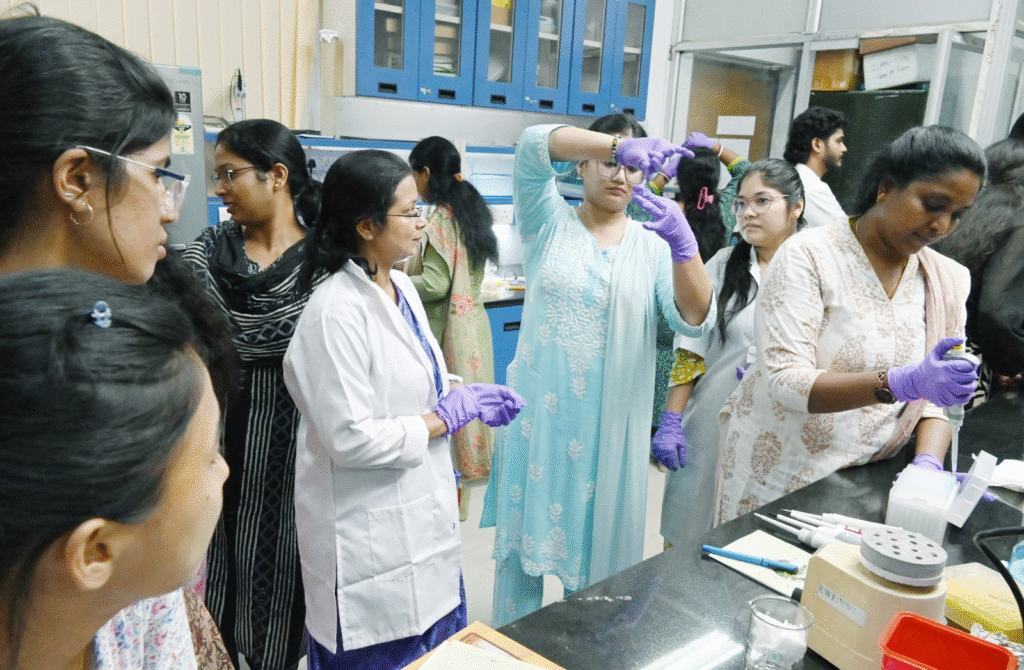
This intensive program integrates theoretical concepts with applicative sessions in cutting -edge molecular techniques, including DNA Isolation, Proteomics, Bioinformatics, and Polymerase Chain Reaction (PCR).
The hands-on training is designed to enable participants to identify aquatic species and diagnose related diseases with precision. By equipping professionals from diverse regions of India with molecular competencies, the program contributes meaningfully toward sustainable aquatic resource management.
Team Maverick


Cashless Land Registration System to be Introduced Across Odisha ; Revenue Minister Reviews Implementation
– All Registration Offices to Become Transparent and Corruption-Free – Land Re…
Cashless Land Registration System to be Introduced Across Odisha ; Revenue Minister Reviews Implementation
– All Registration Offices to Become Transparent and Corruption-Free – Land Registration Process to …