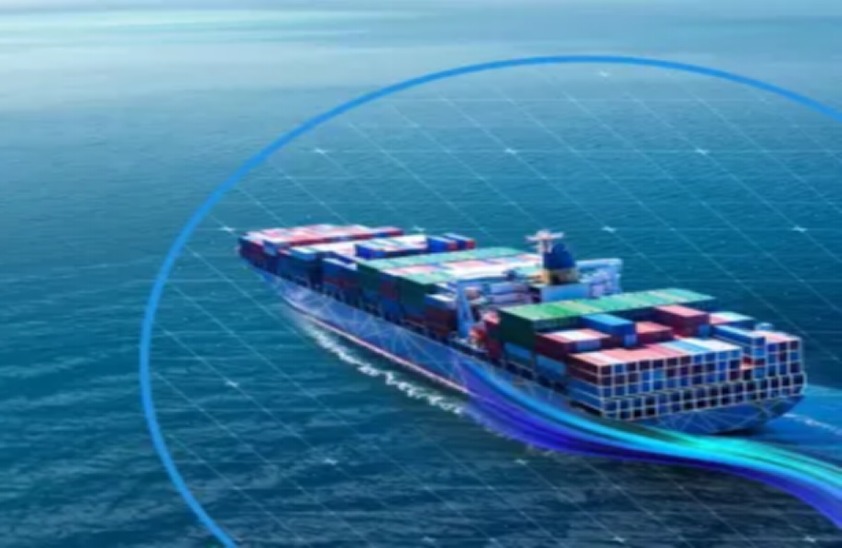
Ammonia and Methanol declared as Zero Emission Shipping Fuels.

Aug 2025 : Both ammonia and methanol have moved from theory to reality as zero-emission shipping fuels, according to a new report from the Global Maritime Forum’s Getting to Zero Coalition. This path breaking conclusion was derived after interviewing around 40 influential industry organisations.
From pilots to practice: Methanol and ammonia as shipping fuels finds that both fuels are now ‘ready’ – methanol for low-carbon operation and ammonia for piloting – representing a significant increase in maturity since the report’s first edition in 2020.
However, the report warns that the fuels require a concerted push if they are to be mature enough to rapidly scale from around 2030, in line with the industry’s targets. The key area that must be addressed is the fuel supply chain – in the case of methanol, enhancing the availability of green molecules; for ammonia, validating and rolling out commercial ammonia bunkering at key ports.
Jesse Fahnestock, director of decarbonisation at the Global Maritime Forum, said: “We have seen excellent progress in the development of zero-emission fuels and technologies over recent years, with methanol and ammonia having now shifted from potential solutions towards initial scale and proof of concept. However, we are only at the start of our journey and technology readiness is not enough by itself. To scale zero-emission fuels at the pace required, we need action from the International Maritime Organization, national policymakers and the industry to create the right enabling conditions; this will be just as vital as the development of the technology itself”.
Since 2020, the Global Maritime Forum’s Mapping of Zero-Emission Pilots and Demonstration Projects report has provided an overview of the nature and scale of zero-emission pilots and demonstration projects taking place in shipping. To keep pace with developments in the sector, this year’s edition takes a new approach, assessing the current status of methanol and ammonia as shipping fuels and bringing together key learnings generated by leading companies so far. In so doing, the report aims to establish remaining priorities for action and assist the industry in its long-term decarbonisation planning. The report specifically focuses on methanol and ammonia, as fuels relatively early in their adoption, while having significant potential in the long term.
The report reveals a number of key learnings on the status of both methanol and ammonia.
Methanol is rapidly moving from proof of concept to early scale (more than 60 methanol-capable vessels in operation, 300 more on order, and bunkering available at around 20 ports) and early adopters are finding it relatively safe and straightforward to integrate. Its lower energy density presents operational trade-offs but has not proven a barrier, and new retrofit kits and the relative ease of converting tanks are making retrofitting conventional vessels feasible. The key challenge to broader scale-up is the availability of green methanol, which makes up only a small share of total supply and remains challenging for shipping companies to access.
Ammonia is rapidly approaching proof of concept as a marine fuel, with engine tests suggesting it can cut tank-to-wake emissions by up to 95%. The first ammonia-powered vessels have been successfully piloted, engine testing is near completion, and bunkering trials are underway – none of which have revealed any fundamental barriers to adoption. Operators report confidence in safely operating ammonia-powered vessels and will likely phase the fuel in over a period of time to build operational experience.
Early movers in the sector propose a mix of actions to accelerate the development of the methanol and ammonia fuel supply chains:
- Providing targeted policy incentives and funding to close the cost gap for green methanol and ammonia and support early adopters.
- Establishing a robust, harmonised fuel certification systems to unlock investment and prevent greenwashing.
- Using book-and-claim systems to link global demand with zero-emission fuel supply on viable routes.
- Aggregating the fuel demand to create an investment case for bunkering infrastructure.
- Offering CAPEX grants to reduce the threshold for investment in bunkering infrastructure, especially bunker vessels.
- Promoting collaboration through green corridors, feasibility studies, and joint bunkering trials at key ports.
- Addressing gaps in the availability of engines and spare parts.
- Ensuring strong IMO emissions guidelines to ensure sustainability of biomass and control fugitive emissions.
- Conducting several independent studies to verify the emissions performance of early ammonia-powered vessels.
- Facilitating cross-industry knowledge sharing through collaborative safety workshops at shipyards and through marine insurers.
Team Maverick






Jesus Backs Cristiano Ronaldo, Takes Charge as Portugal Coach Until 2030
Lisbon, July 2026 : Newly appointed Portugal head coach Jorge Jesus has thrown his full su…

Jesus Backs Cristiano Ronaldo, Takes Charge as Portugal Coach Until 2030
Lisbon, July 2026 : Newly appointed Portugal head coach Jorge Jesus has thrown his …