RFK Junior’s endless anti-vaccine campaigns target the science that could lead to cancer vaccines.

Sept 2025 : There are many reasons for the widespread condemnation of the decision by Health and Human Services Secretary Robert F. Kennedy Junior to cancel half a billion dollars in research and development of mRNA vaccines. Indeed, impeding work on one of the most promising areas of biomedical innovation, along with several treatments for non-respiratory diseases like cancer, which represents an astounding level of short-sightedness.
Operation Warp Speed, one of the biggest achievements of the first Trump administration, helped compress a novel vaccine development timeline that previously could take a decade or more into less than a year. And mRNA vaccine technology, which represents a readily modifiable vaccine platform that can be used for countless vaccines, is Operation Warp Speed’s most important legacy. Failing to build on mRNA research now makes the United States more vulnerable to infectious diseases like influenza or COVID, to future pandemics, to biological attacks, and to other health threats. And it cedes a critical field of research to other countries and will make it harder for Americans to access these lifesaving tools.
Rather than embracing mRNA vaccines, Kennedy, a long-time opponent of vaccines, is putting forward lies based on phony data and false claims in his war on these medical tools. In announcing his no-notice decision to shut down 22 research programs earlier this month, the health secretary said the government was shifting funding “toward safer, broader vaccine platforms that remain effective even as viruses mutate”. Numerous studies, however, have proven that mRNA vaccines have reduced disease and death from COVID, even as the virus has mutated over the years. And they’ve demonstrated the safety of the technology.
A rapid response. During a future pandemic or other biological emergency, being able to quickly develop safe and effective vaccines will be key to preventing severe illness and death and to easing stress on a health care system that could otherwise collapse under a surging patient load.
COVID took millions of lives, disrupted society, tanked the economy, and closed businesses and schools. Yet, bad as our most recent pandemic was, it is not the most serious threat imaginable. Future pandemics, and there will certainly be others or a biological attack involving a pathogen engineered specifically for lethality and/or transmissibility could make COVID look mild. Stunningly, Kennedy has chosen to take away a singularly effective weapon against such threats.
Historically, efforts to develop vaccines have been hindered by the inflexibility and time-consuming nature of traditional vaccine manufacturing approaches. For example, were there to be an influenza pandemic tomorrow, manufacturers could immediately start making a vaccine to stop it, but traditional flu vaccines are typically grown in eggs in a process that can take as long as six months. There are only so many plants in the world that can make such vaccines, so it might take years to grow the amount of vaccine needed to meet likely global demand in a pandemic. And if the virus mutates, manufacturers would need to update vaccines to meet the mutation, starting the whole time-consuming process all over again.
Conversely, mRNA vaccines are much more easily modified than egg-based vaccines. Once scientists figure out what protein on the surface of a pathogen the vaccine should target, manufacturers can make vaccines that tell our cells how to make that protein to teach our immune system what to target. Not having to “grow” in eggs or other animal cells the active ingredient in mRNA vaccines that stimulate our immune system theoretically shortens the vaccine production process by months—a crucial amount of time in a fast-moving, deadly biological crisis. Hence, the mRNA platform can more easily meet the challenge of virus mutations, producing vaccines that target different pathogens or parts of pathogens, as needed.
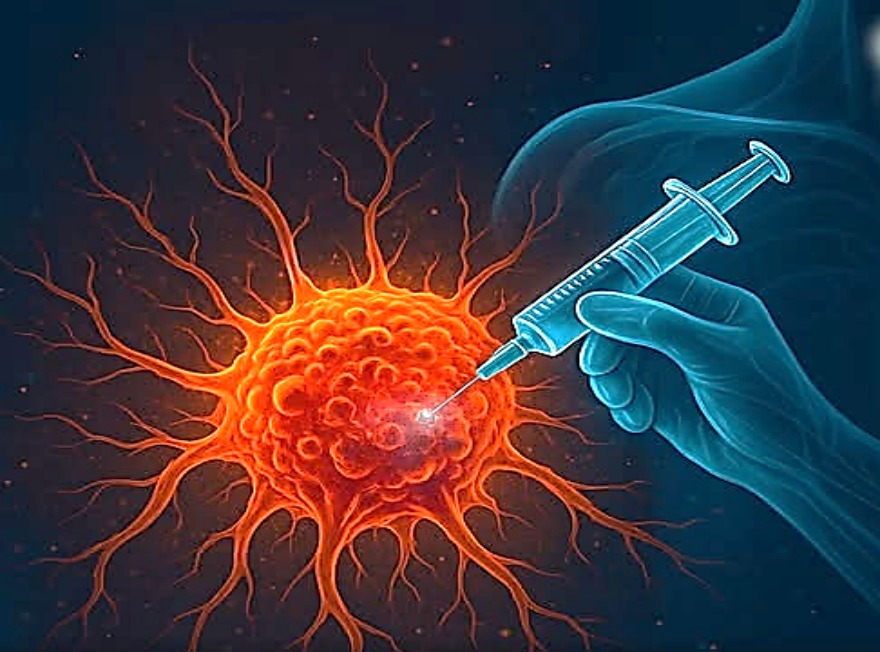
While much attention has been paid to how Kennedy’s mRNA decision could impact development of infectious disease vaccines, the secretary’s decision could also stall or delay work on another potential capability of mRNA-based vaccines. Imagine being diagnosed with a rare, aggressive cancer. Now imagine receiving that diagnosis and being told that it is possible to teach your immune system to find and destroy all of the cancer cells in your body. The prospect of having not only a vaccine against cancer, but one tailored to a patient’s specific cancer is just one of the many potential applications of mRNA-based approaches that scientists hope to develop. Early studies looking at using mRNA vaccines to treat pancreatic cancer—historically one of the more deadly forms of the disease—show great promise. Several vaccine candidates, including those targeting high-risk melanoma and pancreatic cancer, are in advanced stages of development (that is, in phase 2 or phase 3 clinical trials).
Health and Human Services has said that the cancellation of the 22mRNA research and development projects was specific to their application to respiratory pathogens and does not extend to their use for other diseases, such as cancer. But this is a false distinction. As former Trump Surgeon General Jerome Adams has noted, several strands of scientific effort were involved in the eventual development of mRNA vaccines. “Cuts in one area, like infectious diseases, will inevitably hinder progress in others, including oncology”, he told U.S. News & World Reports. Cutting research for mRNA vaccines in the United States is likely to have a chilling effect on broader mRNA research. The sudden offloading of these pre-existing projects sends the signal to researchers and companies that it may be risky to do this type of work. And the lies spread about the safety and effectiveness of mRNA vaccines for respiratory pathogens may tarnish perceptions about all vaccines developed with this technology, discouraging patients from treatments that could make a difference.
By turning away from mRNA vaccine research, the United States will lose out to other countries that have been trying to develop their own mRNA-based vaccines. Though China has been investing in mRNA vaccines for decades, it was unable to develop domestic mRNA COVID vaccines until later in the pandemic. Instead, China relied on vaccines made with older approaches inactivated, whole-virus vaccines, that ultimately proved to be less protective than the mRNA vaccines the United States was using. Because of the Trump administration’s retreat from mRNA efforts, researchers and companies that once preferred to work with the United States may instead turn to China and other countries that are eager to gain access to these technologies. Kennedy’s decision raises the question: When the next pandemic strikes, how quickly will the United States have access to the most effective vaccines and treatments?
At this point, the best hope for global preparedness for combatting pandemics, biological attacks, and diseases like cancer and HIV will be for other countries to increase their investments in mRNA vaccines. Recognizing the likely and critical role such vaccines will have in future pandemics, the World Health Organization has been working to increase the number of regional mRNA vaccine research and development hubs, with the goal of improving access to these life-saving tools to other countries, including low- and middle-income countries. These efforts will be even more essential as the United States abandons its role as global leader in vaccine research and development—all in service of Kennedy’s personal, endless campaign against proven, effective, life-saving vaccines.
Team Maverick





Portugal Part Ways with Roberto Martinez After World Cup Exit, Begin Search for New Head Coach
Lisbon, July 2026 : The Portuguese Football Federation (FPF) has officially confirmed the …

Portugal Part Ways with Roberto Martinez After World Cup Exit, Begin Search for New Head Coach
Lisbon, July 2026 : The Portuguese Football Federation (FPF) has officially confirmed the departure …