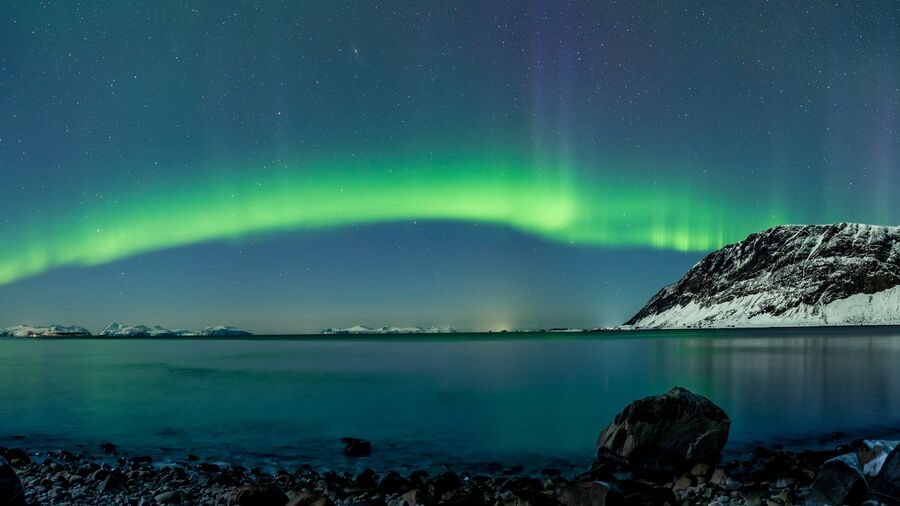
A Surge in Auroras – Equinox and Solar Maximum.

As the September equinox approaches, two key phenomena, the Russell–McPherron effect and the equinoctial effect, are expected to boost auroral activity in the coming weeks. At the equinoxes, Earth’s axis is tilted neither toward nor away from the Sun. This geometry shapes how Earth’s magnetic field interacts with the solar wind: Earth’s magnetic field points north, and when the solar wind’s magnetic field points southward, opposite to Earth’s – the two fields can connect, a process called magnetic reconnection. This process lets energy and charged particles from the Sun stream into Earth’s magnetosphere, powering auroras.
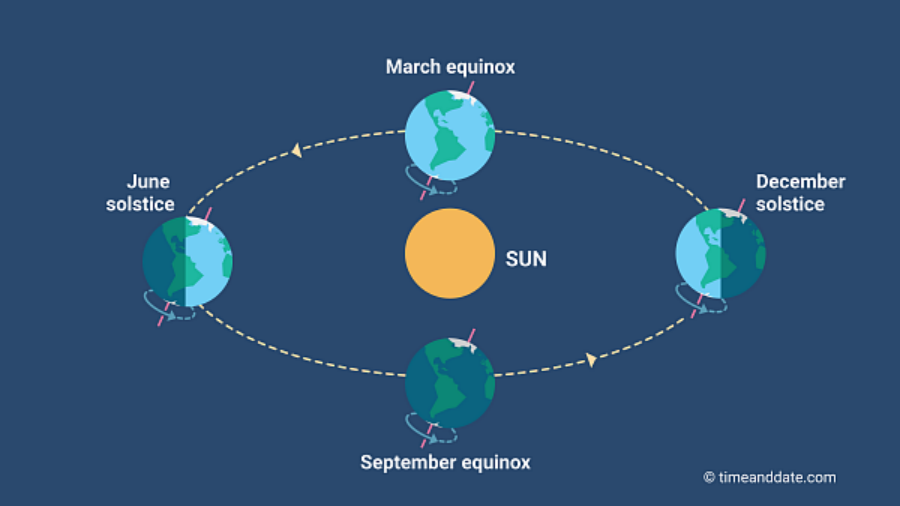
What is the equinox? –
As in the case of two magnets: if their poles are opposite, they attract while snapping together; if they’re the same, they distract by pushing apart. Around the equinoxes, Earth’s tilt positions its magnetic field so that we more often experience the solar wind’s magnetic field pointing southward, opposite Earth’s, allowing the two fields to connect.
Even when the solar wind’s magnetic field isn’t southward, auroras can still occur, though they tend to be stronger and more frequent when the field points south, opposite to Earth’s. Because this alignment happens more often around the equinoxes, auroras in both hemispheres become brighter and more frequent, and this phenomenon is known as the Russell–McPherron effect.
The Equinoctial Effect –
Scientists point out that another factor called the equinoctial effect also boosts auroras.
Around the equinoxes, when Earth’s tilt is effectively zero relative to the Sun, our planet’s magnetic poles fall nearly at right angles to the solar wind. This orientation makes Earth’s magnetosphere—our planet’s invisible shield—more open to interactions with the solar wind, allowing energy and charged particles to enter. This explains how it essentially makes our magnetosphere a bigger target for incoming solar wind. The equinoctial and Russell–McPherron effects are neat interplays between geometry and magnetic fields. When they coincide at the equinox, the night sky can put on some of the most memorable auroral shows of the year.
Solar Maximum: An Extra Boost –
This year, the timing is especially favorable. The Sun seems to be just past the peak of its solar maximum phase, the period in the 11-year solar cycle, when solar storms and Earth’s geomagnetic activity are stronger and more frequent. These storms can produce both coronal mass ejections (CMEs) and faster, denser solar wind, supercharging the northern and southern lights. The combination of solar maximum and the September equinox gives sky watchers one of the best chances to see auroras in over a decade.
When and Where to See –
For aurora hunters, this combination of factors means the weeks around the September 22 equinox are prime time for auroral viewing. Geomagnetic storms are still required to create visible displays further from the polar regions, but the odds are tipped in favor of more frequent and brighter aurora displays around this time of year.
The Northern Lights: In the Northern Hemisphere, the next several weeks could bring ideal viewing conditions for high-latitude regions such as Alaska, Canada, Scandinavia, and the northern parts of the UK. Strong solar storms can cause the northern lights to light up skies much further from the usual auroral zones, sometimes as far south as the northern US or central Europe.
The Southern Lights: In the Southern Hemisphere, the aurora australis can be visible from Tasmania, New Zealand, southern parts of South America, and occasionally even South Australia during strong geomagnetic storms. Fewer people live under the southern auroral oval, the area around the poles that usually gets the aurora, but those who do may enjoy darker skies and less light pollution, making the equinox boost especially rewarding.
Around the equinox, when Earth’s tilt is effectively zero relative to the Sun, the alignment of Earth’s magnetic field and the Sun’s extended magnetic field can make auroras brighter and more frequent across the globe. Combined with the heightened activity around solar maximum, this means that whether you live under the auroral oval or farther afield, this could be one of the best times in years to witness nature’s incredible light show.
Team Maverick





Andhra Pradesh Announces Cash Incentive for Higher Births as CM Naidu Pushes Population Growth Agenda
Amaravati, May 2026: In a significant policy shift aimed at addressing declining birth rat…

Andhra Pradesh Announces Cash Incentive for Higher Births as CM Naidu Pushes Population Growth Agenda
Amaravati, May 2026: In a significant policy shift aimed at addressing declining birth rates, …