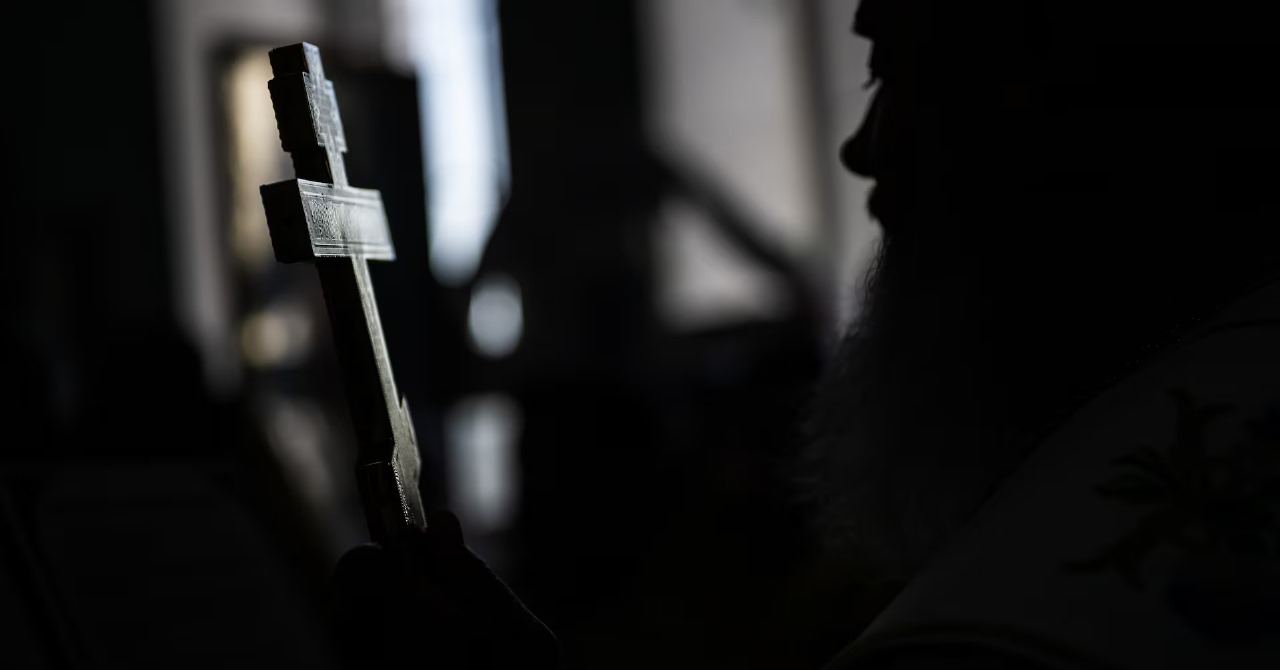
Russia has recruited Orthodox Priest to sway Moldovan Voters.

Sept 2025 : Moldova, a small, deeply religious nation in eastern Europe, holds crucial parliamentary elections on Sunday (28th September, 2025) that could thwart its advance towards EU membership. The country is uniquely caught between Russia and the West: while it gained formal independence from Moscow in 1991, its Orthodox church – a revered institution followed by the bulk of its 2.4 million population – remains a subordinate branch of the Moscow Patriarchate.
The Allegations –
Russia has paid for the Moldovan Orthodox priests for a Moscow pilgrimages and gave them debit cards loaded with hundreds of dollars on their return home. In exchange, priests created Telegram channels to influence Moldova’s elections, warning against integration with the European Union and promoting traditional values over ‘gay Europe’.
Father Mihai Bicu, a 39 years old priest in the Orthodox Church in Moldova, alongwith his party of a few dozen Moldovan clergymen had spent the previous week on an all-expenses-paid tour of some of the Russian Orthodox Church’s holiest sites in September last year, Bicu told Reporters. They were given vouchers worth 10,000 roubles ($120) by Russian Orthodox officials to spend in church shops that sell icons and souvenirs, he said.
They were also treated to a series of lectures from theologians and historians that stressed Russia and former Soviet state Moldova were bound by centuries of tradition and a shared faith and must stick together against a morally corrupt West, the priest added. Before they flew home, Bicu said he and many others in his group received debit cards issued by a Russian State Bank which were handed to them in a monastery by Non-Church personnel whose identities were unknown. The money was assured to be transferred to them upon arriving at Moldova.
There was a service the priests needed to render in return: When receiving the cards, Bicu said his party was told that in exchange for the sum of $1,200, they were expected to create social media channels for their Parishes in Moldova to warn their community about the dangers of the pro-Western government’s pursuit of closer European integration.
Bicu’s party was among the several hundred people, primarily priests, plus lay clergy and others associated with Moldova’s church, who had accepted the all-expenses-paid trips to Moscow between June and October 2024, according to interviews with 15 clerics, including four who attended the pilgrimages, and an analysis of photos and videos of the visits posted online.
Modus Operandi –
Almost 90 new Telegram channels were registered as the accounts of Moldovan Orthodox parishes over the past year, according to a review of social media data. Most channels have pumped out identical content on a near-daily basis, urging the faithful to oppose the government’s pro-Western push in posts that have reached thousands of followers, the analysis found. When asked about the flurry of new channels, Telegram said it was a politically neutral platform that respects peaceful free speech.
The online activity has been exaggerated as the election was steadily approaching. The source for most of the content, a channel called Sare şi Lumiña that is re-posted by the parish accounts, published over 600 messages between May and August, almost triple the number posted over the previous four months of this year.
The overarching message is that Moldova’s traditional family values are under threat from an EU that will force citizens to embrace LGBT identities, degrade morals and destroy freedom of worship. While posts aren’t explicitly pro-Russian, they echo the narratives pushed by opposition parties that advocate closer ties with Moscow.
“Today our country stands before a fateful choice. We are being advised to abandon faith, language, and our roots in exchange for foreign rules and ‘European values’”, said one message posted on September 18 by 39 of the parish channels reviewed. Russian is commonly spoken in the country alongside official language Romanian. “Will Moldova keep its independence or become a bridgehead for outside interests? It depends on us, let’s make the right choice on September 28”.
The targeting of the Moldovan church is part of a broader shadow war being waged by Russia to influence the pivotal election, including online disinformation that pushes anti-Western narratives, cyberattacks on critical state infrastructure and clandestine support for politicians sympathetic to Moscow, according to the Moldovan government as well as many Western diplomats and think-tanks.
Russia has outrightly rejected such allegations as unsubstantiated. Spokesman Dmitry Peskov said it was for the Moldovan people themselves to decide who wins the election. “Russia always strongly condemns interference in the internal affairs of other countries. It never does this itself. We want the political forces that advocate establishing good, mutually beneficial relations with our country to win”.
Rebuttals –
The Moscow Patriarchate spoke publicly about the pilgrimages in September last year following Moldovan media reports that alleged the visits were part of a church campaign to turn priests against the EU. The reports contained no evidence of Russian state involvement. The church said in its statement that it was financing a program to bring Moldovan clergy to Russia to help impoverished priests and strengthen fraternal ties, with no political motives.
Archbishop Marchel, one of the leading figures of Moldova’s church, asserted that, the clerics’ trips to Russia were simply pilgrimages to holy sites, while the new social media channels are a local initiative by the Moldovan church, he said in an interview after leading Mass in the village of Slobozia-Măgura this month. Marchel said bank cards were issued so clergy could buy religious paraphernalia at a church shop in Russia.
Rhetorical Effect –
The leaders of Moldovan Orthodox church speak frequently about the dangers of embracing Europe, and they promote close cultural ties with Russia. The head of the church is a permanent member of the Holy Synod of the Russian Orthodox Church, which is led by Patriarch Kirill, a close ally of Putin.
A spokesperson for the EU, which has accused Russia of trying to influence the election with “a web of cash, content and coercion”, said it continued to support Moldova’s ambitions to join the bloc.
Archbishop Marchel invoked Kirill several times at Slobozia-Măgura, where his arrival was greeted by priests in gold vestments wafting incense and female parishioners in headscarves lunging forward to receive a blessing. In his Mass, he asked God to soften the harshness of the Ukrainian people and guide them toward peace.
Marchel said the danger of integrating with Europe was Moldovans having to accept Western values such as permitting homosexuality. “It’s the worst sin”, he said. “To cultural, Christian Europe, I say yes. To gay Europe, I say no. If you come with gays, then don’t come at all”.
Father Bicu, who served as senior deacon in Marchel’s diocesan headquarters in Balti, northern Moldova, said he wasn’t surprised when his superiors told him he’d be flying to Moscow on the pilgrimage in September last year.
Groups of about 50 people linked to the church, including some wives of clergy, had been making the same trip every week since June, he added. It was an unexpected reward for priests in Moldova, one of Europe’s poorest countries, who must often eke out a living selling candles and icons to parishioners.
Aftermath –
Ultimately, Bicu did not implement the plan devised for him in Moscow. A few weeks after the trip, he quit the church and defected to a rival branch of the Orthodox church aligned with Romania. He said he left because he disagreed with financial and personnel decisions made by the leaders of his diocese, adding that he kept the $1,200. However, Other clergy did execute the online plan.
On October 26 last year, the team of clerics at the Church of St Panteleimon the Great Martyr in Balti launched a channel on Telegram. A member of the team at Saint Panteleimon told Reporters the parish received the help of an IT specialist, who he said was a Russian-speaker from outside Moldova, to launch the service. The team member said he was unable to provide more specific details.
Soon after launch, posts began to appear on the channel that no one in the parish team had published, according to the team member. The posts were politically charged, he said, relating to LGBT issues and to allegations that neighbour and EU member Romania is trying to cleave Moldova away from the Russian church.
The parish team member said they deleted the mystery posts. Fresh ones appeared, though. The account was corroborated by two other people who help run the parish’s social media. One of the people showed Reuters a screenshot from a closed part of the Telegram account listing the channel’s administrators, including someone they didn’t know with the Telegram username “Petr Petry”.
Team Maverick
End of an Era: Cristiano Ronaldo Bids Farewell to the FIFA World Cup After a Record-Breaking International Career
Dallas, July 2026 : One of football’s greatest chapters came to a close on Tuesday a…
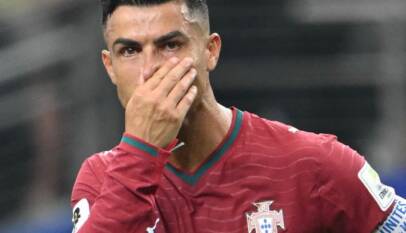
End of an Era: Cristiano Ronaldo Bids Farewell to the FIFA World Cup After a Record-Breaking International Career
Dallas, July 2026 : One of football’s greatest chapters came to a close on …