Designing Nuclear Sanctions which defies Boomerang Effects.

While sanctions remain a powerful tool, policy makers should stop treating them as a universal solution. When sanctions are carefully calibrated and tied to verifiable steps, they might succeed in pulling countries back from the nuclear precipice. Policy makers must build off-ramping mechanisms into sanctions from their inception. Without them, sanctions can corner states and unnecessarily escalate crises. Humanitarian channels must be preserved, the military-technical nuclei of programs should be targeted rather than the entire society, and de-escalation should be politically achievable for both sides. The alternative is dangerous: a repetitive cycle of pressure, siege, and innovation.
The above statement can be well illustrated, considering the steps adopted by the United States while imposing sanctions on Iran:
- The state freezes uranium or plutonium enrichment at a specific low-grade percent. In return, the state is awarded general licenses for pharmaceutical products and food.
- The state verifiably destroys or relinquishes highly enriched or weapons-grade uranium stockpiles. Limited oil exports are then allowed.
- The state adopts or re-adopts the International Atomic Energy Agency’s Additional Protocol, which provides access to information and locations that can reveal undeclared nuclear material and activities. In exchange, financial channels are opened again through correspondent banks (financial middlemen), which re-establish access to the global economy and money-transfer systems.
Credible off-ramps implemented, should provide nuclear powers with opportunities to save face, de-escalate, and return to compliance. De-escalation can include tiered or phased sanctions relief tied to concrete and verifiable de-weaponization, or third-party mediation. The Iran nuclear deal’s structure of incremental compliance for incremental sanctions relief still serves as a fragile model. Sanctions are most effective when they are coordinated among major powers and target specific entities, individuals, and sectors involved with nuclear proliferation, rather than entire populations. For example, sanctions against Iran were more successful than those against North Korea in part due to their multilateralism. Such approaches minimise humanitarian harm and reduce the risk of a broad political backlash, while still maintaining consistent pressure on decision makers in sanctioned countries.
Unlike comprehensive sanctions, targeted sanctions take actions against specific sectors or entities, such as military or intelligence groups to freeze assets, hamper progress, and restrict technologies, in the form of export controls to prevent the spread of weapons and dual-use technologies without hampering overall trade. Targeted sanctions keep the door open to diplomacy while pressuring decision makers. Comprehensive sanctions, on the other hand, are economy-wide restrictions that can turn nuclear weapons into existential necessities.
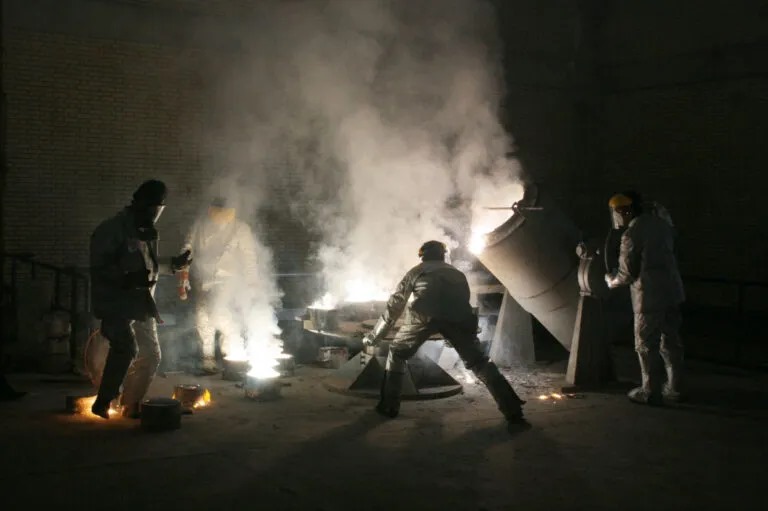
The comprehensive sanctions against Iran also spurred significant technological and strategic innovation. Cut off from international markets, Iran developed extensive indigenous capabilities, especially in uranium enrichment. The country built hardened nuclear facilities at Fordow, Natanz, and elsewhere, while the “resistance economy” became self-sufficient. Internet warfare capabilities, drone technology, and regional proxy groups all advanced.
Supreme Leader Ali Khamenei pointed that Nuclear development became a matter of dignity rather than political posturing; potential domestic discontent over economic mismanagement turned into unity against a common enemy. This narrative was especially potent in Iran because of Western involvement in the 1953 coup that overthrew Prime Minister Mohammad Mosaddegh and the strong support of Iraq during the Iran-Iraq war. Even as sanctions ravaged the Iranian economy, they created a siege mindset that strengthened the domestic regime rather than weakening it.
Perhaps; the demonstrative impact of the sanctions paradox comes from North Korea’s nuclear program. The country currently possesses a nuclear stockpile estimated at around 50 warheads, as well as missiles capable of reaching the continental United States. North Korea’s nuclear saga commenced in the early 1990s, when it first threatened to withdraw from the Nuclear Non-Proliferation Treaty. Initial sanctions, intended to pressure North Korea into returning to the negotiating table, instead triggered the sanctions paradox. As sanctions tightened further following the first North Korean nuclear tests in 2006, the regime’s messaging shifted: Atomic weapons became vaunted achievements of the Korean people rather than bargaining chips.
Each subsequent round of sanctions induced similar outcomes. When the UN Security Council imposed progressively stricter sanctions in response to nuclear weapons testing, North Korea responded by accelerating its nuclear program, engaging in 220 missile tests from 2014 to 2022.
Cut off from international markets and networks, North Korean nuclear scientists synthesised solid propellant for missiles, miniaturised warheads, and attempted to develop hydrogen bombs. The Hwasong-18 intercontinental ballistic missile revealed in February 2023, which has a solid fuel rocket motor and is allegedly capable of carrying multiple nuclear warheads, exemplifies these developments.
Meanwhile, the collapse of diplomacy between North Korea and the West eliminated potential avenues for de-escalation and off-ramping. Six-party talks between 2006 and 2009 collapsed from a lack of compromise, while briefly hopeful moments like the Trump-Kim 2018 summit produced only vague commitments to “denuclearisation” that led nowhere. North Korea saw the 2011 overthrow of Libyan ruler Muammar Qaddafi, only eight years after he abandoned nuclear weapons in exchange for sanctions relief, as a cautionary tale. Today, despite decades of continuous and stringent sanctions, North Korea is a nuclear state with a growing atomic arsenal and little incentive to disarm.
Sanctions can also fail because of inadvertent acceleration. Necessity is the mother of invention, and comprehensive sanctions create necessity like little else. Cut off from trade and international collaboration, nations with nuclear ambitions become creative. Sanctions reshape entire economies around nuclear objectives: Black markets orient themselves around dual-use technologies, industries reorganise around the indigenous production of previously imported components, and innovation under pressure leads to unexpected breakthroughs.
The North Korean nuclear program was developed under some of the most restrictive sanctions in the world, but it surprised intelligence agencies with its advanced capabilities. On the other side, in Iran, the development and configuration of IR-9 centrifuges leapfrogged earlier models, which is beyond purely technical achievements, sanctioned states also develop new proxy networks, sophisticated money-laundering techniques, and more resilient supply chains.
The sanctions paradox does not mean that sanctions cannot work. To the contrary, it highlights the need for a more nuanced and realistic approach to counter-proliferation sanctions policy. To prevent sanctions from backfiring, policy makers must make them more targeted, incremental, and multilateral with clear pathways for de-escalation and off-ramping.
However, the sanction methodologies are not always the same for all countries, although if found to be prevailing on the other side of the same carpet. Let us discuss about the case of India’s neighbouring rival Pakistan.
On May 2, 2011, as per official release from the White House, the Barrack Obama led US administration identified the hiding secrets Of Osama Bin Laden in Abbottabad, Pakistan. Within an hour, Laden was assassinated. The world’s most wanted terrorist had confided in Pakistan for years, less than a mile from Pakistan’s top military academy. Despite harbouring the most wanted enemy of the United States, the architect of the 9/11 attacks on the United States, Pakistan had faced no invasion, regime change, or “shock and awe” campaign. But the same United States had invaded Afghanistan within weeks of 9/11/2001, accusing its leaders of supporting terrorism, and invaded Iraq in 2003 on even fewer substantial grounds.
Beyond a broader US belief in the strategic value of Pakistan, there was a critical factor in the US mission to kill bin Laden: Pakistan had nuclear weapons. It is an unfortunate truth that nuclear weapons deter invasion, transforming outcast states into all-but unassailable ones. As the American government engaged in regime change across the Middle East, Pakistan’s government remained untouched. Although Pakistan had voiced its discontent with regard to how effectively the country’s defences were breached by the United States, and how the Pakistan Air Force failed to detect and intercept any incoming American aircraft. But the hidden agenda is, Pakistan who were deep in the dusts staggered by economic fragmentation – who had left the developmental keys under the carpet, and had delved in sponsoring and promulgating ultra-terrorism. Leaking information to the United States, allowing them to explore the country’s chastity, and in turn benefit from US Funds, are understandably the root cause of the eventualities.
Suvro Sanyal – Team Maverick





A New Threat Posed To Israel-US Joint Air Operations In The Form Of Chinese QW-12 ADM To Iran.
Beijing/Washington DC; August 2026: As per information provided by trusted PLA sources, Ir…
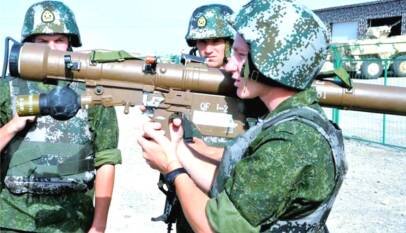
A New Threat Posed To Israel-US Joint Air Operations In The Form Of Chinese QW-12 ADM To Iran.
Beijing/Washington DC; August 2026: As per information provided by trusted PLA sources, Iran is …