UNCTAD16 opens in Geneva – Day 01.

The 16th United Nations Conference on Trade and Development (UNCTAD16) opens today in Geneva under the theme “Shaping the future: Driving economic transformation for equitable, inclusive and sustainable development”.
The four-day conference (20-23 October) convenes ministers of trade and economy, leaders of international organisations, representatives of civil societies, private sector, youth and renowned experts to engage in high-level dialogue on global trends and policy perspectives on trade, finance and debt, investment, development and the digital economy.
The quadrennial conference is UNCTAD’s highest decision-making body, bringing together 195 Member States to assess pressing trade and development issues, weigh policy options and craft multilateral responses.
Across more than 40 high-level sessions, ministerial roundtables and events, delegates will focus on practical routes to resilient supply chains, fairer finance, productive investment and an inclusive digital economy. Discussions will examine how countries can navigate today’s uncertainties while laying foundations for sustainable growth that benefits everyone, everywhere.
As per official release, the UN Secretary-General António Guterres will address UNCTAD16 on 22nd October.
Federal Councillor Guy Parmelin of Switzerland host country of UNCTAD16, elected by acclamation as president of the conference, have said: “Let’s remain faithful to tradition of international Geneva and find consensus by looking at the diverse points of view and ensuring that we stimulate the economy with a view to achieving fair, inclusive and lasting development”.
In her opening address, UNCTAD Secretary General Rebeca Grynspan warned that uncertainty, debt and falling investment are weighing heavily on the world’s poorest countries. Yet the Secretary General has highlighted that major shifts, from new trade patterns and resilient services to clean technologies and artificial intelligence. offer a chance to reshape the global economy for greater inclusion and resilience. She has further stressed that the key question is not whether change will happen, but who will steer it and for whose benefit. “We’ve come here to shape the future, together, so that trade, investment and technology work for people, not the other way around”, Grynspan said.
The world is at an emphatic crossroads that calls for a fundamental shift in development mindset, global leaders say in their remarks to the UNCTAD16 opening ceremony.
- President José Ramos-Horta of Timor Leste, while speaking via video message, called for a renewed commitment to rebalance the rules of global commerce, decisive action on debt, bridge the digital divide and ensure climate justice is reflected in trade and investment, especially for least developed countries.
- Prime Minister Phạm Minh Chính of Viet Nam, in his video message, called for bold and effective reforms to the multilateral trading and financial systems, while reaffirming his country’s support for the UN’s central role in tackling global and people-centred issues linked to sustainable development.
- Prime Minister Mia Amor Mottley of Barbados, in a pre-recorded message, praised the “transformative response” of UNCTAD in carrying out the Bridgetown Covenant adopted at the organisation’s 15th quadrennial conference held in Barbados. “We must empower UNCTAD to be that space, where new global consensus on links between trade and development are forged for the prosperity of all”, said the Prime Minister.
UNCTAD16 takes place amid wide-ranging reform efforts aimed at making the United Nations and the multilateral system better adapted to pressing challenges now and into the future.
“Progress in trade and development is critical to that renewal”, said Annalena Baerbock, President of the UN General Assembly. The President have urged countries to ensure that trade uplifts rather than divides, empowers rather than excludes: “Because a more equitable global economy is essential in demonstrating that multilateralism still works for all”.
Director General Tatiana Valovaya of the UN Office at Geneva has urged vide her speech, “The momentum is ramping up, encouraging participants to seize it with ‘clarity, courage and collective resolve’. This (UNCTAD16) conference may serve as a space for bold ideas, innovative partnerships and renewed determination to build resilient, sustainable and inclusive future for all”.
Opening Statement by Rebeca Grynspan, Secretary-General of UN Trade and Development (UNCTAD) –
Today, we gather under the theme “Shaping the future” because the future has never been less certain. The old certainties are crumbling. The assumptions that governed global trade for decades are being questioned. The pathways that seemed permanent are being redrawn. And in this process of the old, lies the raw material of the new. Consider what is happening before our eyes. The geography of growth has shifted.
Today, three quarters of it comes from the developing world. Trade itself is changing – services and data now flow across borders that containers cannot cross. A programmer in Kigali can compete with one in California, an entrepreneur in Bangladesh can reach customers in Berlin. Clean technologies are undergoing a boom that even the most optimistic forecaster failed to imagine. And artificial intelligence has moved from science fiction to science fact. Yet even as these tectonic shifts create unprecedented opportunities to reshape the global economy in order to make it more dynamic, more sustainable, more equitable, more innovative, and inclusive, there are also forces that can pull us backward.
If we stay on the defensive and continue with business as usual, yesterday’s commodity dependence will be tomorrow’s destiny. Today’s debt burdens will become permanent features of the landscape. The digital divide will grow too wide to bridge, the climate transition too costly to afford and the technological revolution too advanced to join. Change with purpose is what we must embrace. The future is not something that happens to us, but it is something we build.
When Kenya decided to become a digital hub, it wasn’t accepting the future, it was shaping it. When Indonesia began adding value to its nickel, it wasn’t following a predetermined path, but was carving a new one. And when Barbados proposed pausing debt payments during climate disasters, it wasn’t adapting to reality, it was changing it. We must build on that spirit.
The question is not whether these forces will transform the global economy, but who will direct that transformation and toward what ends. This is why your presence here matters. Every ministerial dialogue held this week, every paragraph drafted, every commitment made is an act of shaping the future. You are not here to predict it; you are here to shape it.
For Sixty One Years, UNCTAD has stood at this intersection of past and future. We established the Generalised System of Preferences (GSTP), opening developed country markets to developing nations for the first time. We created the category of least developed countries, ensuring that the most vulnerable received recognition and support in international frameworks. We articulated the vision of a New International Economic Order, planting the seeds for today’s debates on reforming the international financial architecture.
Today’s mandates stand on these foundations. The questions evolve, but the conviction remains: The future belongs to those who shape it, and it must be shaped to benefit all.
Dear all,
This has been a tough year for trade and an even tougher one for trade ministers, foreign ministers and finance ministers alike. You’ve had to navigate tariff shifts more dramatic than at any time in recent history. You’ve had to negotiate in an environment where geoeconomics and geopolitics are more intertwined than ever before, and where predictability became the scarcest commodity. You’ve had to balance domestic pressures with international commitments.
I want to especially acknowledge those of you who have faced these challenges with far fewer resources. Many of you have been on the front line of disruption, yet at the back of the queue in negotiations. At UNCTAD, we have done our best to support you throughout this year. And we are proud to have you here with us in Geneva.
Dear Friends, because of the work you’ve done, 72% of global trade still moves under WTO rules. Trade is growing at 5% to 6% in current prices year on year – and 9% if we look at South-South trade excluding China.
Most importantly, we have for now avoided the domino effect of tariff escalation that once brought the world economy to its knees in the 1930s. This didn’t happen by accident. It happened because of you – because you kept negotiating when it seemed pointless, defending a rules-based system even as you worked to reform it, and building bridges even when they fell. For that, I want to personally thank you. The world may not always notice, but history will.
Excellencies,
Beneath the resilience, important fragilities remain. Resilience is not the same as stability – and we need both. The world economy has learned to improvise, to adapt, to find a path through uncertainty. That deserves recognition. But the forces driving today’s resilience are not always the ones that will sustain tomorrow’s development.
Rising trade volumes coexist with many countries losing preferential access, while facing higher absolute tariffs that make it harder for them to compete. A debt and development crisis is still facing countries with impossible choices. We have heard that in the interventions from the prime ministers and presidents. They have to decide to default on their debts or on their development.
Global investment flows are retreating for the second year in a row, eroding tomorrow’s growth. And 2.6 billion people remain offline – most of them women in developing countries.
Freight costs are now too volatile, hitting landlocked countries and small island developing states with transport bills up to three times the global average. And while AI promises to add trillions to global GDP, fewer than one third of developing countries have strategies to capture any of its benefits.
We know that a healthy, fair and dynamic global economy is the foundation of a stable and peaceful world. The outcome document being negotiated this week addresses each of these challenges with concrete mandates.
It commits UNCTAD to support the graduation of least developed countries, ensuring that graduation becomes not a cliff but a bridge to sustained prosperity. It calls for stronger South-South cooperation through mechanisms like the GSTP, turning solidarity into market access. It recognizes that creating enabling investment environments requires addressing the capital cost disparities that make a dollar of investment three times more expensive in Zambia than in Zurich. And it emphasises bridging digital divides through not just connectivity, but capacity ensuring countries can innovate, not just consume.
But this conference delivers more than that. Over the coming days, you’ll engage in ministerial dialogues that translate principles into practice. The investment roundtable will explore how to channel trillions in sustainable finance to countries that need it most. The digital economy session will map pathways for countries to leapfrog old technologies and capture new ones. The supply chain dialogue will tackle how to make trade routes resilient when old certainties about maritime passages no longer hold. And the financing for development discussions will confront the debt crisis head-on, building on Sevilla’s commitments.

Dear all
This has not been an easy year for us either. In this 80th anniversary of the United Nations, the multilateral system faces pressures that impact every aspect of our work. But as I have said, being a multilateralist today means being a reformist. And this institution has proven it, we have been reforming and successfully responding to the new challenges and to this new world since 2021. And here we are.
We organised this conference with a frozen budget and late change of venue. We’ve stretched resources past any reasonable expectations. The challenges have been great, but we have proven that we can overcome them. We can be proud of the past, but being defensive will not take us into the future. This is truer today than ever.
We are in a transition period, where the old has not died and the new has not yet been born. This is a period of contradictions not all forces go in the same direction and all of them coexist. What we do will define what will happen, because we have agency and we have the responsibility to use it.
Therefore, before I officially open this ministerial conference, three acknowledgements are due.
First, to our host, Switzerland.
“Pendant plus de soixante ans, vous avez donné à la CNUCED plus qu’un simple lieu.
Genève a été un terrain neuter, un endroit où des pays en désaccord peuvent encore discuter. Ici, le multilatéralisme est une réalité de tous les jours.
Vous avez toujours gardé cet espace ouvert. Ce compromis, cette constance, ont une grande valeur. Merci”.
Second, to our member states.
Your engagement over these months of preparation has shaped this conference before it even began. I especially thank Ambassador Paul Bekkers, our Trade and Development Board President, whose steady leadership has guided us through complex preparations. Thank you.
And to the coordinators of the negotiating groups – your tireless work bridging differences and finding common ground exemplifies diplomacy at its best. Thanks.
The proposals you’ve submitted, the consultations you’ve conducted, the red lines you’ve defended – this is multilateralism in its most genuine form. This is countries insisting on shaping their own futures. At a time when multilateralism faces many questions, your presence here constitutes an answer. I thank you.
Lastly, to my staff.
The conference you see this week, the ministerials that will convene, the negotiations that will unfold, the outcome document that will emerge rests on work that remains largely invisible. The logistics coordinated across multiple venues and time zones. The documents prepared with precision. The relationships with partners and stakeholders that open doors. You’ve done this work with the professionalism that defines this institution. I am proud of your work, and I thank you.
Excellencies,
All of us, ministers and authorities, UNCTAD staff, member states, private sector, civil society, youth, women have overcome challenges to be here. And we’ve done that not just for the sake of negotiating a document, or taking place in a ministerial dialogue, or arranging a bilateral. We’ve come here to declare that we can shape the future and we’ve come to shape it. Together.
I hereby declare the 16th ministerial session of the United Nations Conference on Trade and development, officially open.
Team Maverick




Iran, US Pause Hostilities for Second Night as Diplomatic Efforts Gather Momentum
Tehran, July 2026 : Iran and the United States avoided launching fresh military strikes fo…
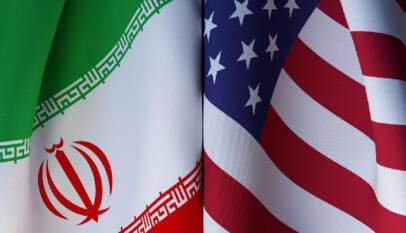
Iran, US Pause Hostilities for Second Night as Diplomatic Efforts Gather Momentum
Tehran, July 2026 : Iran and the United States avoided launching fresh military strikes …