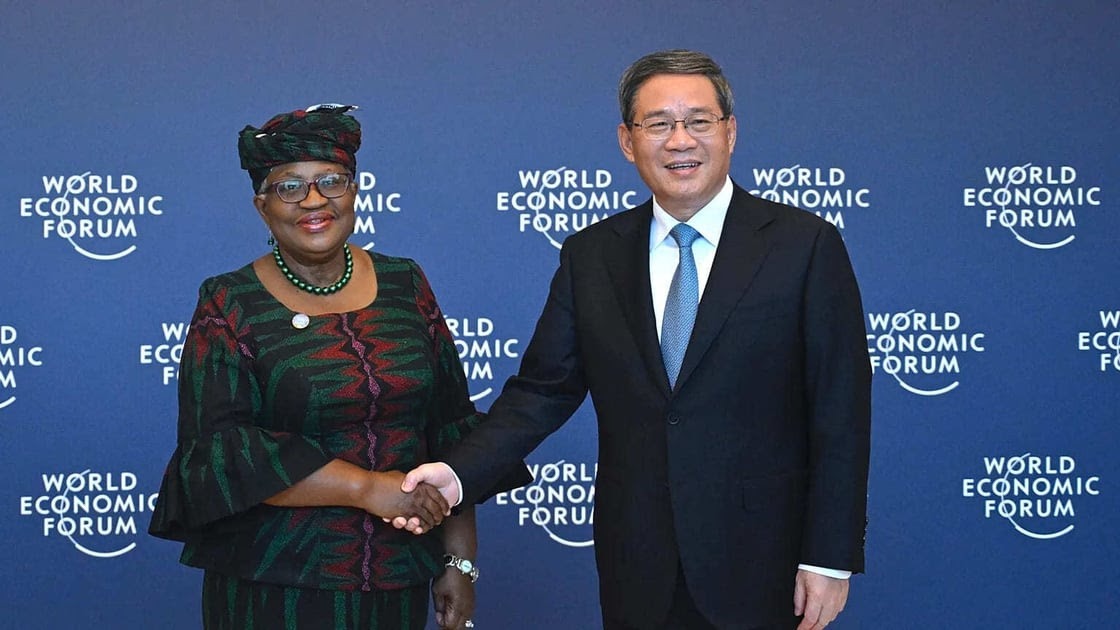
China foregoes WTO privileges. Time for others to do the same?

In the early October, 2025, China has decided to forego special benefits for developing countries at the WTO, posing an unprecedented challenge to other large emerging economies: Would others; notably India, to ask hard questions to themselves if they should take China’s lead in stepping up to meet much-needed contributions toward leadership of the international trading system?
The World Trade Organization (WTO) currently allows its 166 members to decide for themselves whether they are developed or developing countries. The global multilateral body has never had a system to classify its members or decide when they should graduate from developing to developed status as economies. There is a third category of WTO members, Least Developed Countries, but these countries are designated as such by United Nations classification.
About two-thirds of WTO members say they are developing economies, including the world’s second- and fourth-largest economies by nominal GDP: China and India respectively. (By GDP adjusted for purchasing power parity, China is the largest economy and India the third-largest.)
Along with the developing country status comes a slew of trade privileges known as “Special and Differential Treatment” (S&DT). These benefits include:
- Longer time periods for implementing agreements and commitments.
- Measures to increase trading opportunities for these countries.
- Provisions requiring all WTO members to safeguard the trade interests of developing countries.
- Support to help developing countries build the infrastructure to undertake WTO work, handle disputes, and implement technical standards.
As the relative size of economies in the world has sharply changed in the last three decades, WTO rules have not kept up. Controversy has crept in and risen especially in recent years over whether such special and differential treatment has become entrenched and viewed as an entitlement among developing countries due to self-designation.
China’s rapid economic ascent since its accession to the WTO in 2001 made its continued claim to developing country status particularly controversial. The world’s largest manufacturer and exporter, China’s decision to forego S&DT benefits in October 2025 addresses longstanding complaints from the United States and other advanced economies who argue that such privileges are unfair for countries with significant global influence and competitiveness.
While the WTO must continue to develop objective needs-based criteria for access to the WTO’s system of S&DT, others among the world’s largest economies could make concrete contributions in this regard as well.
Emerging economies’ reluctance and rationale:
China’s move is relatively cost-free to China for now. Multilateral trade negotiations at the WTO on agriculture and fisheries, among others, aren’t moving quickly. And China has already given up S&DT privileges in some recent talks, mostly because it doesn’t need them. Yet, even as a symbolic move, publicly declaring its commitment to take on developed country obligations is important and positive Chinese positioning, not least for “hearts and minds”, in China’s bid for the mantle of leadership of multilateral trade in a world rocked by trade uncertainty and tariff escalation. By some measure, the renunciation carries an element of sacrifice: China may be the world’s second-largest economy but its per capita income is still just $ 13,300, far below others such as the United States at $ 86,000.
China’s move now poses an unspoken challenge to other large emerging economies: Would they similarly step up?
India with just $ 11,000, for example, has been outspoken in defending its entitlement to S&DT, citing ongoing development challenges such as poverty, capacity constraints, infrastructure gaps, the digital divide, and uneven growth. But India goes further by objecting not just to new proposals for rules to reduce trade barriers involving all 166 WTO members; India even objects to plurilateral deals among subsets of members that do not include India and in which India has no interest in joining. India and South Africa allege that plurilaterals by their nature are illegal in the WTO.
Major economies including India, South Africa, Brazil, and Indonesia often work together to stall many WTO negotiations, arguing that while their economies have grown, they still face significant domestic hurdles that justify retaining policy flexibility under WTO rules for domestic development needs and bargaining power in trade talks. These countries used to be able to count China in their column on such issues. Since China’s October declaration, this is no longer reliably the case.
Global trade implications:
China’s decision is not yet consequential in real concessions but potentially pivotal, giving Beijing the high ground to lead the way for a reordering of the multilateral trading system. There is no sign other major emerging economies are about to join China. India has said it won’t become a developed country until 2047. Brazil in 2019 said it would declare itself a developed country, then in 2024 said it wouldn’t.
If other major emerging economies were to follow China’s example, it could accelerate WTO reform. It isn’t just other large emerging economies that should take China’s lead into consideration. Other economies with higher per capita income, that currently label themselves developing countries at the WTO, should do so too.
In key ways, China still shares the same development challenges that the likes of India and Brazil use to justify their developing country privileges. But China has chosen to give up its privileges for the public good. If all major economies in the modern age similarly agree to place themselves on an equal footing, it would make for a confidence-building restoration of trust among WTO members.
The outcome of this debate will shape the future of the WTO and the global trading system. As the Chinese saying goes, a journey of a thousand miles begins with a single step.
Team Maverick




More Than a Café: How MITTI Café is Brewing Hope, Dignity and Dreams at Rashtrapati Nilayam
Hyderabad, July 2026 : Tucked away inside the serene campus of Rashtrapati Nilayam in Boll…
More Than a Café: How MITTI Café is Brewing Hope, Dignity and Dreams at Rashtrapati Nilayam
Hyderabad, July 2026 : Tucked away inside the serene campus of Rashtrapati Nilayam in …