Call for Human Centered Economy.

The UN International Labour Organization (ILO) has warned that the world of work is undergoing rapid and destabilising change, with widening inequality and job insecurity leaving millions without stable livelihoods or basic protections, urging governments, employers and labour organizations to put dignity and workers’ rights at the centre of economic decision-making.
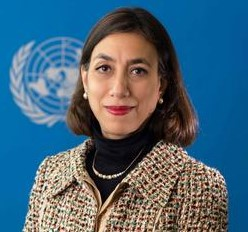
“This report brings together the voices, experiences and proposals of trade unions worldwide”, said Maria Helena André, Director of ILO’s Bureau for Workers’ Activities. “Workers have defined shared priorities for advancing social justice and shaping a more inclusive future of work”. She noted that while economies and labour markets are changing rapidly, worker protections and governance systems have not kept pace, leading to rising insecurity and deepening inequalities.
According to the report, technological change, climate pressures, demographic shifts and weakening social protections are reshaping workplaces faster than policy can respond. Without action, existing inequalities are likely to worsen, particularly for workers in informal, temporary or low-wage jobs.
Among its key messages:
- Decent work and labour rights are non-negotiable.
- Economic governance must put people first.
- Technological and climate transitions must be just and inclusive.
- Local realities require tailored solutions.
- Trade unions are transforming to remain relevant.
Global debate is set to open in Doha amidst the findings which come as more than 8,000 participants – including Heads of State and Government, ministers, employers’ groups, civil society organisations and youth representatives, prepare to gather in Doha for the Second World Summit for Social Development, opening on the 04th October, 2025.
The Summit will revisit and update commitments first made at the landmark 1995 Social Summit in Copenhagen, as inequality, insecurity and social fragmentation are once again rising in many parts of the world.
In a message ahead of the Summit, ILO Director General Gilbert F. Houngbo urged governments to act with ambition and unity: “Everyone deserves an equal chance at quality jobs and shared prosperity. Let us come together again to deliver fair, inclusive and lasting progress for people everywhere”.
Earlier on 31st October, Laura Flores, Americas Division Director at the Department of Political and Peacebuilding Affairs (DPPA), who is leading the department’s initiatives in Latin America and the Caribbean, working closely with local authorities and organisations, as well as women’s and indigenous communities to advance gender equality. She had asserted that, “people finally started recognising that women aren’t just affected by conflict, they’re also key to resolving it”, while she was advocating about women’s inclusion in conflict resolution. “It’s about making sure women have a seat at the table when peace is being negotiated, and that their voices are heard in decisions that shape recovery and security”.
The United Nations promotes women’s protection in conflict and participation in negotiations but it is up to the countries to implement WPS in their policies. In Chile, the UN assisted a commission initiated by the country’s president to address the root causes of conflict affecting Indigenous communities. It specifically considered challenges faced by the indigenous ‘Mapuche’ women and most of the commission’s proposals came from women.
Despite hopeful development, gender-based violence remains “alarmingly” high, with at least 11 women murdered every day in Latin America alone. Political violence and digital harassment against women leaders keep rising, while in some countries like Haiti, inclusion in politics remains low amid high levels of sexual violence.
Indigenous Peoples, making up over 467 million of the global population, are often denied the right to live in accordance with their cultural values and face exclusion in political processes. It is the indigenous women those who are often hit hardest by conflict, but they’re also incredibly resilient and central to peace efforts.
Team Maverick

Jaishankar, Rubio Push for Defence Pacts and Near-Final Trade Deal at Manila Meeting
Manila, July 2026 : India and the United States on Wednesday gave fresh momentum to their …
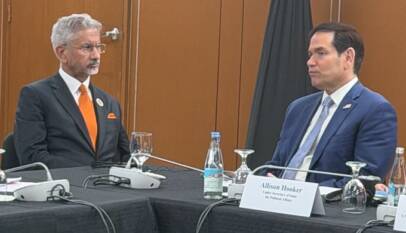
Jaishankar, Rubio Push for Defence Pacts and Near-Final Trade Deal at Manila Meeting
Manila, July 2026 : India and the United States on Wednesday gave fresh momentum …