Berkshire Hathaway has more cash than Big Tech’s AI billions.

Wall Street has explored the quantum of Cash, the Big Technological Conglomerates has on hand. It was unveiled that Berkshire Hathaway surpassed all, with the company now holds more cash on its balance sheet than the top five technology firms combined: Amazon with 70.50 billion; Interactive Brokers with 53.90 billion; American Express with 53.40 billion; Apple with 33.50 billion, and Microsoft with 28.8 billion.

Why it is important:
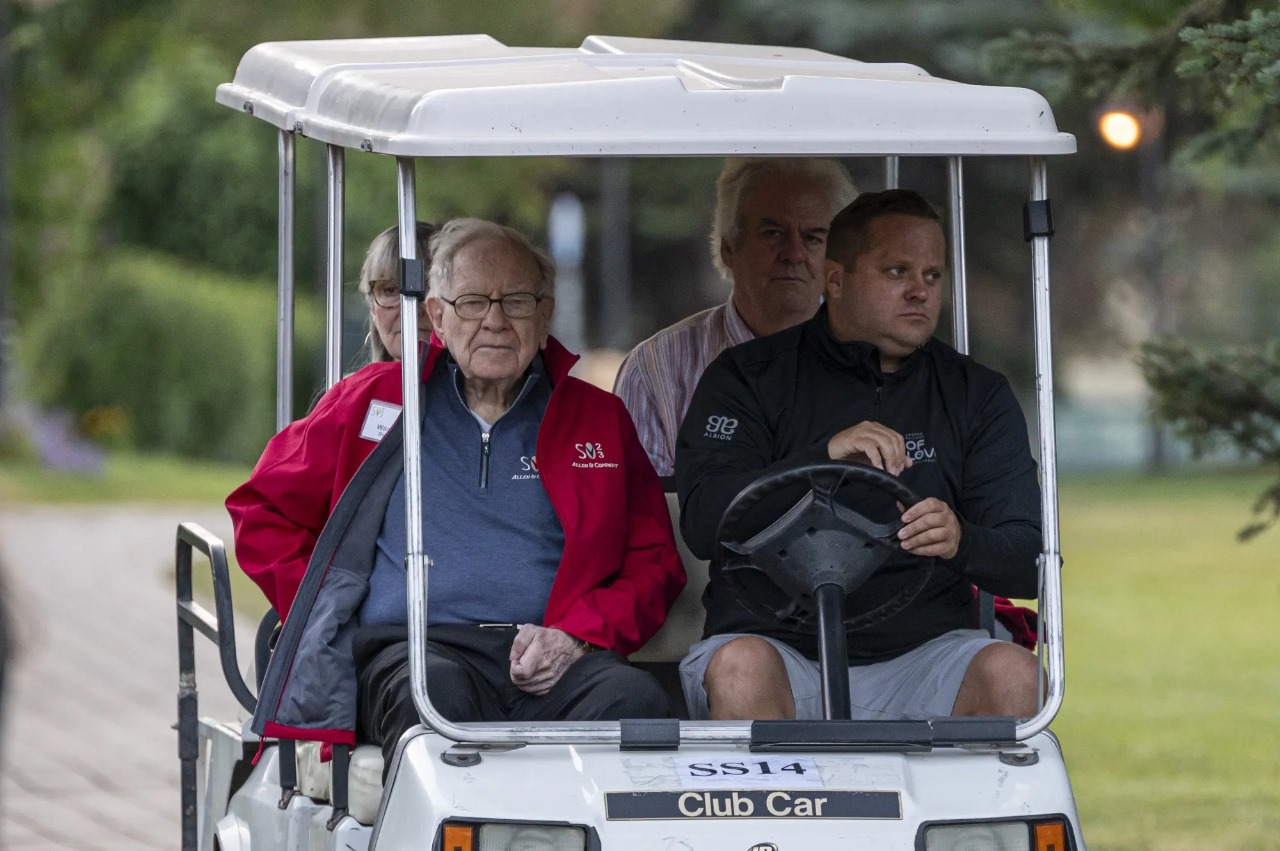
Newly appointed CEO Greg Abel will have serious Monopoly money to deploy when he takes the reins of Berkshire from Warren Buffett in 2026.
The big picture: Berkshire hit a record $382 billion cash hoard in the third quarter.
Big Technological’s are going the other way, taking on debt to fund the biggest capital spending cycle in decades, much of it tied to AI. The four biggest hyperscalers are set to spend half a trillion dollars on building out AI infrastructure this year alone.
Warren Buffett, who is the acting Berkshire CEO, is obviously put off by current market valuations, according to Jonathan Owen, who manages a $30 billion investment grade portfolio for Twenty Four Asset Management. At the same time, “there has been a fairly reasonable push back on the capex plans for AI“, Owen notes.
Berkshire is not the only corporate behemoth sitting on a mountain of cash, but others are deploying that cash differently. Corporate buybacks, when companies purchase their own shares, hit a record high in the first half of the year. For the fifth consecutive quarter, Berkshire did not use cash to buy back any of its own shares. In a market obsessed with who spends the most, Berkshire’s real edge may be that it doesn’t have to.
This year on 02nd August, Buffett’s Berkshire Hathaway had initiated a $3.8 billion write-down on its 27.5% stake in Kraft Heinz, which was at that point of time was weighing various breakup plans to salvage value.
It was a bad deal that kept getting worse for Berkshire, because more than a decade earlier it had partnered with 3G Capital Partners to buy H.J. Heinz for $28 billion. Two years after the Berkshire-3G Capital Partnership, Heinz had merged with publicly traded Kraft Foods, with Berkshire and 3G initially owning a majority stake in the combined company, which since had culminated to a market Cap Sag and revenue. Most noteworthy is that before and after the Kraft Heinz deal, Buffett was a vocal critic of private equity.
He argued that fees and leverage were excessive and that the reporting to limited partners was dishonest. Perhaps more importantly, he believed that private equity investors “don’t love” the companies they buy, viewing them more as cash cows than family pets. For some reason, though, Buffett felt that 3G Capital was an exception to his rule.
Maybe it was because the firm was founded in Brazil rather than Manhattan. Or because he felt it had a long-term investment philosophy, even though much of its timing record looked indistinguishable from vanilla private equity firms. Perhaps he was pleased by early returns from a Berkshire loan that helped 3G-backed Burger King buy Tim Hortons.
Whatever the cause, Buffett looked the other way and partnered with 3G on the mega-deal for Kraft Heinz, deflecting when asked if 3G’s early and brutal cost cuts contributed to the company’s later troubles. 3G had even installed one of its partners as CEO in 2019, but by the end of 2023, he was dismissed. So were the “long-term” investors at 3G, which quietly exited its entire 16% stake — leaving Buffett holding the bottle.
It’s reductive, and downright false, to argue that private equity usually destroys value at the businesses it buys. Even at Kraft Heinz, there are plenty of secular challenges, including changing consumer nutrition trends, and it’s been publicly held since the 2015 tie-up. But if it is proclaimed that private equity is malevolent, asking it to the prom could become a self-fulfilling critique.
During the FY: 2025-2026, Berkshire Hathaway Incorporation’s cash pile soared to $381.7 billion in the third quarter, a fresh record, and operating earnings surged 34% at Chief Executive Officer Warren Buffett’s conglomerate. That figure hit $13.5 billion, as the firm’s insurance underwriting profit more than tripled in a period marked by unusually low disaster activity.
Earlier this year, Buffett appeared to be back on the hunt for deals, with the acquisition of a $1.6 billion stake in UnitedHealth Group Inc. and a $9.7 billion deal to buy OxyChem last month. But the famed billionaire remained on the sidelines in the third quarter. Berkshire Hathaway offloaded $6.1 billion of shares during the period. “There isn’t much opportunity in Buffett’s eyes right now”, said Jim Shanahan, an analyst for Edward Jones.
Despite its growing Cash hoard, the firm’s net investment income declined by 13% to $3.2 billion amid lower short-term interest rates. The firm’s collection of primary insurance and reinsurance businesses both turned a pretax underwriting profit this quarter, after posting losses in the year-ago period.
But Berkshire auto insurer Geico’s pretax underwriting profit had fell by 13% amid slightly higher claims and a 40% increase in underwriting costs, which the firm said is due to “increased policy acquisition-related expenses. That’s likely to be mostly advertising. Geico is everywhere right now”, Shanahan said.
Berkshire’s earnings are closely watched because the conglomerate’s array of businesses, ranging from insurance to rail, energy and manufacturing, provides a snapshot of the health of the US economy.
Investors may also pay closer attention as the company nears a new era, with Buffett handing off the role of CEO to Greg Abel at year-end.
Operating earnings at its railroad unit BNSF surged by 5%, to $1.4 billion, as revenue from the transportation of agricultural and energy products grew, driven in part by slightly higher grain exports. At the same time, Berkshire’s utilities business, which runs PacifiCorp, MidAmerican and NV Energy, posted a 09% decline in operating earnings, to $1.5 billion over the period.
One sore point is Pilot, which posted a $17 million loss in the third quarter. Berkshire said the decline is driven by lower wholesale fuel and retail margins, as well as higher expenses. “The Pilot business is not really doing very well. I’m interested to see what the plan might be to turn that around”, Shanahan said.
No Buybacks – For the fifth straight quarter, the firm declined to buy back its own shares, which have fallen nearly 12% since Buffett’s announcement in May that he would step down. “I think that sends a very powerful message to shareholders”, said Cathy Seifert, an analyst at CFRA Research. “If they’re not buying back their shares, why should you?”
Despite the earnings gains, the firm’s tepid revenue growth in the period is not going to help investor sentiment, according to Seifert. “I’m struggling to find a catalyst” for an increase in the stock price, she said.
Team Maverick


Deschamps Admits France Fell Short as Spain End World Cup Dream with 2-0 Semifinal Win
Arlington (Texas), July 2026 : France head coach Didier Deschamps admitted his side was ou…
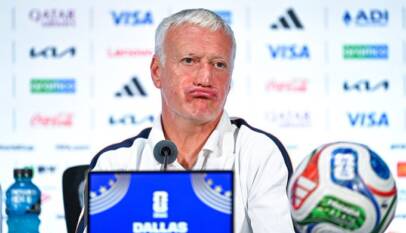
Deschamps Admits France Fell Short as Spain End World Cup Dream with 2-0 Semifinal Win
Arlington (Texas), July 2026 : France head coach Didier Deschamps admitted his side was …